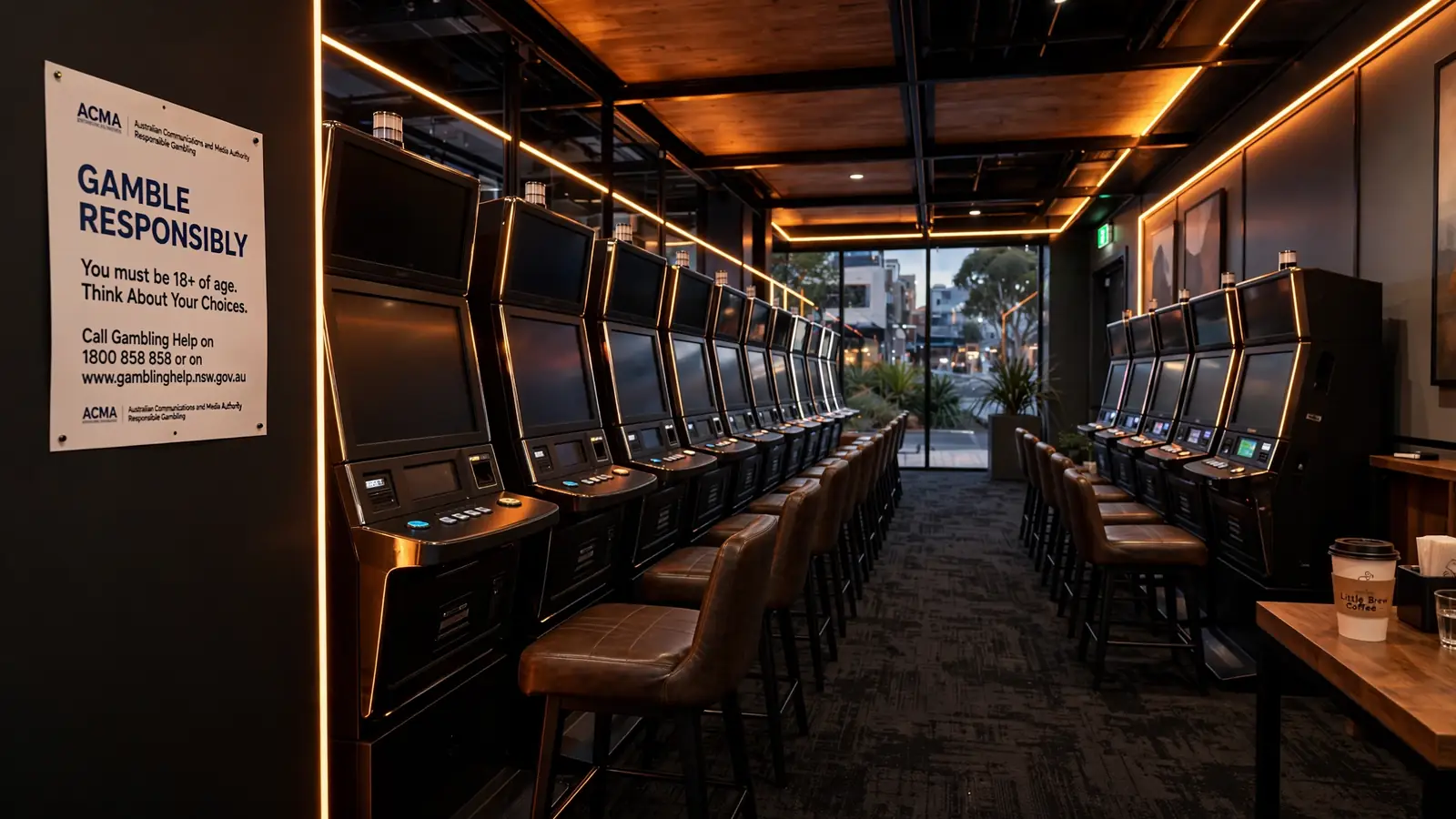
Opening hours, gaming-area access and online claims are separate details, so venue-level confirmation matters.
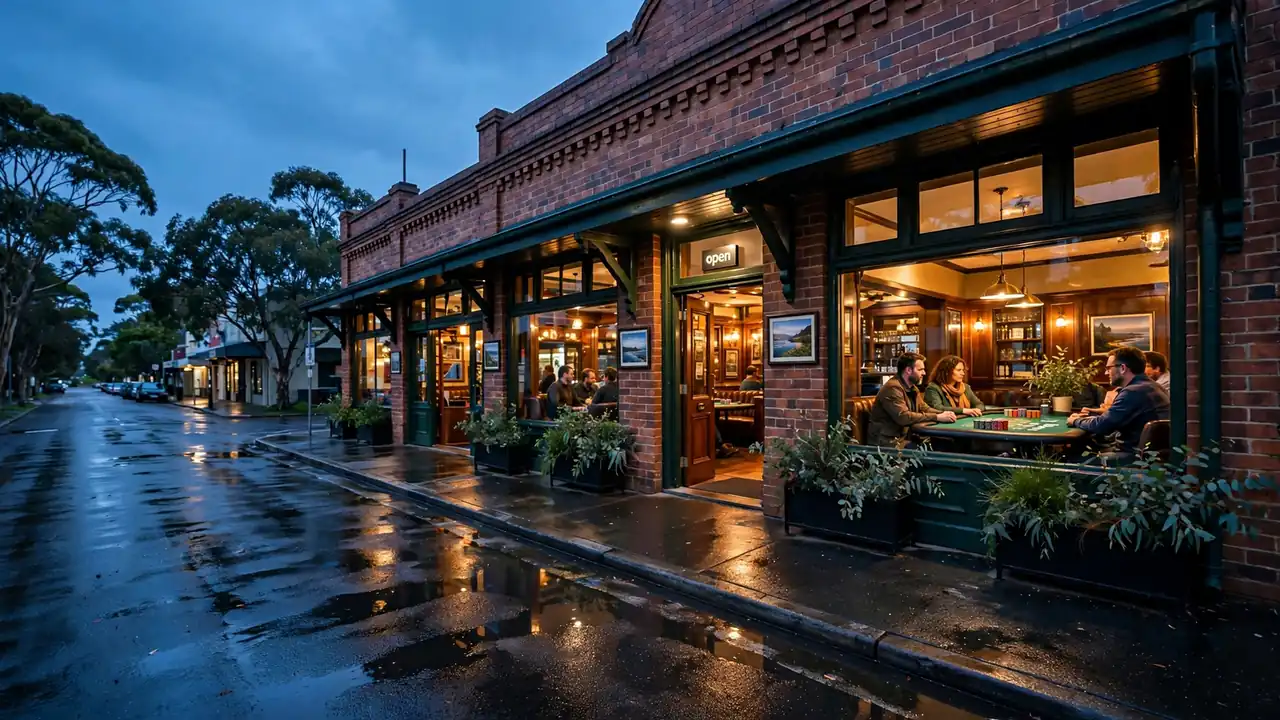
An “open now” label answers a narrow question: whether a venue is listed as operating at the time the information was checked. It does not confirm that its pokies are available, that the gaming area is open, or that the listing is current. Those are separate details, and a search result can blur them into one green status marker.
For a Tasmanian venue, the most useful first check is its own current information: an official website or social media account may publish a temporary closure or a change to normal hours. A business listing can help locate contact details, but its status should be treated as a pointer rather than confirmation. Listings may rely on hours entered earlier, and a routine schedule does not necessarily reflect a public holiday, a private event or an unexpected closure.
Where the distinction matters, direct confirmation is stronger than a search result. A call to the venue can establish whether it is operating at that moment and whether the gaming area is open. The question needs to be precise: a venue may be open for hospitality while pokies are unavailable, or different parts of the premises may operate on different schedules. “The venue is open” and “pokies are available” are not interchangeable statements.
Choosing pokies in Tasmania calls for checking the details that matter to you, such as licensing and payment terms. Use this list as a starting point and verify that each option suits your circumstances.
Bizzo Casino
Bizzo Casino is listed with a Curacao Gaming Control Board licence held by TechSolutions Group N.V.
Vegaz Casino
Vegaz Casino lists a Curacao OGL/2024/1335/0780 licence. Its minimum deposit is EUR 20.
Neospin
Neospin lists a Curacao Gaming Control Board licence, OGL/2023/176/0095, held by Hollycorn N.V.
Ricky Casino
Ricky Casino lists crypto payouts in under an hour and PayID payouts in 1–3 business days. The minimum deposit is A$20, or A$30 to qualify for the bonus.
7Bit Casino
7Bit Casino is operated by Dama N.V. and lists a Curacao licence.
Kingmaker
Kingmaker lists crypto payouts of around 90 minutes and fiat payouts of 1–5 days. Its minimum deposit is A$30.
WinSpirit Casino
WinSpirit Casino lists a Curacao eGaming OGL/2024/923/0383 licence held by Antillephone N.V. Its minimum deposit is A$30.
Playfina Casino
Playfina Casino lists a Curacao eGaming licence held by Hollycorn N.V. since 2017. The minimum deposit is A$20–30, depending on the offer.
Golden Pokies
Golden Pokies lists a Curacao licence.
DragonSlots Casino
DragonSlots Casino lists a Curacao Gaming Authority licence, with Jumpman Gaming Ltd as the named operator.
This is particularly relevant when looking for an early or late opening. A time shown beside a venue may refer to its general business hours, not the hours of the gaming area. It may also describe a regular schedule rather than the conditions on the day. A broad search for Tasmanian pokies opening times can identify places to investigate, but it cannot settle those distinctions on its own.
The same caution applies to claims that a venue is open now. The label is time-sensitive, but the underlying information may not update at the same moment as the venue’s circumstances. A listing that appeared accurate recently can become stale after a temporary closure or a change in operating arrangements. Checking the date of an official notice and, when necessary, confirming by phone reduces the chance of relying on an old schedule.
It helps to separate three checks:
This is a practical distinction, not a claim that every venue publishes separate hours. The point is that a general opening status does not establish the status of every service inside the premises.
Responsible-gambling staffing rules also concern machine operation, not whether a venue’s front doors are open. A report published by regionriverina.com.au describes a requirement for venues with more than 20 gaming machines to have a dedicated responsible gambling officer (RGO) on duty while those machines are operating, from 1 July. The same report describes a one-month grace period for removing signage and introducing RGOs. These reported requirements do not verify the present opening status of any particular Tasmanian venue, nor do they establish that pokies are operating at the time of a visit.
A search mentioning Crown Tasmania should be treated with the same care as any other venue-related phrase. A name appearing in a result is not, by itself, confirmation that a particular Tasmanian premises is operating or that pokies are available there. The useful checks remain current venue information and direct confirmation of the specific service in question.
The final decision point is simple: an online status can narrow down where to check, but it cannot replace confirmation when access to pokies is the issue. If the venue confirms that it is open but cannot confirm the gaming area, the machine-availability question remains unresolved. That is a limitation of the information, not a reason to infer availability from the word “open.”
A pokie’s return setting and the result of an individual spin describe different things. Return to player (RTP) is a theoretical measure of how much a game is designed to return across a very large number of plays. It is not a forecast of what one person will receive over a session, and it does not set a minimum return for a particular player.
A theoretical measure of how much a game is designed to return across a very large number of plays, rather than a forecast for an individual session.
A specialist review reports that some game providers allow casinos to choose between multiple RTP settings for the same pokie. As a result, a game with the same title and presentation may have a different theoretical return setting in different casinos. The title alone cannot establish which setting applies. Nor does a general claim that a game is “high paying” prove the setting used by a particular venue.
That distinction matters when comparing claims about pokies in Tasmania. A list of familiar game names, or a statement that a title is available at a casino, says nothing by itself about its configured RTP. To compare settings, the relevant information would need to identify the exact game and the applicable setting at the specific venue. Without that, a ranking of “best paying pokies” has no measurable basis: it may compare names while leaving out the variable that the claim depends on.
RTP is also a long-run statistical measure, not a promise that a fixed share of each deposit or session will be returned. Short sequences can depart substantially from a theoretical rate. A player may receive little or nothing across many spins, or see a larger win early. Neither outcome demonstrates that the game’s setting has changed. The measure describes expected behaviour across extensive play, not a balance sheet for an individual visit.
The result of each spin is generated independently by the game’s Random Number Generator. In practical terms, the machine does not need to “make up for” a run of losses, and a recent win does not make another win due. The previous outcome is not a signal about the next one. A sequence that looks patterned to a person does not establish that the underlying process is following a pattern.
This is why streak-based descriptions are poor evidence of likely returns. A pokie that has not paid recently is not thereby closer to paying; one that has just produced a win is not thereby less capable of producing another. Those statements concern expectation, not certainty about any particular spin. The next result remains unknown even when the earlier sequence is visible.
The distinction also prevents a common comparison error: treating an advertised or published RTP as though it describes the actual results from a short sample. A small set of spins can vary widely from the theoretical figure without disproving it. Conversely, a brief run of favourable results does not verify a higher setting. A useful comparison requires the applicable setting, while an observed streak cannot supply it.
For anyone assessing a claim about the best pokies in Tasmania, the terms need to be separated. Game availability identifies what can be played; an RTP setting describes a theoretical long-run return; and a spin produces one random result. None substitutes for the others. Even where the setting is known, it cannot predict a session’s outcome or convert a chance-based game into a reliable way to earn money.
The practical reading is therefore narrow. A game title does not establish its return setting, and a past result does not indicate what the next spin will do. Any claim that a particular pokie pays better needs comparable, game-specific setting information rather than a name, a streak or a confident label. If that information is absent, the claim cannot support a meaningful ranking.
A result described as “near the airport” establishes, at most, that a listing has been associated with an airport-related place or search area. It does not establish that a pokie venue is inside an airport, that it is accessible from a terminal, or that the listing is current. Those are separate claims and require separate checks.
The wording matters. A search for pokies near a Tasmanian airport can return places in a broad surrounding area, not only facilities within the airport itself. “Near” may refer to a mapped route, a straight-line radius, or simply the location terms attached to a business listing. Without a stated method and a specific address, the label has little value for estimating practical travel.
Arrival points also differ. An airport, ferry terminal, coach stop and CBD are not interchangeable map references. A venue described as close to a city centre may still be inconvenient from a particular arrival point; a venue shown near an airport marker may be on the other side of an access road or outside the area a traveller can reach on foot. The word “near” carries no standard measure of distance or journey time.
A useful check starts with the venue’s own address, rather than the map’s proximity label. The address can then be compared with the relevant terminal or arrival point using a route that matches the intended mode of travel. Driving, walking and public transport can produce different results. A pin on a map is not proof that a route is available, that the entrance is where the pin appears, or that access is straightforward with luggage.
The same discipline applies to broad searches for pokies in northern Tasmania or near a CBD. A regional label may cover a large area, while “CBD” may be used loosely by listings or map services. Neither term identifies a particular venue. Before treating a result as a destination, the venue name, street address and location on the map need to agree. If they do not, proximity is still an unresolved claim.
Airport wording deserves particular care. A result that mentions an airport may describe a nearby business, a transport area, or a place that appears in the same search results. It does not show that pokies are available within the airport. A listing title or category is not evidence of the machines on site, and a map pin cannot confirm what facilities a venue provides.
For people arriving from interstate, “pokies near Tasmania” can also blur the distinction between Tasmania and nearby mainland locations. A search phrase is not a geographic boundary. The actual address is what determines whether a venue is in Tasmania, in another state, or merely associated with a broader travel route.
Verifying Venue Access
Identify the venue
Find the specific venue name and its official street address rather than relying on a map proximity label.
Measure the route
Compare the address with the actual arrival point using a route that matches your intended mode of travel.
Confirm facilities
Verify through the venue's own information whether pokies are actually available on site.
The practical test is therefore modest: identify the specific venue, verify its address, and measure the route from the actual arrival point. Treat airport, CBD and regional labels as navigation clues, not as confirmation of distance, access or facilities. A nearby result may help narrow a map; it cannot do the accounting for the journey.
A venue record can support a narrow conclusion: what the venue says it has documented or put in place. It cannot, on its own, establish that one Tasmanian venue is the best place to play pokies. That would require comparable evidence and a clear measure of “best”; a register of incidents is not a scorecard.
A report published by regionriverina.com.au describes a requirement for venues with more than 20 gaming machines to have a dedicated Responsible gambling officer (RGO) on duty while those machines are operating, from 1 July. It also describes a requirement for venues to keep a gambling incident register. These are reported requirements, not proof that a particular Tasmanian venue is covered by them or that the arrangements are operating there. A venue-specific claim needs venue-specific evidence, and the report should not be read as a ranking of Tasmanian locations.
The proposed register is intended to capture occurrences, including situations where a patron displays behaviour indicating they may be at risk of, or affected by, gambling harm. Such records can establish that an incident was recorded and provide a basis for reviewing how it was handled. Their scope is limited: an entry does not by itself show the full circumstances, whether support was effective, or how consistently staff responded across different occasions.
The RGO requirement, as described in that report, concerns staffing during machine operation at venues above the stated machine threshold. It can indicate that a designated role is expected to be present under those conditions. It does not establish that the officer was available at every relevant moment, that a particular patron received assistance, or that a venue had fewer incidents than another. Those conclusions need evidence beyond the existence of a role or a policy.
For anyone comparing pokies venues in Tasmania, the useful distinction is between an operational record and a promotional claim. Records may answer limited questions about whether incidents are logged and whether a responsible-gambling role is part of the reported arrangement. They do not identify which venue offers the fairest play, the best experience, or the strongest outcomes for patrons. Those are different claims and cannot be inferred from an incident register.
Nor does a blank or short register automatically mean that a venue is safer. It may show only that few incidents were recorded in the period examined; without context, it cannot explain why. Conversely, recorded incidents are not, by themselves, proof that staff failed to respond appropriately. The record is evidence of documentation, not a complete audit of conduct.
A sound venue-level assessment therefore keeps the claim proportional to the evidence: a stated staffing arrangement establishes an intended control; an incident entry establishes that an occurrence was documented. Neither supports an unsupported “best pokies venue in Tasmania” label.
A reference to pokies on the Spirit of Tasmania does not establish that machines are available aboard the ferry. A phrase connecting the ship and pokies may reflect a passenger’s question, a location association or an online claim; it is not proof of an onboard facility. Availability should be confirmed through current information issued by the ferry operator, rather than inferred from a page title or a search result.
The same distinction applies to results that pair Tasmania with Crown or a casino. A name appearing beside “Tasmania” does not, by itself, establish that a venue operates in the state, that it has pokies, or that a particular service is available there. Those are separate claims requiring direct, current confirmation from the venue concerned. A search result can point towards a topic; it cannot supply the missing evidence.
The legal position is different from a question about a physical venue. Under the Interactive Gambling Act 2001, companies cannot lawfully offer real-money online pokies to people in Australia without a domestic licence. No Australian licence has been issued for that service, and there is no Australian-licensed online casino.
That matters when a page advertises Tasmanian online pokies for real money, whether it frames the offer around a welcome bonus, no-deposit play or another promotion. The wording of an offer does not change the operator’s legal position. A bonus label is packaging; the underlying service remains real-money online gambling.
Some offshore sites may still appear in results or accept Australian customers. Their presence does not make them Australian-licensed or provide the protections associated with a domestic online casino. If an offshore casino refuses to pay winnings, an Australian player has no legal recourse in Australia to recover them. That is a material difference, not a footnote to the advertised offer.
A “no deposit” claim also needs careful interpretation. It may describe a promotional condition, but it does not establish that the service is lawful in Australia, that winnings can be withdrawn, or that the operator will honour its terms. The relevant terms and operator identity may be difficult to verify, and a prominent claim is not a substitute for enforceable local protection.
The practical check is therefore to separate three questions: whether a ferry or venue actually offers pokies, whether a claim concerns real-money online play, and whether the service has an Australian licence. For online casino play, that final condition cannot be met: no Australian-licensed online casino exists. A page mentioning Tasmania, a ferry or a casino name does not alter that position.
A search for round-the-clock pokies in Tasmania expresses a specific requirement: access to a venue, and to its machines, at any hour. A general result cannot confirm either condition for a particular place. Search listings may use “24-hour” as a description, but that wording is not proof that the venue is open continuously or that machines are available throughout its operating hours.
Those are separate checks. A venue may have stated opening hours that differ by day, while access to its gaming area may have its own conditions. Even a listing that appears to promise continuous operation needs to be matched to the venue’s current information. The practical detail is not the label; it is whether the relevant area is accessible at the time in question.
Tasmanian pokies opening hours should therefore be checked at venue level. The venue’s own current information is more useful than a general directory entry, particularly where listings conflict or do not distinguish between the venue and its gaming area. If the information does not specify machine availability, it does not settle that point. A direct confirmation from the venue can resolve the gap; a search result cannot.
The phrase “open now” has the same limitation when attached to an all-hours claim. It may reflect a listing’s status at the moment it was updated, rather than verified access to machines. A venue’s general opening status is not interchangeable with confirmation that pokies are operating. The distinction matters most when the whole purpose of the visit depends on late-night or early-morning access.
Rules that apply while machines are operating are also different from opening hours. A report published by regionriverina.com.au describes a requirement, effective from 1 July, for venues with more than 20 gaming machines to have a dedicated Responsible gambling officer (RGO) on duty while those machines are operating. That report is not, by itself, confirmation of a Tasmania-specific requirement or of any venue’s hours. It does illustrate why the operating period can matter independently of a venue’s general schedule.
For a claimed 24-hour venue, the useful confirmation is narrow: whether it is open continuously, whether its gaming area is accessible continuously, and whether that information applies to the intended date and time. Without those details, “24-hour” remains a claim to verify, not a reliable timetable.
A broad claim that a pokie is among the best in Tasmania has little value until its basis is clear. “Best” might refer to a return setting, maximum bet, potential cash payout or simply personal preference. Those are different measures, and a statement about one does not establish the others.
A specialist review reports that some game providers give casinos a choice of return-to-player settings for a particular pokie. If that applies, the same title could have different stated return percentages at different casinos. That is a reason to treat a game’s name as incomplete information, not proof that its settings match elsewhere. The reported option is not evidence that every provider or casino makes such a choice, or that a particular Tasmanian venue uses a specific setting.
Claims about “pokies in Tasmania” also need a defined comparison. A return percentage describes a theoretical long-run relationship between wagers and returns, not a promised result for an individual. A high stated return would not establish that a game is preferable for every player, nor would it predict what a session will produce. Without a stated metric and the applicable game setting, a ranking is largely packaging.
Bet limits and cash payouts require separate attention. A maximum bet describes a permitted stake; a maximum cash payout concerns a game’s payout conditions. Neither can be inferred from the other, and neither establishes a return setting. A claim about maximums is useful only when it identifies the particular pokie and the terms that apply to it. General language about a venue or region cannot settle those details.
The same distinction applies to claims about a “hot” machine or a run of recent wins. Pokies use a Random Number Generator to determine outcomes, and each spin is a separate event. Previous results do not make a later result due, more likely or less likely. A sequence can look meaningful after it happens without providing a usable forecast for the next spin.
A grounded reading therefore separates three things: what the claim measures, which game and setting it refers to, and whether it says anything about a future outcome. The first two may help describe a game’s terms. They do not turn independent random results into a schedule. A Tasmanian label, a favourable review or a recent winning story cannot bridge that gap.
An online casino result associated with Tasmania is not evidence that the service is authorised in Australia. Under the Interactive Gambling Act 2001, companies must not provide real-money online pokies to people in Australia without a domestic licence. No such licences have been issued, and there is no Australian-licensed online casino.
The legal distinction is between the operator’s conduct and the player’s position. The Act prohibits providers from offering these services to people in Australia; it does not impose a fine or criminal penalty on an individual player simply for using an offshore site. Australians may be able to access offshore operators that accept them, but access does not make the service locally licensed or give it Australian oversight.
That difference matters when an online service appears to be based near Tasmania, or presents itself as serving the state. A website’s wording, local references or apparent availability do not change the legal status of the service. Nor does the phrase “near Tasmania” establish a physical venue or an Australian authorisation. Online availability and local legal status are separate questions.
Claims about the best-paying pokies in Tasmania require particular caution. A promotional label does not establish that a game pays more, that its settings are the same across operators, or that a player can withdraw winnings. Those are not guarantees supplied by a location-based claim. More fundamentally, an offshore service offering real-money online pokies to people in Australia falls outside the domestic licensing framework, regardless of how its games are described.
The practical exposure becomes clearest when a dispute arises. If an offshore casino refuses to pay winnings, Australian players have no legal recourse in Australia against that operator. A displayed balance or a promised payout therefore cannot be treated as equivalent to money recoverable through a domestic licensed casino. The absence of local recourse is a material condition, not a minor service inconvenience.
A search for online pokies in Tasmania can return pages that look local while describing offshore services. That appearance does not provide Australian licensing or local protection. The central distinction remains: the law restricts companies from supplying real-money online casino games to people in Australia, while it does not make the individual player liable under that prohibition. Availability, legality for the operator and practical protection for the player are three different matters.
A search for pokies in a Hobart or other Tasmanian CBD club does not establish how that venue supervises its machines. Location and oversight are separate questions: a city address says nothing about the procedures in place when a patron appears distressed or at risk of gambling harm.
A report published by regionriverina.com.au describes a requirement taking effect from 1 July: venues operating more than 20 gaming machines are to have a dedicated responsible gambling officer (RGO) present while those machines are running. The threshold concerns the number of machines at a venue, not its CBD location. The report also describes a requirement for venues to maintain a gambling incident register. That record is intended to capture relevant occurrences, including behaviour suggesting that a patron may be at risk of, or affected by, gambling harm.
These measures concern accountability, not a ranking of clubs or a finding that a particular CBD venue meets every requirement. The register can document incidents; its existence alone does not show how effectively staff responded, or whether an individual venue has handled a particular event appropriately. Likewise, the presence of an RGO is a staffing requirement, not evidence that a machine offers better terms.
Self-exclusion is another responsible-gambling measure, but its practical operation is venue-specific. A general reference to self-exclusion does not establish how a particular club handles requests, what access is covered, or how the restriction is applied. Those details require direct confirmation from the venue or the relevant regulator. The distinction matters: a policy name is not the same as a record of how the policy works.
For CBD venues, the useful distinction is between a claim and evidence. A venue’s stated procedures may explain how incidents are recorded and who is responsible for oversight. The reported requirements set out duties for certain venues, but do not identify which Tasmanian clubs fall within the threshold. Nor do they establish that every venue has the same machine count or internal process. A responsible-gambling policy can describe the intended process; the incident register is the mechanism for recording relevant events. Neither should be treated as a measure of game outcomes.
Interest in cashless pokies in Tasmania can refer to different things: a venue’s payment arrangements, a machine’s payment method, or simply the use of “cashless” as a broad label. Those are not interchangeable. The term alone does not confirm that a particular venue has pokies, that they are operating, or that any specific payment option is available.
The same distinction applies to searches about pokies near Newcastle, Tasmania. A place name paired with “cashless” is not evidence of a venue’s facilities. Payment terminology cannot establish machine availability or operating status.
PayID has a narrower meaning. It is an alias-based way to direct a bank transfer through Australia’s New Payments Platform (NPP). Instead of entering account details, a transfer can be addressed using an email address, mobile number or ABN linked to the recipient’s bank account. PayID is part of the NPP, a system supported by all major banks and protected with end-to-end encryption.
That describes the transfer infrastructure, not the purpose or reliability of a payment recipient. A business accepting a PayID transfer has not thereby demonstrated that its machines are licensed, fair or even present at a particular venue. Those are separate claims requiring separate evidence.
“Cashless” is also not a synonym for PayID. The word may describe payment arrangements generally, while PayID specifically identifies a bank-transfer alias system. Treating the terms as equivalent can obscure what is actually being offered: a payment method, a venue facility or a machine feature.
The useful distinction is simple: PayID explains how a bank transfer can be addressed; it does not certify the venue or the pokies associated with a payment. A payment label is not a venue record.
Yes, Australians can play on offshore sites that accept them, but companies cannot legally offer real-money online pokies to Australian residents without a domestic licence, and none have been issued. There is no Australian-licensed online casino, and players have no legal recourse in Australia if an offshore casino refuses to pay.
You must be at least 18 years old to gamble online in Australia.
Yes. Some game providers let casinos choose from multiple RTP settings for the same game, so check the setting for that specific game at the venue.
It is the amount you must bet to meet a bonus’s turnover multiplier before withdrawing winnings. For example, a $500 bonus with a 40x requirement means $20,000 in bets; if the requirement applies to a $500 deposit plus a $500 bonus at 35x, it means $35,000 in bets.
Prepared by the SpinsUP Casino editorial staff.