The legal position on online casino services is distinct from whether a particular operator accepts BPAY for deposits.

The starting point for any discussion of online casino services in Australia is the Interactive Gambling Act 2001. It makes it unlawful for operators to provide real-money online casino games to people located in Australia. The restriction covers casino-style services such as poker, blackjack, roulette and pokies. The legal focus is on the provision of the service to customers in Australia, not on whether the operator is based locally or overseas.
An offshore address or foreign licence does not create an exemption from that rule. If an operator provides a prohibited real-money casino service to people in Australia, the service remains within the Act’s scope. The distinction matters because a business may describe itself as an international casino, while the relevant legal question is where the customer is located and what kind of gambling service is being supplied.
The law treats the operator’s conduct and a player’s conduct differently. The Act prohibits operators from offering the covered services in Australia, but it does not explicitly make an Australian resident’s use of an offshore site a criminal offence. That distinction should not be enlarged into a claim that offshore gambling is authorised, protected or free of practical consequences. It describes the boundary of the stated prohibition, not an endorsement of the service.
For Australian players looking for casino sites that accept BPAY, checking the payment options directly is essential: the information available here does not confirm that any listed site currently accepts BPAY. Use the details below as a brief reference, and verify payment availability before signing up.
Bizzo Casino
Bizzo Casino is listed with a Curacao Gaming Control Board license held by TechSolutions Group N.V. The available information does not specify its payment methods.
Vegaz Casino
Vegaz Casino is listed with Curacao OGL/2024/1335/0780 and a minimum deposit of EUR 20. Its BPAY availability is not specified.
Neospin
Neospin is listed with a Curacao Gaming Control Board license, OGL/2023/176/0095, held by Hollycorn N.V. No payment-method details are provided.
Ricky Casino
Ricky Casino lists crypto payouts in under an hour and PayID payouts in 1–3 business days. The minimum deposit is A$20, or A$30 to qualify for the bonus; BPAY availability is not specified.
7Bit Casino
7Bit Casino is listed as operating under a Curacao license, with Dama N.V. as its operator. The available information does not specify its payment methods.
Kingmaker
Kingmaker lists crypto payouts at around 90 minutes and fiat payouts in 1–5 days. Its minimum deposit is A$30, while BPAY availability is not specified.
WinSpirit Casino
WinSpirit Casino is listed with Curacao eGaming license OGL/2024/923/0383, held by Antillephone N.V., and a minimum deposit of A$30. The available information does not confirm BPAY support.
Playfina Casino
Playfina Casino is listed with a Curacao eGaming license held by Hollycorn N.V. since 2017. Its minimum deposit is A$20–30, depending on the offer; BPAY availability is not specified.
Golden Pokies
Golden Pokies is listed with a Curacao license. No payment-method or other operator details are provided.
DragonSlots Casino
DragonSlots Casino is listed with a Curacao Gaming Authority license, with Jumpman Gaming Ltd as the operator. The available information does not specify its payment methods.
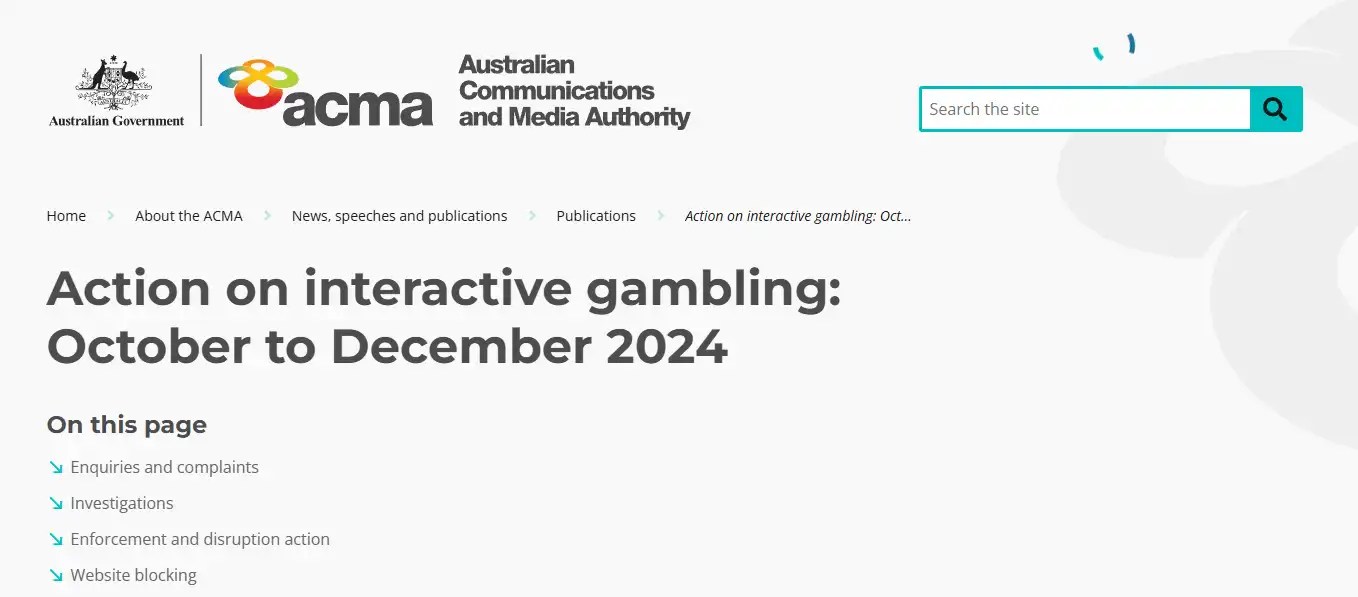
The Australian Communications and Media Authority, commonly known as ACMA, oversees enforcement of the Act. Enforcement is part of the practical context: offshore casino services are actively restricted and the rules are applied. A service’s apparent availability at a particular moment would not, by itself, change the legal status of its offer to Australian residents. Nor does a payment label, including BPAY, determine whether the underlying gambling service may lawfully be supplied.
The Act also carries substantial penalties for violations. Its maximum daily penalty is $360,000 for an individual and $1.8 million for a body corporate. Those figures concern violations of the Act; they should not be presented as a fine imposed on a player merely for using an offshore casino, because the law does not explicitly criminalise that player conduct. Keeping the two points separate avoids turning an operator-facing prohibition into a misleading warning about individual users.
A separate boundary concerns advertising. Real-money interactive gambling services, including online casinos, cannot be advertised to Australian audiences. That restriction is relevant to the way casino services are described and promoted, not merely to the wording of a particular payment claim. A page that presents an offshore casino as a recommended option for Australians would cross from neutral explanation into promotion. The legal position cannot be softened by presenting promotional material as a comparison, a payment guide or a consumer tip.
Australian consumer law does not protect players who use offshore casinos. That leaves a material difference between the legal position of the operator and the practical position of a customer. The fact that a player is not explicitly criminalised for using an offshore service does not supply the protections that would apply to a lawful domestic consumer transaction. Claims about safeguards, dispute remedies or regulatory recourse therefore cannot be inferred from the mere existence of a casino website or a functioning account.
This context also prevents a common category error: a question about how an offshore site handles money is not the same as a question about whether it may offer casino games to Australians. A cashier could display a payment option, but that display would not validate the gambling service under the Interactive Gambling Act. Likewise, a service’s use of Australian currency, an Australian-facing page or a payment method familiar to local consumers would not alter the operator’s legal obligations.
The relevant boundary is therefore clear. Real-money online casino games supplied to people in Australia are prohibited services under the Act; ACMA is the enforcement authority; advertising those services to Australian audiences is also prohibited; and Australian consumer law does not protect customers using offshore casinos. The absence of explicit criminalisation of player use is a narrower point, not a permission for operators to serve the market. Payment terminology cannot change that framework.
A claim that an Australian-facing casino accepts BPAY needs to be specific: it must connect a named operator, the BPAY service and the relevant transaction. A general statement that a site offers bank-linked payments does not establish that BPAY is among them. Nor does a reference to BPAY on a page about payment options prove that it is available for an Australian account or for a particular deposit.
That distinction matters because payment labels can conceal different arrangements. A cashier may show options that depend on a customer’s location, account status or selected currency. A method may also be mentioned in general information without appearing as an available choice when a transaction is attempted. The label alone does not settle which arrangement applies.
At present, no operator can be identified on a substantiated basis as accepting BPAY for Australian casino deposits. That is not proof that no operator has ever displayed the option. It means a named site, a working BPAY option and the conditions attached to it cannot be treated as established simply because the claim appears in a search result or promotional description.
The same standard applies to phrases such as “BPAY casino” or “casino with BPAY”. They may describe a claim, not a confirmed payment facility. A site’s acceptance of cards, PayPal or another bank-linked service would not establish BPAY acceptance either. Similarity in how payments connect to a bank is not evidence that they share a cashier option or transaction process.
The year in a title does not make an old payment claim current. Operators can change their available methods, and a page may remain online after its details have changed. A statement needs a clear date and operator-specific support before it can be relied on as a description of present availability. Without those elements, a list of supposed BPAY casinos would turn uncertainty into a recommendation.
There is also a separate legal boundary. Under the Interactive Gambling Act 2001, operators are prohibited from providing real-money online casino games to people in Australia. The law does not make players criminally liable for using offshore sites, but Australian consumer law does not protect players who use them. A payment claim does not alter either point; it is not evidence that an operator is authorised to provide casino services in Australia.
Accordingly, the defensible answer to whether a particular Australian casino deposit can be made through BPAY is that it cannot be confirmed from a payment claim alone. A named operator’s own, current cashier information would need to identify BPAY as an available option for the relevant Australian account. Even then, that would establish only what the displayed terms say, not the legality of the casino service in Australia.
The distinction is narrow but consequential: a mention is not an available transaction, and an available transaction is not regulatory approval. Until both the payment detail and its scope are clear, BPAY acceptance remains an unverified claim rather than a basis for choosing an offshore casino.
A deposit figure and the cost of making a payment are separate parts of a transaction. A stated amount describes how much is intended to reach an account; it does not, by itself, show whether a fee is added, whether the amount is converted from another currency, or whether the payment can be completed through the named method. Those terms depend on the provider and the transaction conditions.
That distinction matters when a casino deposit is described as being made through BPAY. The label alone does not establish the amount accepted, any charges, or the total debited from the payer’s account. Without clear terms for the specific service, a quoted deposit amount cannot be treated as a complete cost. A neat figure is not a receipt.
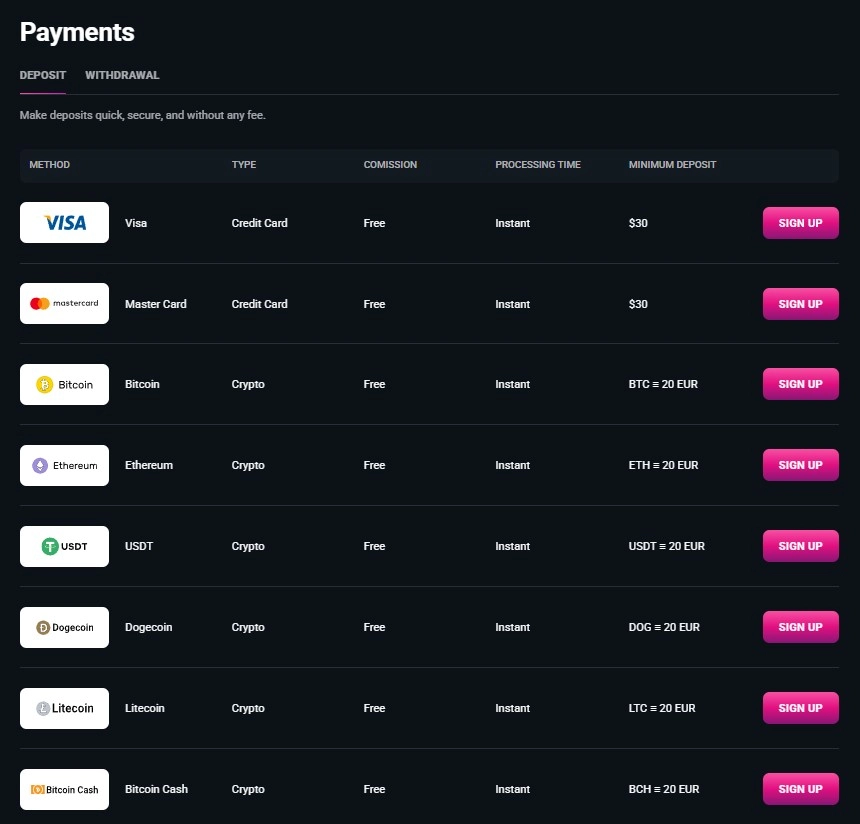
A minimum deposit, if stated by a service, is only one condition. It does not reveal whether a separate payment fee applies, whether the bank imposes a charge, or whether the amount shown is denominated in Australian dollars. Nor does a minimum establish the maximum permitted transaction or confirm that a particular payment route is available.
The same applies to a small figure such as a $10 deposit. The number alone says nothing about the final debit or the terms attached to the transfer. If a transaction includes an added charge, the total paid differs from the amount credited. If an exchange rate is involved, the amount leaving the account may also differ from the displayed deposit. Those are distinct calculations and should not be collapsed into one headline figure.
A sound comparison therefore requires the same basis on both sides: the amount credited, the amount charged, the currency used, and any conditions that alter either figure. Where those details are not visible together, a low entry amount cannot establish that the transaction is inexpensive.
Fees can sit at different points in a payment. A casino may state one price, while a bank or payment provider may apply a separate charge under its own terms. A currency conversion can also affect the final amount even when the casino lists no deposit fee. The relevant question is not merely whether a fee is advertised, but who may charge it and what amount the charge is calculated against.
The distinction is familiar across payment products. Australian consumers are comfortable moving between cards, mobile wallets and bank-linked services such as PayPal. That flexibility describes payment habits, not identical pricing. A fee attached to one method cannot be carried across to another, and acceptance of a service in everyday commerce does not establish the terms of a casino transaction.
For BPAY, a meaningful cost comparison would need a stated deposit amount, any service-side fee, any bank-side fee, the currency, and the amount ultimately debited. A term such as “no fee” also needs a clear scope: it may refer to one party’s charge rather than every cost associated with the payment. Without that distinction, the phrase is too broad to support a reliable total.
Payment terms may also depend on account status, transaction limits, or verification requirements. A displayed amount is not necessarily the amount a particular account can submit. Likewise, a payment option shown in general information does not establish that it will appear for every customer or every transaction. The applicable cashier terms and account conditions determine what is available at the point of payment.
Currency is another material detail. An amount presented in Australian dollars is not equivalent to an amount charged in a different currency, even if the displayed figures look similar. Any conversion rate or associated charge changes the comparison. The only useful total is the amount that will be debited after applicable charges and conversion are accounted for.
The same discipline applies when a service promotes a low deposit threshold. That threshold can be compared only after the payment route, currency and extra costs are identified. Otherwise, the comparison measures the advertised entry point, not the price of completing the transaction.
A BPAY deposit claim is therefore not a complete cost statement. The amount, currency, possible charges and transaction conditions are separate variables. Until each is clear for the particular payment, no single deposit figure can establish the final cost.
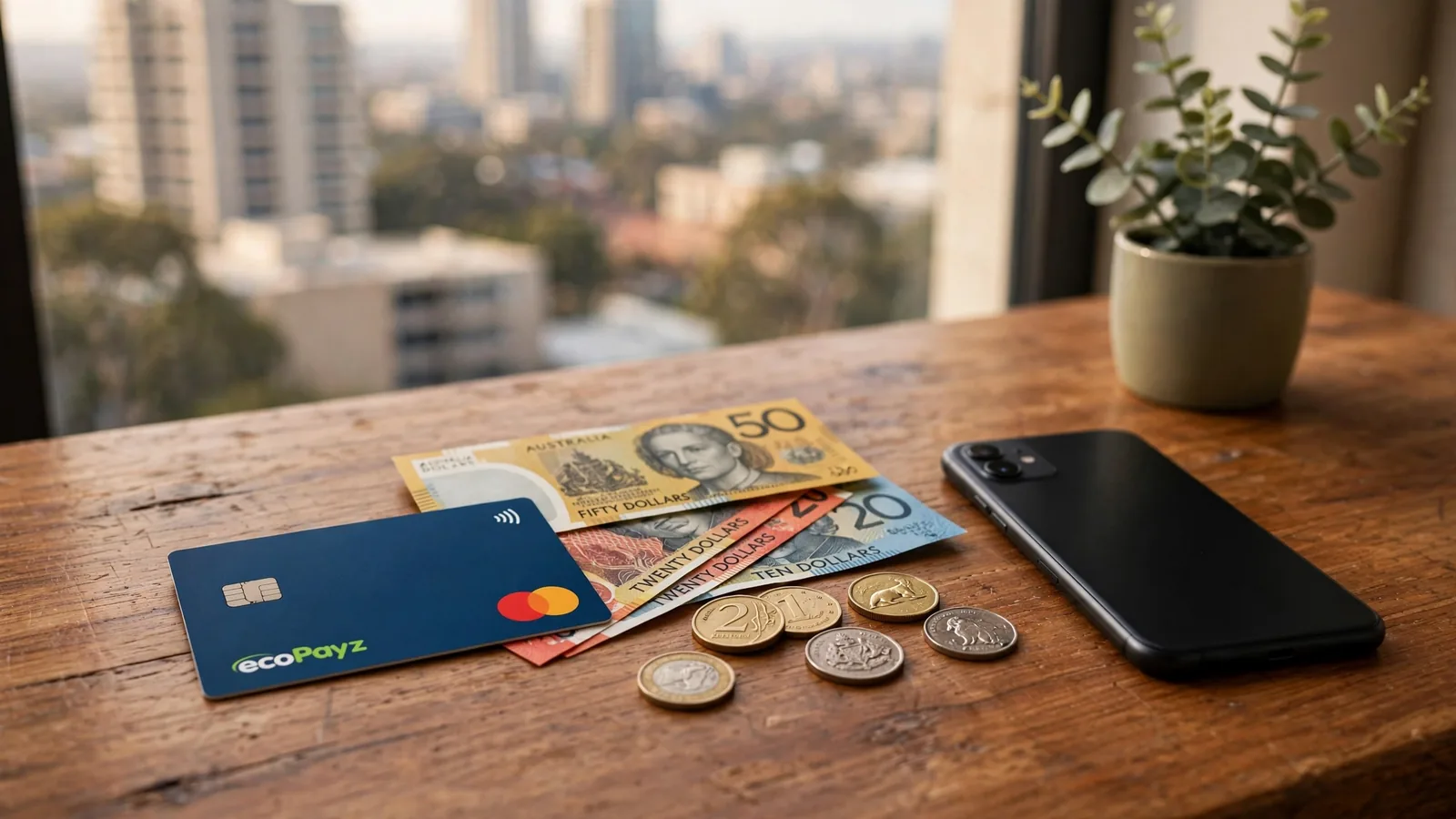
Australian payment habits provide context, but they do not establish which methods a particular service supports. Contactless credit and debit cards are accepted across almost all of Australia, as are mobile wallets such as Google Pay and Apple Pay. People are also accustomed to moving between cards, mobile wallets and bank-linked services such as PayPal.
That familiarity can make different payment options seem interchangeable. They are not. A card transaction, a wallet payment and a service connected to a bank account use distinct arrangements, and broad acceptance of one does not demonstrate acceptance of another. The same distinction applies to BPAY: the fact that Australians commonly use bank-linked payment services does not show that a casino cashier offers BPAY, or that a payment would be accepted there.
For an Australian casino and BPAY, the relevant evidence would need to be specific to the service and its current payment terms. General statements about how Australians pay cannot fill that gap. Nor does the presence of card or wallet options establish that a separate bill-payment route is available. Treating them as equivalent would turn a description of consumer habits into an unsupported claim about a particular cashier.
The practical distinction is between a payment method’s place in everyday Australian commerce and its availability in a particular transaction. Contactless cards and mobile wallets have broad local acceptance; consumers are comfortable switching among these and bank-connected services. Those facts describe the wider payment landscape, not the cashier configuration of an online casino.
This matters because a label such as “bank-linked” can cover services that behave differently at checkout. Familiarity with PayPal, for instance, does not imply that BPAY is offered alongside it. Likewise, widespread use of cards does not establish which card brands or other payment routes a particular service may support. Each option requires its own confirmation; one method’s prevalence cannot be used as a substitute for another method’s stated availability.
The distinction is narrow but financially material: Australian payment preferences describe what consumers encounter broadly, while acceptance is a service-specific condition. Without that separation, general knowledge about cards, wallets and bank-linked services can be mistaken for evidence about BPAY.
A claim that a casino accepts BPAY needs evidence specific to that operator and to the relevant transaction. A page title, promotional banner or general list of payment methods does not establish that BPAY appears in the cashier, applies to Australian accounts or can be used for a particular deposit. Until those details are confirmed, “best” is not a meaningful comparison: the central feature being ranked remains unverified.
The claim should be separated into distinct points. Does the operator name BPAY as an available method? Is the statement current and explicitly applicable to customers in Australia? Does the cashier show BPAY as an option for the account in question? A general reference to bank payments, or an image that does not identify the method, cannot answer all of these. Nor does a claim about one operator establish anything about another.
The same standard applies to phrases such as “BPAY casino bonus” or “bonus with BPAY.” A promotion mentioning a payment method does not, on its own, establish that the method is available, that a deposit qualifies, or that the offer’s conditions apply to a particular account. The bonus and the payment claim are separate assertions; combining them in a headline does not verify either one.
Visa provides a useful contrast, but not proof. A specialist review has described Visa as potentially more broadly accepted at Australian online casinos than American Express. That qualified comparison concerns those card methods; it cannot be extended to BPAY, and it does not establish acceptance at any particular operator. A familiar or widely used payment option is not evidence for a different one.
A defensible comparison would need operator-specific, current material that clearly names BPAY and states the relevant availability. Where claims conflict, the discrepancy should remain unresolved rather than being converted into a ranking. A list assembled from repeated promotional wording can look comprehensive while merely repeating the same unconfirmed assertion.
There is also a legal boundary to any such assessment. Under the Interactive Gambling Act 2001, providing real-money online casino games to people in Australia is illegal for operators. Australian consumer law does not protect people who use offshore casinos. Accordingly, a payment-method comparison cannot be treated as an endorsement or as a recommendation to open an account. The narrow conclusion is that a BPAY label requires specific substantiation; Visa comparisons, bonus wording and broad payment lists do not supply it.
A payment method is more than a name displayed beside a deposit option. A usable route has to connect the payer’s instruction, the receiving account and the operator’s process for recognising the funds. Without those parts, a BPAY label alone cannot establish that a payment can be made to a particular casino account.
The route also has separate stages: initiating a transfer, having it processed by the relevant institutions, and having the recipient record it against the intended account. These are not interchangeable events. A payment instruction being submitted would not, by itself, confirm that funds had reached an operator or become available in an account.
That distinction matters when a service describes itself as accepting BPAY. The claim would need to correspond to an actual payment option available to Australian customers, rather than a general reference to bank payments or an icon on a page. It would also need to make clear which entity receives the funds and how the transaction is identified. Those details determine what the route does; the payment name does not.
A specialist review has noted that bank transfers may carry longer waiting periods and higher fees. That is a broad observation about bank transfers, not a BPAY timetable or fee schedule for any particular operator.
The distinction between a payment route and an operator’s cashier is especially important in Australia. The Interactive Gambling Act 2001 prohibits operators from providing real-money online casino services to people in Australia. Australian consumer law does not protect players using offshore casinos. Payment descriptions do not change either point, nor do they establish that an offshore service is lawful or accessible.
Accordingly, a BPAY reference should be treated as a claim about a proposed route, not proof that the route works end to end. The relevant facts would be the actual cashier option, the recipient and the processing terms—but none can be inferred merely from the payment label.
A game catalogue and a payment method are different parts of a service. A cashier may describe how an account can be funded; it does not establish which games are available, or whether any particular game can be accessed. Conversely, a game name or category says nothing about how a service handles payments. Treating the two as interchangeable turns a payment label into a claim about game access that it cannot support.
That distinction matters for searches combining BPAY with casino games. A reference to BPAY, even if displayed as a payment option, would concern a transaction route—not a catalogue of games. It would not establish that a particular game is offered, that it can be played for real money, or that BPAY can fund access to it. Those are separate propositions and require separate evidence.
There is also a legal boundary in Australia. Under the Interactive Gambling Act 2001, operators must not provide real-money online casino games to people physically in Australia. That prohibition covers casino-style offerings such as poker, blackjack, roulette and pokies. A payment description does not alter the legal status of the service or make the provision of those games lawful.
The distinction is practical as well as legal. A list of payment options is not a game list, and a game category is not proof of a working deposit route. The phrase “BPAY casino games” can suggest a single combined product, but it joins two questions that need independent answers: what service is being provided, and how it proposes to process funds. Neither answer can be inferred from the other.
Australian consumer law does not protect players who use offshore casinos. That leaves the payment label with no power to establish either lawful local availability or consumer protection. A BPAY reference cannot convert prohibited real-money casino access into a permitted service, nor can the presence of familiar game names demonstrate that a payment method is accepted.
The useful distinction is therefore narrow: payment information concerns funding; game information concerns the service itself. Neither should be treated as evidence for the other, and neither removes the Australian restriction on operators providing real-money online casino games.
A payment option for adding funds does not, by itself, determine how winnings can be paid out. Deposits and withdrawals are separate transactions, and an operator may set different conditions for each. A BPAY deposit claim therefore cannot establish that BPAY is available for withdrawals, that a payout can be sent to the same account, or that a particular customer is eligible to receive one.
Payout eligibility may also depend on account checks. Online casinos typically require customers to complete a Know Your Customer assessment before financial transactions. That assessment is distinct from the payment method: completing it does not establish which withdrawal routes are offered or whether a BPAY payout is possible.
The distinction matters when interpreting phrases such as “withdrawal by BPAY.” A clear claim would need to specify that BPAY is supported for withdrawals, not merely appear among deposit options. It would also need to set out the applicable eligibility conditions and any payout timing. Without those terms, a deposit method says nothing conclusive about the return route.
This separation applies to requests about online casino BPAY withdrawals and pokies as well. The game category does not determine the payment rules, and a deposit reference does not establish a withdrawal facility. The relevant conditions are the operator’s payout terms, not an assumption that money can travel back by the same route it arrived.
There is a separate legal boundary in Australia. The Interactive Gambling Act 2001 prohibits operators from providing real-money online casino games to people physically in Australia. Australian consumer law does not protect players who use offshore casinos. A payment label cannot alter either point or make an offshore service lawful for Australian customers.
A payment method described as instant for a deposit does not, by itself, establish how quickly a withdrawal will arrive. The two directions of payment are separate conditions. A claim about money entering an account cannot be used as a timetable for money leaving it, and the word “instant” is not a substitute for a stated withdrawal term.
That distinction matters when assessing claims about BPAY. No timing conclusion follows merely from a reference to BPAY as a deposit option. Without terms that specifically describe withdrawals through BPAY, there is no basis for calling a BPAY withdrawal instant, assigning it a processing window or comparing it with another method. A deposit claim and a withdrawal claim are not interchangeable entries in a cashier.
The same caution applies to phrases such as “instant withdrawal.” They need to identify what is instant: the operator’s handling of a request, the movement of funds through a payment network, or the point at which funds become available to the account holder. Those are not necessarily the same event. If the wording does not define the endpoint, it does not provide a usable arrival time. For BPAY, an unqualified speed claim leaves the timing question unresolved rather than answered.
Cryptocurrencies provide a separate, specifically stated comparison. Bitcoin and Ethereum can offer instant deposits and withdrawals with limited or no fees. That description concerns those payment types; it is not evidence about BPAY, nor does it establish that a particular gambling service makes either cryptocurrency available. The comparison is useful only at the level of the stated payment characteristic. It cannot be transferred from one method to another by analogy.
The cost wording also needs to stay attached to the method it describes. “Limited or no fees” does not mean that every transaction has no cost, and it says nothing about BPAY charges. Likewise, an instant transaction description does not establish what conditions apply to a specific account or service. A timing claim without a corresponding payment method and withdrawal condition has little financial value.
For any money decision, the relevant figure is the amount and timing actually available under the applicable terms—not a headline attached to a deposit. Where a service does not state a withdrawal timetable for BPAY, a precise estimate would be speculation. Repeating “instant” does not make the missing condition more precise; it merely makes the uncertainty sound more confident.
This is also a legal and consumer-protection issue, not just a processing question. Australian law prohibits operators from providing real-money online casino services to people in Australia, and Australian consumer law does not protect players who use offshore casinos. A fast-payment claim does not change either point or create a guarantee that funds can be recovered. The apparent speed of a payment route should therefore not be treated as a measure of the security or legal status of the service.
A sound reading of payment language keeps each claim in its lane: deposit speed applies to deposits; withdrawal speed requires a withdrawal-specific statement; a fact about cryptocurrency does not establish BPAY performance. If the stated terms do not supply a BPAY withdrawal time, there is no defensible basis for describing that route as instant.
A payment option and a game are separate features. Seeing BPAY mentioned in connection with a service would not, by itself, establish that the service offers online slot games; a game listing would not establish that BPAY can be used to pay. Neither claim follows from the other.
There is also a legal boundary that a payment label cannot alter. Under the Interactive Gambling Act 2001, operators must not provide real-money online casino games, including slots, to people physically located in Australia. The Australian Communications and Media Authority enforces the Act. Whether a cashier displays a particular payment method does not change that prohibition.
Offshore availability does not remove the practical risks. Australian consumer law does not protect players who use offshore casinos, and a payment reference is not evidence that an operator is lawful or that a transaction is protected.
The distinction is straightforward: BPAY acceptance concerns a payment arrangement; online game access concerns the service being offered. Treating one as proof of the other turns two unverified claims into one, without making either more reliable. The legal status of real-money online casino games for people in Australia remains the same regardless of the payment method named alongside them.
Accordingly, a claim linking BPAY with online slots should not be read as confirmation that such games are available to Australians or that BPAY can be used for them. Payment wording cannot establish lawful access, operator compliance, or consumer protection.
Jackpot City Casino, Spin Palace, Ruby Fortune, Ignition Casino, Joe Fortune and PlayAmo are listed as supporting Amex deposits. This is not a recommendation: Australian law prohibits operators from offering online casino games to Australian residents.
Check the site’s cashier for American Express as a deposit option; availability can vary by casino and account. Australian law prohibits operators from offering online casino games to Australian residents.
Amex deposits typically have no fee, but a casino may add a 1.5% surcharge, and currency conversion can cost 3%. Withdrawal fees may also apply.
Amex may block payments to particular websites, and Australian banks may also block gambling-related transactions on Amex cards. Acceptance therefore varies between sites and card issuers.
Yes, an Amex gift card can be used for deposits at casinos that accept American Express, but not for withdrawals.
Yes, Amex casino deposits are processed instantly. Withdrawals to Amex can take up to five days to clear.
Yes, some Australian-facing online casinos accept Amex deposits, but not all do, and withdrawals to Amex may not be available. Australian law prohibits operators from offering online casino games to Australian residents.
Prepared by the SpinsUP Casino editorial staff.