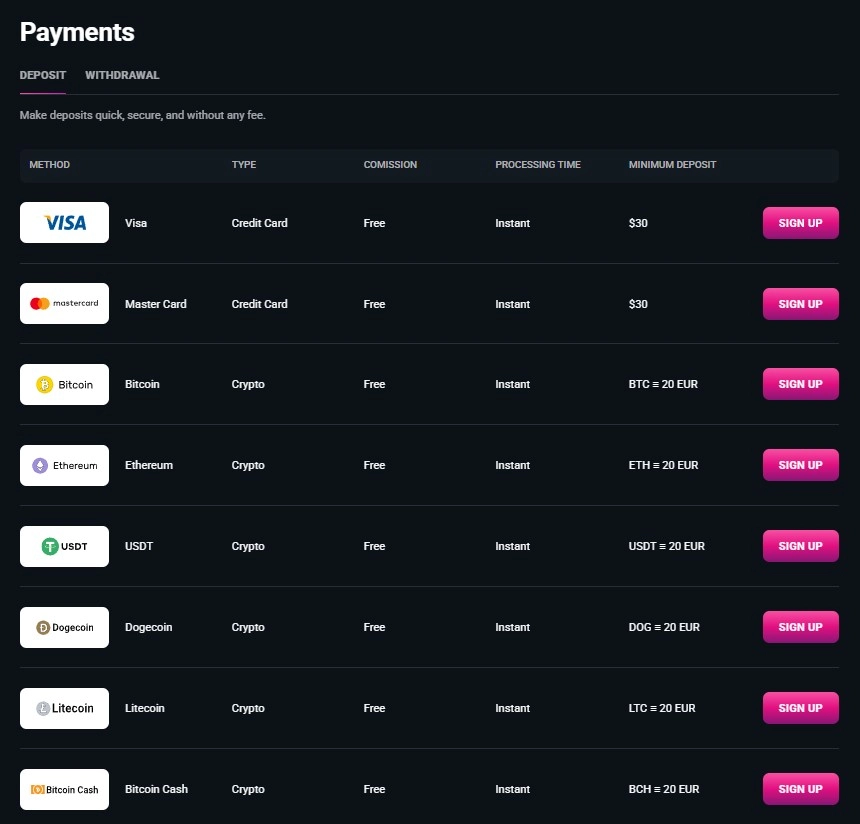
Trustly acceptance, deposit terms and withdrawals do not establish that specific pokies are available.

Trustly and Australian online pokies are often treated as if they were one product: a payment service attached to a particular set of games. They are separate questions. Trustly is a payment method; pokies are casino-style games. A search result, a payment logo, or a game label cannot by itself establish that an Australian-facing service accepts Trustly or that a particular game is available through it.
The distinction matters because a game does not carry its own payment terms. Even where a casino-style service displays pokies, that does not show which payment methods it accepts. Nor does the appearance of Trustly in general payment information establish that it can be used for a particular service in Australia. The two details need to be confirmed together before they amount to a usable claim.
The same applies to mobile access. A page that works on a phone may still have different payment options, account conditions, or access restrictions from those suggested by a general description. “Mobile casino” describes how a service is accessed, not whether Trustly is supported or whether pokies can lawfully be supplied to someone in Australia. Device compatibility cannot close either gap.
“Best” adds another layer that cannot be measured from the payment label alone. A meaningful comparison would need confirmed acceptance, clearly stated terms, and a defined basis for comparing the games or services. Without those, a ranking of Australian pokies linked to Trustly would give a precise appearance to an unverified pairing. A list of names would not fix that problem; it would simply make the claim more specific.
There is also a legal boundary that changes how these searches should be read. Under the Interactive Gambling Act 2001, operators cannot provide real-money online casino games, including pokies, to people physically located in Australia. The Australian Communications and Media Authority enforces the Act. This is a restriction on the service provided by operators; it does not mean that a player’s use of an offshore site is explicitly criminalised under that law. However, Australian consumer law does not protect players using offshore casinos. Payment access, where claimed, is not a substitute for those protections.
That distinction prevents a common category error. A payment method can be discussed without establishing that the underlying gambling service is lawful or available in Australia. Equally, a casino-style game being described as accessible online does not establish that Australian residents may be offered it for real money. A payment label cannot change the legal status of the activity it would fund.
Searches for Australian pokies and Trustly therefore combine terms that need independent verification. The country reference may describe the intended audience, the location of the operator, or simply the person making the search; those are not interchangeable. The word “Australian” alone does not establish that a service is based in Australia, authorised to provide casino games there, or covered by Australian consumer protections. A claim about Trustly support needs to be read as a claim about a particular service and its actual terms, not as a general attribute of Australian pokies.
The same caution applies when a service is described as new. “New” is a time-sensitive label, not proof of payment support, game availability, or legal status. A newly presented casino-style product remains subject to the same separation between its payment arrangements and the games it offers. A date or launch description cannot supply the missing link between those elements.
For a factual description, the useful unit is not “Trustly pokies” as a combined category. It is a specific, current statement about a particular payment method and a particular service, considered alongside the law governing real-money casino games in Australia. Without that level of specificity, there is no sound basis to identify a confirmed Australian Trustly pokies option or to rank one as the best. The wording may be compact; the conditions behind it are not.
A $10 deposit is not a complete description of a payment term. It identifies an amount, but says nothing by itself about whether that amount is permitted, which payment method applies, or what conditions govern the transaction. For a Trustly deposit, the amount and the payment route would need to be treated as separate parts of the calculation rather than as one promise.
The first figure to distinguish is the minimum deposit shown for a particular method in the cashier. A site-wide minimum, if displayed, would not necessarily establish the threshold for every payment option. Nor does the presence of a Trustly label establish that a $10 transaction can be made. The relevant amount is the one attached to that method and available transaction at the time of payment.
That distinction matters because the advertised amount and the amount debited are not always identical concepts. A deposit may be expressed in Australian dollars, while a payment service or account could involve another currency. The cashier’s displayed currency and the final transaction record would determine what amount is being processed. Without those details, a $10 figure cannot be treated as a guaranteed final cost.
Fees are another separate term. A payment can have a stated deposit amount and still carry a fee, or it can be processed without one; the method name alone does not settle the issue. Any charge needs to be checked against the applicable payment terms before a transaction is submitted. The same applies to conversion costs: a displayed Australian-dollar amount does not, on its own, explain how a different account currency would be handled.
The cashier is the practical place where a payment option, its permitted amount and the transaction currency are presented together. Those details should be read as a single set of terms. If the cashier shows a minimum that differs from the amount being considered, the smaller figure cannot be assumed to override it. If a method is unavailable in the cashier, a page elsewhere describing that method does not complete the transaction conditions.
A further condition can arise before money moves: online casinos commonly conduct identity checks before allowing financial transactions. That assessment is separate from the deposit amount. A payment method being visible, or an amount appearing to fit a stated minimum, does not establish that the account has cleared any required checks.
For an amount-led comparison, the useful record is therefore not simply “$10 accepted.” It is the payment method shown in the cashier, the minimum and maximum displayed for that method, the transaction currency, any stated fee, and the amount ultimately debited. Those terms belong together because changing one can change the effective cost. A low minimum is not the same as a low-cost transaction, and neither establishes that a particular method is available.
The wording “best casino sites that accept Trustly deposits” also compresses several distinct issues into one claim: whether a service is legally available, whether the cashier offers Trustly, and whether the deposit conditions suit a particular amount. A deposit threshold cannot answer those questions by itself. Nor can an amount-based comparison establish the quality or legality of an operator.
In Australia, the Interactive Gambling Act 2001 prohibits operators from providing real-money online casino games to people in the country. Australian consumer law does not protect players who use offshore casinos. Those limits matter before any deposit calculation: a payment term does not make an otherwise prohibited service lawful or confer consumer protections that do not apply.
The useful interpretation of the $10 question is narrow. It asks whether a specified amount fits the terms attached to a specified payment route, in the currency and account conditions actually shown. It does not establish a universal Trustly minimum, confirm a casino’s acceptance of Trustly, or determine the final amount charged. A deposit figure is only one line in the transaction; the cashier’s full terms determine what that line means.
A claim of an instant Trustly withdrawal needs a defined starting point and finish point. It could refer to the time between requesting a payout and an operator authorising it, or to the time until funds appear in an account. Those are not interchangeable measures. Without a stated scope, “instant” is a label, not a usable estimate.
A search for a fast payout therefore cannot be turned into a reliable promise about when money would arrive. Nor does an instant-deposit claim, if one appears elsewhere, establish anything about withdrawals: sending funds and receiving them are separate transactions, with separate terms.
The distinction matters in searches for real-money pokies and casinos. A result using “instant withdrawal” may sound like a statement about the whole payout, but the wording alone does not identify what is timed, which conditions apply, or whether the claim concerns Trustly at all. There is no basis to treat a search-result phrase as proof of a completed, immediate transfer. A precise claim would need to specify the relevant stage and the conditions attached to it.
A meaningful time estimate would distinguish between the point when a withdrawal is requested and the point when the funds are available to the recipient. It would also state whether the estimate depends on account checks or other operator conditions. Online casinos commonly require identity and customer checks before allowing financial transactions; until that assessment is complete, a payout-time figure may not describe the experience of every account.
Those distinctions are not minor wording. If an estimate begins only after an operator has approved a request, it does not measure the full period from the initial instruction. If it ends before funds are accessible, it does not describe receipt. The final amount is not the only relevant figure in a financial decision; the time boundary behind the claim matters too.
It would be misleading to attach a duration, even a broad one, or to call a withdrawal immediate. The same applies to claims about “no deposit” offers: an offer label does not establish that a withdrawal is available, eligible, or fast. Bonus wording and payout timing are different conditions.
“Instant” is often used as a broad description rather than a clearly bounded service standard. It does not, by itself, reveal whether a request is accepted immediately, whether a payment is processed immediately, or when the recipient can use the funds. A casino’s wording would need to resolve those points before it could support a practical expectation.
This is particularly important when comparing real-money payout claims. One service may describe the initiation of a transaction; another may describe the time to final receipt. Without comparable start and end points, the descriptions cannot be ranked on speed. The word alone cannot fill in missing terms.
The same caution applies to searches for instant Trustly pokies in Australia. Such wording combines a game category, a payment name, and a timing expectation, but it does not prove that any particular service offers those games or supports that payment route. It also does not establish a withdrawal timeframe. Search phrasing is not a transaction policy.
Australian consumer law does not protect people using offshore casinos. That makes careful reading of payout terms more than a matter of convenience: an unclear timing claim may leave no dependable remedy under Australian consumer protections. A stated time should identify what event starts the clock, what counts as completion, and which account conditions must first be met.
Until those elements are clear, “instant” should not be treated as a forecast of when a withdrawal will reach a player. For Trustly, no specific timing claim can be substantiated. A fast-sounding label supplies no deadline, and no deadline means no reliable cash-flow calculation.
The legal issue behind searches for Australian casino sites accepting Trustly comes before the payment method. Under the Interactive Gambling Act 2001, operators must not provide real-money online casino games to people located in Australia. A payment option does not alter that rule: Trustly acceptance, if claimed by an offshore service, would not make the service lawful to offer to Australians.
The restriction applies to the operator’s conduct. It does not explicitly make an individual player’s use of an offshore casino a criminal offence. That distinction matters, but it is not a statement that offshore play is protected or risk-free. Australian consumer law does not protect people who use offshore casinos. If a dispute arises over funds or account access, the usual local consumer protections cannot be assumed to apply.
The Australian Communications and Media Authority, known as ACMA, administers enforcement of the Act. Its role is to enforce the prohibition on online casino services offered to people in Australia. Offshore location does not, by itself, remove an operator from the scope of the rule when the service is directed at people physically located in the country.
This leaves two separate questions that are often blurred together: whether a website says it accepts Trustly, and whether its provision of real-money casino games to Australians complies with Australian law. A cashier page or payment logo can address the first question only as a statement about the operator’s payment arrangements. It cannot establish that offering the gambling service is permitted.
Nor does a foreign licence resolve the Australian legal position. The relevant rule is tied to the customer’s location and the operator’s provision of the service, not simply to the jurisdiction named on an offshore licence. An offshore operator’s terms, branding or payment options do not replace the requirements of the Interactive Gambling Act.
The practical consequence is that a list of casinos said to accept Trustly would not answer the central legal question. Naming operators or directing Australians to their services would risk turning an information page into promotion of prohibited online gambling. For the same reason, a payment method should not be presented as a workaround or as evidence that an offshore casino is suitable for Australian use.
The wording of a payment claim also deserves a narrow reading. “Accepts Trustly” may refer to a deposit option, a withdrawal option, or an operator’s general payment description; it does not say anything about the legality of the casino service in Australia. The payment claim and the legal status of the underlying service are different matters, and one cannot be used to infer the other.
Accordingly, Australian law does not provide a basis for recommending an offshore casino on the strength of Trustly availability. The operator’s prohibition, ACMA’s enforcement role and the absence of Australian consumer-law protection for offshore casino users are the material conditions. A payment route changes none of them.
Choosing a casino site that accepts Trustly in Australia calls for checking what is actually known about each operator before deciding where to play. This list offers a concise reference to the available licensing, deposit, and payout details.
Bizzo Casino
Bizzo Casino is licensed by the Curacao Gaming Control Board, with TechSolutions Group N.V. named as the operator.
Vegaz Casino
Vegaz Casino holds Curacao license OGL/2024/1335/0780. Its minimum deposit is EUR 20.
Neospin
Neospin is licensed by the Curacao Gaming Control Board under OGL/2023/176/0095, with Hollycorn N.V. named in the license details.
Ricky Casino
Ricky Casino lists crypto payouts in under an hour and PayID payouts in 1–3 business days. The minimum deposit is A$20, or A$30 to qualify for the bonus.
7Bit Casino
7Bit Casino is licensed in Curacao and operated by Dama N.V.
Kingmaker
Kingmaker lists crypto payouts at around 90 minutes and fiat payouts in 1–5 days. Its minimum deposit is A$30.
WinSpirit Casino
WinSpirit Casino holds Curacao eGaming license OGL/2024/923/0383, with Antillephone N.V. named in the license details. Its minimum deposit is A$30.
Playfina Casino
Playfina Casino has been associated with Hollycorn N.V. since 2017 and is licensed by Curacao eGaming. Its minimum deposit is A$20–30, depending on the offer.
Golden Pokies
Golden Pokies is listed as holding a Curacao license; no further operator details are provided.
DragonSlots Casino
DragonSlots Casino is licensed by the Curacao Gaming Authority, with Jumpman Gaming Ltd named in the license details.
A “best” label needs a defined basis for comparison. For a casino payment method, that would mean confirmed acceptance and terms that can be compared across operators. Without those, a ranking of Trustly casinos in Australia would imply a distinction that has not been established.
A casino’s overall reputation would not fill that gap. It cannot show that Trustly is available in its cashier, or that its conditions are better than another operator’s. Nor does a list of casino names become a Trustly list merely because the payment method appears in the page title. The label has to describe a verified feature, not a hoped-for one.
Bonuses create a separate comparison problem. A casino bonus associated with Trustly would need clear terms showing eligibility, the payment method’s role, and any conditions attached to the offer. Without those details, calling an offer a Trustly bonus says little about its value. A headline can be generous; the terms do the accounting.
The same distinction applies to games. A casino game and a payment option are different parts of a service. A search for the best games at a Trustly casino cannot establish which games, if any, are connected to that payment method. Game quality, availability and payment acceptance would each require their own evidence. Combining them in one ranking would blur the basis of comparison rather than clarify it.
A useful comparison would therefore need operator-specific information that can be checked on the operator’s own terms: whether Trustly is listed for the relevant account, which transaction types it supports, and what conditions apply. Those details would need to be current, because cashier options and payment rules can change. Until they are established, ranking casino websites by Trustly support—or calling one the best Trustly casino site—would be a claim without a measurable foundation.
This is a narrow limit, not a judgement about every other feature of a casino. It does not establish whether an operator offers particular games, bonuses, or alternative payment methods. It means only that those features cannot be used as substitutes for confirmed Trustly terms.
The phrase “best Trustly casino” can describe a comparison only when the comparison has a verified subject and consistent criteria. Without both, “best” is packaging, not a result. A list, award, or bonus label does not change that calculation.
A payment method and a game catalogue are separate parts of an online service. A reference to Trustly alongside casino games does not, by itself, establish that Trustly can fund play, or that any particular games are accessible through it. Payment access concerns how a transaction is handled; game availability concerns what an operator offers and whether it may offer it to a customer in Australia.
That distinction matters because payment wording can make a service sound more definite than its terms. A cashier may identify a payment method, but that alone does not establish whether it is available for a particular account, whether a transaction would be accepted, or whether the account could access games. Those are separate conditions, not interchangeable descriptions.
The reverse is also true: a game listing does not establish that Trustly is an available payment route. A named title, category or table game says nothing about how an account may be funded. Combining a payment label and a game reference in a search result or advertisement does not resolve either question.
For Australian audiences, there is a further legal boundary. The Interactive Gambling Act 2001 prohibits operators from providing real-money online casino games to people physically located in Australia. This includes casino-style games such as poker, blackjack, roulette and slots. Describing a payment method alongside those games cannot change the legal status of the service.
Australian consumer law does not protect players who use offshore casinos. That is a material cost of relying on an offshore service: the payment route, if presented, does not supply consumer protections or make the underlying offer lawful in Australia. A payment method is not a licence, a safeguard, or evidence that an operator may provide real-money casino games to Australian residents.
The practical distinction is therefore narrow but important. Trustly relates to payment; games relate to the content and service being offered. Neither label should be treated as proof of the other, and the presence of payment language does not make casino play available or lawful in Australia.
A casino’s acceptance of a payment service and its legal ability to offer online casino games in Australia are separate matters. Trustly appearing in payment information would not make an online casino service lawful for people physically located in Australia.
Under the Interactive Gambling Act 2001, operators must not provide real-money online casino games to people in Australia. The restriction covers casino-style services such as poker, slots and table games. The Australian Communications and Media Authority enforces the Act. The law does not explicitly criminalise players for using offshore casino sites, but that does not create a locally authorised market for those services.
This distinction matters when assessing claims about an Australian casino using Trustly. A payment logo or cashier entry, by itself, says nothing about whether the operator may legally provide casino games to Australian residents, whether a transaction would be accepted, or what protections apply if a dispute arises. Payment access is not a substitute for legal status.
Australian consumer law does not protect players who use offshore casinos. That leaves a material difference between seeing a payment option and having enforceable consumer protections for the underlying gambling service. The availability of familiar ways to pay in Australia does not close that gap.
Accordingly, “Trustly casino Australia” is not a reliable category for judging the status of an online casino. The relevant questions are not simply whether Trustly is named or whether a cashier displays it. The legal setting concerns the operator’s provision of real-money casino games to people in Australia; the payment method does not alter that setting.
No operator names or acceptance claims can establish a lawful Australian casino market. Treating a Trustly payment option as proof of local authorisation would confuse a transaction feature with permission to provide the service. In financial terms, those are separate entries, and one cannot be used to balance the other.
A payment option for adding funds does not, by itself, establish that the same method can be used to receive a payout. Deposit and withdrawal permissions are separate terms. A casino cashier could display a method for incoming transactions while its withdrawal rules specify another route, impose eligibility conditions, or exclude that method altogether.
That distinction matters when assessing claims about a Trustly withdrawal at an online casino. A reference to Trustly for deposits is not evidence of Trustly payout support. Nor does a general statement that an operator accepts Trustly settle whether the method is available for withdrawals by Australian customers. The relevant terms need to identify the transaction direction and the applicable customer group.
Withdrawal conditions can also depend on account status and the operator’s payment rules. Online casinos typically require a Know Your Customer assessment before financial transactions. That requirement is separate from payment-method availability: completing verification does not, by itself, establish that Trustly is an eligible withdrawal route.
The practical comparison is therefore between the casino’s stated deposit methods and its stated withdrawal methods, not between a brand name and an assumed two-way service. A cashier entry should be read alongside the withdrawal policy, including any conditions attached to the method. If the policy names Trustly only for deposits, its appearance elsewhere does not fill the gap.
For Australian residents, the legal setting is material. The Interactive Gambling Act 2001 prohibits operators from providing real-money online casino games to people in Australia, and the Australian Communications and Media Authority enforces that law. Australian consumer law does not protect players using offshore casinos. Payment availability should not be mistaken for approval of an operator or a guarantee that a payout can be obtained.
A clear Trustly withdrawal claim would need to specify that the method is available for withdrawals, identify any relevant eligibility conditions, and apply to the customer’s jurisdiction. Without those terms, “Trustly accepted” describes too little to determine the route by which winnings could be paid. Depositing and withdrawing are different transaction permissions; treating them as interchangeable is not a sound basis for calculating access to funds.
A payment method is useful only when its terms are clear at the point of payment. The name Trustly, appearing in a general description or search result, does not establish that a particular service accepts it, that Australian customers are eligible, or that a transaction can be completed. Those are separate conditions, not details that can be inferred from the brand alone.
A meaningful payment assessment would need to identify the operator, the customer eligibility rules, the transaction type supported, and the fees or other conditions that apply. Deposit access and withdrawal access are distinct: support for one does not demonstrate support for the other. Nor does a payment option’s presence establish its availability for every account or transaction. Without confirmed terms, there is no sound basis for describing a Trustly payment as available, successful, or cost-free.
Payment details also sit alongside account checks. Online casinos typically require customers to complete a Know Your Customer assessment before financial transactions. That requirement is separate from the choice of payment method; completing an account check does not itself establish that a particular method is supported.
The Australian legal position is more decisive than the payment label. Under the Interactive Gambling Act 2001, operators may not provide real-money online casino games to people physically located in Australia. The law covers casino-style services, including poker, slots and table games, and the Australian Communications and Media Authority enforces it. Australian consumer law does not protect players who use offshore casinos. A Trustly option therefore cannot make an otherwise prohibited service lawful or provide the protections associated with a domestic consumer transaction.
The practical distinction is between a payment brand being mentioned and a complete, applicable set of terms. For a transaction to be assessed, acceptance, eligibility, fees, account requirements and the permitted service would all need to align. A vague reference to paying through Trustly answers none of those points. Treating it as confirmation would leave the central financial conditions unmeasured—and the legal status unchanged.
A payment method and a game are separate parts of an online service. Trustly, where offered, would concern how money moves between a customer and an operator; it would not identify which games are accessible. A title’s appearance in a game catalogue would not establish that Trustly could be used to fund play, either.
That distinction matters for searches about online slots associated with Trustly. The phrase can describe a hoped-for combination, but it does not tell whether an operator accepts that payment method, whether a particular game is available, or whether the service may lawfully be offered in Australia. Those are separate questions, and none can be answered by a game title alone.
For Australian residents, the legal boundary is decisive. The Interactive Gambling Act 2001 prohibits operators from providing real-money online casino games, including slots, to people physically located in Australia. Calling a game a “Trustly slot” does not change the nature of the service or create an exception. Australian consumer law also does not protect players using offshore casinos.
Payment access should therefore not be treated as a proxy for game access. Even where a site presents a cashier and a catalogue as adjoining parts of one account, a payment option does not certify the games, and a game listing does not confirm a payment route. Each label describes a different condition.
The practical reading is narrow: Trustly is a payment-method term, while slots refers to casino games. Combining the two does not establish an available or lawful service for Australian play. No slot names can responsibly be attached to Trustly on that basis.
Amex deposit and withdrawal limits are set by each casino and can vary. Check the limits for American Express in the casino’s cashier before making a transaction.
Jackpot City Casino, Spin Palace, Ruby Fortune, Ignition Casino, Joe Fortune, and PlayAmo are listed as accepting Amex deposits for Australian players.
Yes, some Australian online casinos accept Amex deposits, though Australian banks may block gambling transactions and not every casino accepts the card.
Amex deposits are typically free, but a casino may add a 1.5% surcharge, and card currency conversion can incur a 3% fee. Withdrawal fees may also apply.
Amex casino deposits are processed instantly. Withdrawals can take up to five days to clear.
Deposits typically have no fee, but some casinos may charge a 1.5% surcharge or a withdrawal fee. Amex currency conversion carries a 3% fee.
Prepared by the SpinsUP Casino editorial staff.