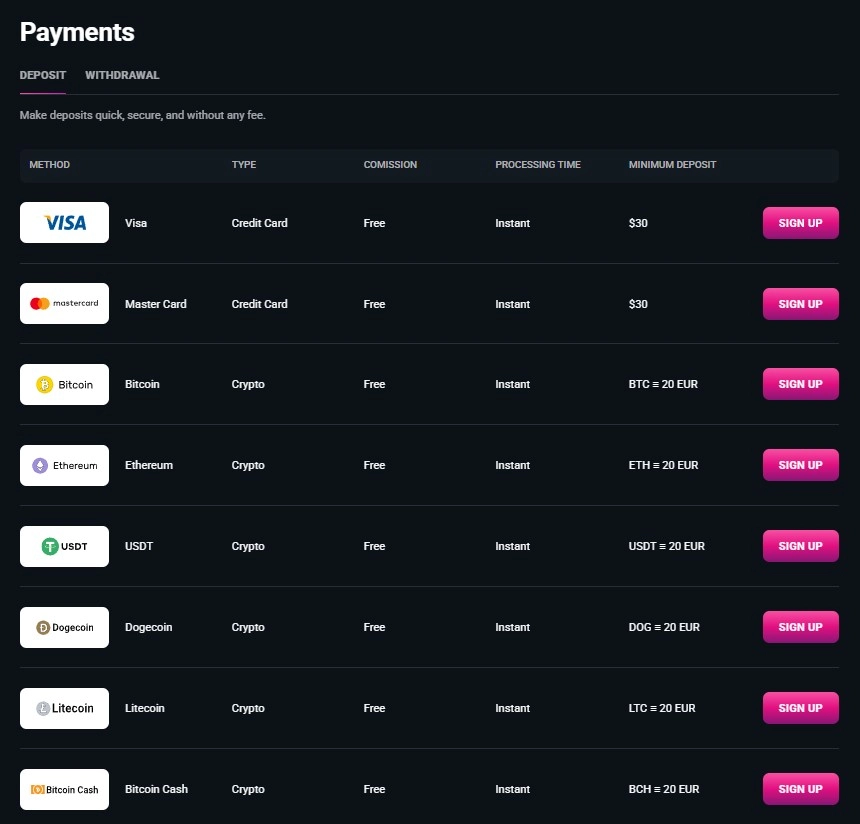
A casino’s stated minimum may not match the amount accepted by a payment service, and bonus and withdrawal terms also shape the real cost.

“No minimum deposit” can describe an operator’s own cashier rule: the operator sets no minimum amount that must be transferred before an account can be funded. It does not mean every payment route will accept any amount. A bank, wallet or other payment service can set its own transaction floor, and that condition still applies when the operator’s stated minimum is zero.
The practical threshold is therefore determined by the full payment chain, not by a headline alone. A cashier may show no operator-set deposit floor, while the selected method refuses a smaller transfer. In that situation, the account is not meaningfully deposit-free: the method’s minimum controls the amount that can actually be sent. The distinction matters whenever an online casino describes itself as having no minimum deposit, because the label may refer only to one part of the transaction.
A specialist review of Australian payment terms places the commonly encountered effective minimum for a usable deposit in the A$10–A$20 range. That is a reported range, not a rule applying to every operator or payment method. A particular cashier may differ, and terms can change. The useful comparison is between the operator’s stated minimum and the minimum shown for the payment method at the point of deposit.
A “no minimum deposit” label can hide important differences in actual deposit terms. Use these operator notes as a starting point, and check the current cashier requirements before signing up.
Bizzo Casino
Bizzo Casino is listed with a Curacao Gaming Control Board licence held by TechSolutions Group N.V.
Vegaz Casino
Vegaz Casino lists a minimum deposit of EUR 20 and a Curacao licence, OGL/2024/1335/0780.
Neospin
Neospin is listed with a Curacao Gaming Control Board licence, OGL/2023/176/0095, held by Hollycorn N.V.
Ricky Casino
Ricky Casino lists a minimum deposit of A$20, or A$30 to qualify for the bonus. Its stated payout times are under an hour for crypto and 1–3 business days for PayID.
7Bit Casino
7Bit Casino is listed as operating under a Curacao licence, with Dama N.V. as its operator.
Kingmaker
Kingmaker lists a minimum deposit of A$30. Its stated payout times are about 90 minutes for crypto and 1–5 days for fiat.
WinSpirit Casino
WinSpirit Casino lists a minimum deposit of A$30 and a Curacao eGaming licence, OGL/2024/923/0383, held by Antillephone N.V.
Playfina Casino
Playfina Casino lists a minimum deposit of A$20–30, depending on the offer. It is listed as operating under a Curacao eGaming licence held by Hollycorn N.V. since 2017.
Golden Pokies
Golden Pokies is listed with a Curacao licence.
DragonSlots Casino
DragonSlots Casino is listed with a Curacao Gaming Authority licence, with Jumpman Gaming Ltd as the named operator.
This also separates a nominal claim from a workable one. An online casino with no minimum deposit may have no internal floor, yet the payment route can make a small transfer impossible. Conversely, a method with a low floor does not establish that every operator accepts it. Both conditions need to align before the advertised wording describes an available transaction.
The phrase also says nothing by itself about whether an online casino is lawful to provide in Australia. The Interactive Gambling Act 2001 is the main federal law governing online gambling. It makes it unlawful for operators to provide certain real-money online gambling services to people in Australia. The law does not make an individual’s act of placing a bet with an offshore operator a criminal offence, but that does not turn the service into a locally authorised one.
Most casinos using “Australia” in their branding operate with licences issued offshore, with Curaçao, Malta and the Isle of Man among the jurisdictions commonly associated with those licences. An offshore licence is not an Australian online-casino licence. The legal position is material to the meaning of “available”: a payment page or an Australian-facing brand does not establish that the service may lawfully be supplied to people in Australia.
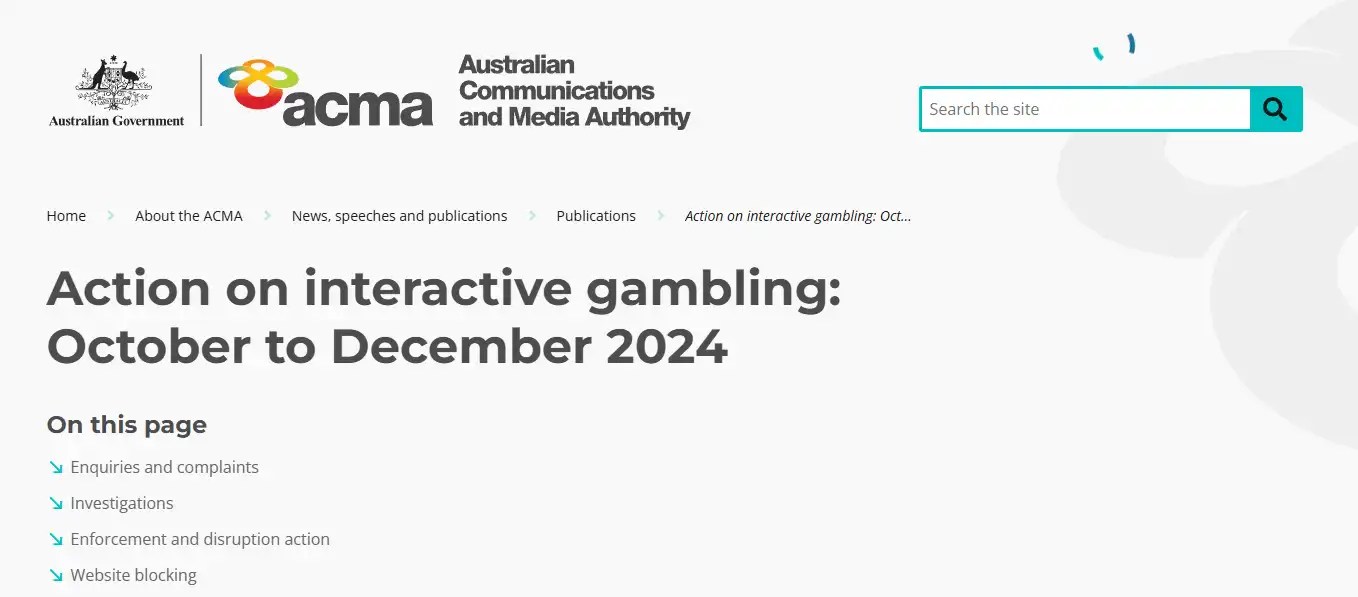
The Australian Communications and Media Authority (ACMA) enforces the federal interactive-gambling rules and monitors compliance. It can ask Australian internet service providers to block sites that provide prohibited gambling services or advertise them in Australia. Since enforcement actions began in November 2019, ACMA has blocked more than 1,455 illegal gambling and affiliate websites. A blocked site may not be consistently accessible from an Australian connection, so a deposit claim should not be read as a guarantee that the service can be reached.
There is also a reported discrepancy in the count of services that have left the Australian market since ACMA began enforcing the rules in 2017. One figure is more than 210; another is more than 190. Both refer to services that withdrew, rather than to a count of sites blocked. The disagreement does not change the central point: enforcement can affect access, and online availability is not the same as lawful local provision.
Accordingly, “no minimum deposit” has a narrow financial meaning. It may mean only that the operator itself has not set a deposit floor. The payment method may still impose one, and the Australian legal context is separate from both. A properly understood claim distinguishes those conditions instead of treating the phrase as proof that a real-money service is locally authorised, accessible, or able to accept an arbitrarily small amount.
A zero-dollar deposit floor describes only one condition: the operator does not require a particular minimum amount before accepting a deposit. It does not establish how much can be sent through a payment route, what balance will be useful after it arrives, or when that balance can be cashed out. These are separate terms, and treating them as one figure makes a low entry point look more useful than it may be.
The practical cost begins with the amount that can actually reach the account. A payment method can set its own minimum even when the operator sets none. The amount credited may also be subject to terms that affect whether it can later be cashed out. The advertised threshold therefore answers a narrow question—whether the operator specifies a deposit floor—not whether a small transfer will support the whole path from payment to cash out.
The withdrawal floor creates a second constraint. A specialist review gives a typical range of $20 to $50 AUD for minimum withdrawals, but that is a reported range, not a fixed rule for every operator. The applicable account terms determine the actual threshold. If a balance remains below that floor, it may not yet be eligible to leave the account, even though the original deposit was accepted without a minimum.
This produces a straightforward gap between entry and exit. Let the accepted deposit be one amount and the cash-out threshold another. If the balance available for cash out is lower than the threshold, the transaction cannot be completed under that rule. The deposit may have been technically possible, while the resulting balance is not yet large enough to transfer out. “No minimum deposit” does not remove that gap.
A small starting balance is particularly sensitive to deductions and losses because there is less room between the credited amount and the cash-out floor. A balance can move away from the required threshold through play, fees, or other account conditions. The precise effect depends on the operator’s terms and the payment route; it should not be assumed that the amount deposited will remain available in full. The relevant calculation is the balance eligible for cash out, not merely the amount originally sent.
The reverse can also matter: a balance may reach the stated threshold, but that does not by itself establish that a cash-out will be processed. The terms may set other conditions, including identity checks or restrictions on eligible funds. The withdrawal minimum is a necessary cash-movement condition where it applies, not a complete description of every condition attached to an account. A displayed balance and an amount presently eligible to leave are not always interchangeable.
For comparison, the amount needed to meet a cash-out floor can be treated as a target balance. The starting amount is the sum credited after the deposit; the difference between that amount and the target is the shortfall, if there is one. This calculation does not predict how play will change the balance. It simply shows why the deposit threshold and the cash-out threshold need to be read together. If the terms state a withdrawal minimum, a deposit below that figure may leave the account short of the amount required to exit.
That distinction also prevents a common accounting error: counting the deposit as if it were a guaranteed recoverable sum. A deposit is money moved into an account, not a promise that the same amount can be returned on demand. Whether any balance can be cashed out depends on the balance remaining, the withdrawal floor, and the account’s applicable conditions. The smaller the starting amount relative to the exit threshold, the more consequential those conditions become.
A useful comparison of low-entry terms therefore records two separate figures: the minimum accepted deposit, if one exists, and the minimum cash-out amount. Where the deposit floor is stated as zero, the second figure still matters. If the withdrawal minimum is not clearly presented alongside the deposit information, the apparent entry cost is incomplete. The missing term is not a minor detail; it determines how much balance must be available before cash can move back out.
The practical measure is not simply whether a small deposit can be made. It is whether the amount credited can remain eligible and reach the stated cash-out threshold under the account terms. A zero deposit floor can lower the point of entry without lowering the point of exit. That is the real cost distinction: access to an account balance and access to that balance as cash are separate stages, governed by separate conditions.
A deposit floor and a cash-out floor govern different points in a transaction. An operator may accept a small balance, but that does not mean the balance can be sent back as soon as play ends. If the account balance is below the stated minimum cash-out, the funds may remain unavailable for transfer until the threshold is met, subject to the operator’s rules.
A specialist review places the minimum cash-out at A$20–A$50. That is a reported range, not a fixed Australian standard: the applicable amount depends on the operator’s terms. The practical test is therefore not simply whether a small deposit can be made. It is whether the resulting balance can reach the cash-out threshold under the account rules.
The distinction matters even when the initial balance is accepted. A permitted deposit does not establish that a cash-out will be available for the same amount, nor does it remove any separate conditions on releasing funds. A balance can be real in the account and still fall short of the amount required for a transfer. The advertised entry point answers one question; the cash-out terms answer another.
A useful calculation starts with the amount that would be eligible to leave the account, then compares it with the stated minimum cash-out. If the eligible balance is below that floor, the difference is not a fee or a processing delay. It is an unmet threshold. Whether additional play can bridge the gap is not a reliable assumption: outcomes are uncertain, and rules may restrict which funds qualify for cash-out.
The terms should also clarify whether the threshold applies to each transaction or to the account balance, and whether other conditions must be met before funds become eligible. If those details are unclear, the value of a low entry cannot be assessed from the deposit figure alone. A small amount accepted at the beginning may have no practical route out until the account meets the operator’s stated conditions.
This is a separate issue from how a balance is used during play. Here the constraint is access to funds, not the wagering contribution assigned to a particular game. Those conditions can affect the final amount too, but they do not change the basic comparison: eligible balance against minimum cash-out.
Australian law is an important boundary. Under the Interactive Gambling Act 2001, operators are prohibited from providing real-money online casino games to people in Australia. The law addresses the provision of those services; it does not make an individual’s act of placing a bet with an offshore operator a criminal offence. A payment page or account balance does not alter that legal position.
For a purely financial assessment, the relevant figures are the accepted deposit, the amount that qualifies for release, and the minimum cash-out stated in the terms. If the last figure is higher than the eligible balance, access to the money is constrained regardless of how low the entry point appeared. A low deposit is not, by itself, evidence of low-cost access to cash.
A cryptocurrency payment can make the deposit field look unusually permissive. Some specialist reviews report that offshore operators accept crypto deposits from as little as A$5. Other specialist reviews describe casino-set crypto minimums as low as the equivalent of A$1. These are reported examples, not a dependable market standard: the threshold can vary by operator, coin and payment network, and may change when terms are updated.
The nominal figure answers only one question: how little the operator says it will accept. It does not establish how much value reaches the account after the transfer, whether the payment is economical, or whether the resulting balance can support a bet. A small permitted deposit is therefore not the same as a practical entry amount.
Transaction costs change the arithmetic. A crypto transfer can involve a network fee, and the sending service may apply its own charges or conversion rate. If those costs are deducted from a small amount, the balance available for play can be materially lower than the amount sent. The impact depends on the specific coin, network and service used; a low casino minimum alone cannot resolve it.
There is a second constraint after the payment arrives: game minimum bets. If the balance is too small to meet a game’s minimum stake, the deposited funds may be unusable for that game. Even where a bet can be placed, a very limited balance leaves little room for ordinary variation in outcomes. The deposit threshold describes access to the cashier, not the duration or usefulness of play.
A sound comparison therefore separates three figures: the casino’s stated minimum, the amount lost to transfer or conversion costs, and the balance remaining for use. The relevant terms may sit in different places: cashier instructions, payment-method details and the rules for the selected game. A displayed minimum should not be treated as the final cost unless the payment route and resulting balance have also been checked.
The legal setting matters as well. Under Australia’s Interactive Gambling Act 2001, operators are prohibited from providing real-money online casino games to people in Australia. A cryptocurrency option does not change that position or make an offshore service locally authorised. The fact that a payment can technically be sent is not evidence that the underlying service is lawful for the operator to provide.
For an Australian reader assessing a claimed low crypto threshold, the useful distinction is between a reported nominal floor and a usable balance after costs and game conditions. The former may be small; the latter cannot be inferred from the deposit figure alone. A low number in a payment description is not a cost calculation, and the missing arithmetic is usually where the practical difference sits.
A casino may advertise no operator-set minimum deposit while the payment route still requires a minimum transaction. The amount that can actually be sent is therefore determined by the lower-level payment terms as well as the operator’s cashier rules. A nominal zero at the operator does not make every transfer possible at zero.
For PayID, a specialist review puts the commonly stated minimum deposit range at AU$10–AU$20. That is a reported range, not a fixed rule for every payment provider or operator, and terms can change. An instant bank transfer may face a similar floor. The practical figure is the minimum shown for the selected route at the time of a transaction, not a general claim that casino games can be started without funding.
Processing speed is a separate condition from the deposit floor. A specialist review describes PayID as one of the faster routes for cashing out, with payments often arriving the same day. That timing is not a guaranteed service standard: account checks and the operator’s processing steps affect when a payment is released. A fast route does not remove a minimum cash-out amount or other account conditions.
PayPal should be assessed on the same distinction between the operator’s deposit rule and the payment processor’s own terms. A low advertised entry amount does not establish that PayPal will accept a transfer of that size, nor does it establish a particular cash-out time. The applicable cashier and payment terms determine whether the route is available and what minimum applies. A no-minimum-deposit claim, by itself, settles neither point.
The distinction matters because a payment method can set the effective floor even where the casino itself does not. Before treating a small amount as usable, the relevant terms are the minimum deposit for that route, any charges, and the cash-out conditions attached to the account. Those are separate figures; combining them into one headline obscures the actual cost and availability of the transfer.
There is also a legal limit to the context in which these payment options can be discussed. Under Australia’s Interactive Gambling Act 2001, operators cannot provide real-money online casino games to people physically in Australia. PayID or PayPal payment capability does not change that rule or make a prohibited service lawful.
While an operator may have no minimum deposit, payment routes like PayID often have their own floors, commonly reported in the A$10–A$20 range.
A low crypto deposit figure describes the amount an account may accept, not how many pokies spins that balance can fund. A specialist review has reported casino-set cryptocurrency minimums as low as the equivalent of A$1. That figure is a nominal entry point: transaction costs and the minimum stake on a game can make a balance of that size impractical to use.
For pokies play, the relevant constraint may be the maximum permitted stake while wagering conditions are active. If the terms set a ceiling per spin, exceeding it can void winnings. A small starting balance does not remove that condition, and a deposit that is accepted does not establish that every stake is allowed.
The distinction matters because the balance and the permitted stake answer different questions. The balance shows how much money is available; the maximum-stake rule determines how much can be placed on a spin under the applicable terms. When those terms impose a ceiling, changing the stake to use a small balance more quickly can create a separate risk: a spin above the limit may invalidate winnings.
Crypto also does not make the casino’s game terms disappear. A deposit may clear into an account while the conditions attached to a promotion remain in force. Those conditions can include a maximum bet during wagering, game weighting and a maximum cashout cap. Each affects a different part of the calculation: whether a stake is permitted, how play counts toward the requirement, and how much can ultimately be paid out.
A sound check therefore starts with the rules attached to the account, not with the smallest deposit amount advertised. The maximum stake should be read alongside the game’s own minimum bet. If the allowed stake range does not suit the available balance, a technically accepted crypto deposit may still be too small for practical play. The nominal minimum is not a measure of session length.
The same care applies when a bonus is involved. A promotion can make the permitted stake more consequential, because a bet above the stated limit may void winnings even if the account began with a very small deposit. A maximum cashout cap can also restrict the final amount. Those conditions should be assessed together; the deposit floor alone says nothing about the amount that could be retained.
For a crypto-funded pokies balance, the useful figures are therefore the accepted deposit minimum, the game’s minimum bet, the maximum stake under active terms and any cashout cap. The first establishes access to the account. The others determine whether the balance can be used within the rules and what portion of winnings may remain available.
A bonus wagering requirement is not affected only by its headline multiplier. The games permitted by its terms can count at different rates, changing how much qualifying play is recorded from each bet. A low deposit therefore says nothing, by itself, about the amount of eligible wagering needed to meet a bonus condition.
Casino terms may count pokies at 100% toward wagering requirements, while blackjack and roulette may count at only 10% or 20%. At full contribution, an eligible bet counts in full. At a lower contribution, only the stated share counts. The difference is in the credit applied to the requirement, not in the amount staked.
Bonus Wagering Calculation
Determine Contribution
Identify the game weighting (e.g., 100% for pokies, 10% for blackjack).
Calculate Credit
Apply the weighting to the amount staked to find the credited wagering amount.
Compare to Requirement
Track the accumulated credits against the total wagering multiplier to determine the remaining turnover burden.
That distinction matters when comparing game categories. A table-game bet may produce less qualifying credit than a pokies bet of the same size. If the terms assign blackjack or roulette a reduced weighting, more total betting would be needed to generate the same amount of credited wagering. The applicable weighting is set by the promotion; it should not be assumed from the game’s name or from the bonus headline.
Before a bonus is accepted, its conditions need to be read together: the minimum deposit required to activate it, the wagering multiplier, and the contribution assigned to each game category. Checking only the multiplier leaves out a material part of the calculation. A promotion can state one requirement while reducing the credit earned through some games, so the stated multiplier alone does not show the full turnover burden.
Contribution rates may also be subject to game-specific terms. The relevant figure is the one in the applicable bonus rules, not a general assumption that every game contributes equally. Where a category has a lower weighting, playing it does not necessarily advance the requirement at the same pace as a category counted in full.
For people in Australia, this is a description of bonus mechanics, not an invitation to use an offshore casino. The Interactive Gambling Act 2001 prohibits operators from providing real-money casino games, including pokies and table games, to people physically located in Australia. Within the terms themselves, game weighting is the adjustment that separates the nominal wagering requirement from the amount of eligible betting needed to satisfy it.
A bonus that requires no deposit is not necessarily money that can be cashed out immediately. Its terms may make bonus winnings conditional on completing a wagering requirement: a specified amount of bets must be placed before those winnings become eligible for cash out. The entry cost and the release condition are separate parts of the offer.
A specialist review reports wagering requirements of 35× to 50× the bonus amount for some low-deposit bonuses. That range is a reported example, not a standard that applies to every promotion. The calculation depends on the stated multiplier and the amount to which it applies. If the terms apply it to the bonus alone, the required turnover is the bonus value multiplied by that figure. If the terms define a different calculation base, the headline multiplier is not enough to determine the total.
The scale is clear in a worked case. A $1,000 bonus subject to 35× wagering entails $35,000 in bets before winnings from the bonus can be withdrawn. That is turnover, not a requirement to lose $35,000; the amount wagered and the eventual balance are different measures. Still, the cash-out condition remains unmet until the specified betting volume has been completed.
A “no deposit” label therefore describes how the bonus is received, not whether its winnings are immediately withdrawable. A promotion can have no deposit requirement and still place a substantial condition between the bonus balance and cash in hand. The relevant figures are the bonus amount, the multiplier, and the terms defining which balance the multiplier applies to. Without those details, the bonus value alone gives no reliable measure of what must be wagered.
The wagering requirement is only one condition to assess. The stated maximum bet during wagering and any maximum cash-out cap can also affect what remains available after completion. A low entry threshold does not change those terms; it changes only the amount needed to access the promotion.
A Bitcoin deposit can have a very low stated threshold without making a small payment economical. A specialist review reports that some casinos set a nominal cryptocurrency minimum as low as the equivalent of A$1. That figure describes an entry condition, not the amount needed to make a deposit worthwhile. It is also a reported example, not a dependable Bitcoin-wide standard: the applicable payment and account terms determine the actual threshold.
Three separate constraints affect the usable amount. The casino sets its deposit minimum; the Bitcoin transaction has costs; and the game sets the minimum stake. A balance that clears the first condition may still leave little available for play once transaction costs are accounted for. If the smallest permitted bet is large relative to the remaining balance, the nominal minimum does not translate into meaningful playing time. The stated deposit floor alone cannot answer either question.
The practical calculation therefore starts with the amount that would arrive after transaction costs, then compares that balance with the permitted minimum bet. The relevant terms should also make clear whether the casino accepts Bitcoin, how deposits are credited, and whether any payment-specific conditions apply. A low headline minimum is not evidence that every small transfer will be accepted or that the resulting balance can be used as intended.
There is a separate legal issue for people in Australia. The Interactive Gambling Act 2001 prohibits operators from providing real-money online casino games to people physically located in the country. Bitcoin does not change that rule or make a prohibited service lawful. A nominal deposit threshold is therefore not a recommendation to use an offshore casino; it is only one figure in a payment calculation, and not the decisive one.
A “no minimum deposit” statement can describe the operator’s own rule without removing limits set by the payment method. If a payment processor sets a minimum transaction amount, that condition can determine the smallest amount that can actually be sent, even where the operator has no deposit floor.
PayPal-specific availability and deposit thresholds cannot be assumed from a general no-minimum claim. The applicable payment terms would need to confirm whether PayPal is offered, whether a minimum applies, and whether any conditions affect the transaction. Without that confirmation, a low entry amount is not a usable figure; it is an unverified assumption.
The distinction is between two separate conditions: the amount an operator says it will accept and the amount a payment route permits. A statement covering only the first does not settle the second. Payment options and their terms can also vary between operators, so a reference to PayPal elsewhere is not proof that it applies to a particular service.
There is a more fundamental limit in Australia. Under the Interactive Gambling Act 2001, operators are prohibited from providing real-money online casino games to people in Australia. A payment method’s stated terms do not change that legal position or establish that a casino service is lawfully available.
Accordingly, “no minimum” should not be read as evidence that a PayPal deposit can be made, or that it can be made for any amount. The only defensible reading is narrow: the operator may have no minimum of its own, while a processor may impose one. Any PayPal claim requires confirmation in the relevant terms—and does not override Australian law.
Cryptocurrency can allow deposits as low as A$5, though transaction costs and betting minimums may make very small amounts impractical. PayID and instant bank transfer commonly have A$10–A$20 minimums; Neosurf vouchers typically start at A$10.
A usable deposit commonly requires A$10–A$20 because payment methods may set their own minimums. Some offshore operators accept cryptocurrency deposits from A$5, but the payment route’s displayed limit determines what you can actually deposit.
The Interactive Gambling Act 2001 prohibits operators from providing certain online gambling services to people in Australia, but it does not criminalise an individual for betting with an offshore operator. An offshore licence does not make the casino locally authorised.
A usable deposit commonly has a A$10–A$20 minimum, though some cryptocurrency deposits can be lower. Low-deposit bonuses may require wagering of 35× to 50× the bonus amount before bonus winnings can be withdrawn.
Yes. Low-deposit bonuses may carry wagering requirements of 35× to 50× the bonus amount; slots typically count fully, while blackjack and roulette may contribute only 10% or 20%.
Yes, if your balance meets the casino’s withdrawal minimum and you have satisfied any applicable bonus terms. Minimum withdrawals are commonly A$20–A$50.
The Interactive Gambling Act 2001 does not criminalise an individual’s act of betting with an offshore operator, but it prohibits operators from providing certain online gambling services to Australians. An offshore licence is not an Australian online-casino licence.
Prepared by the SpinsUP Casino editorial staff.