Payment speed, verification, withdrawal conditions and Australian licensing are separate issues when assessing an online casino payout claim.

“Instant payout” describes a claimed speed of payment, not a legal status or a guarantee that winnings will arrive immediately. The phrase may refer to a casino’s stated processing time, but it does not, by itself, establish when a request is approved, whether conditions remain outstanding, or what happens if payment is disputed. A fast-sounding label is not a substitute for enforceable protection.
The distinction matters in Australia because there is no Australian-licensed online casino. Under the Interactive Gambling Act 2001, companies must not provide real-money online pokies to people in Australia without a domestic licence. No domestic licences for online casinos have been issued. The law is directed at operators, rather than individual players: Australians are not criminally liable simply for playing on an offshore site that accepts them. That does not make the offshore service locally licensed or bring it within an Australian casino licensing system.
An instant-payout claim therefore cannot establish that an operator is authorised in Australia. Nor does it show that Australian authorities can require the operator to release a disputed balance. Speed and jurisdiction are separate questions: a transfer might be described as fast, while the service behind it remains offshore and outside the domestic licensing framework.
Instant payout claims can depend on the payment method, so check the stated withdrawal times and the terms that apply before choosing a casino. This guide highlights the available payout and licensing details to help you assess the options.
Bizzo Casino
Bizzo Casino is listed with a Curacao Gaming Control Board license held by TechSolutions Group N.V.
Vegaz Casino
Vegaz Casino lists a Curacao OGL/2024/1335/0780 license. Its minimum deposit is EUR 20.
Neospin
Neospin lists a Curacao Gaming Control Board OGL/2023/176/0095 license held by Hollycorn N.V.
Ricky Casino
Ricky Casino lists crypto withdrawals in under an hour and PayID withdrawals in 1–3 business days. The minimum deposit is A$20, or A$30 to qualify for the bonus.
7Bit Casino
7Bit Casino is operated by Dama N.V. and lists a Curacao license.
Kingmaker
Kingmaker lists crypto payouts at about 90 minutes and fiat payouts in 1–5 days. Its minimum deposit is A$30.
WinSpirit Casino
WinSpirit Casino lists a Curacao eGaming OGL/2024/923/0383 license held by Antillephone N.V. Its minimum deposit is A$30.
Playfina Casino
Playfina Casino lists a Curacao eGaming license and notes that Hollycorn N.V. has been associated with it since 2017. The minimum deposit is A$20–30, depending on the offer.
Golden Pokies
Golden Pokies lists a Curacao license.
DragonSlots Casino
DragonSlots Casino lists a Curacao Gaming Authority license, with Jumpman Gaming Ltd named as the operator.
The practical consequence is significant if winnings are withheld. Australian players have no legal recourse in Australia against an offshore casino that refuses to pay. A payout promise may form part of the operator’s terms or marketing, but that does not create a local route to recover funds when the operator does not honour it. The prospect of a quick payment and the ability to enforce a claim are not the same asset.
That leaves a gap between the wording of a claim and what it can prove. “Instant” does not establish that every withdrawal is paid immediately, that a payment will not be delayed, or that a disputed amount can be recovered. Those points depend on the operator’s actual terms and handling of a request; the phrase alone supplies no evidence about them. It also says nothing about whether the service is licensed in Australia. In this market, that last distinction cannot be treated as a minor detail, because no Australian online casino licence exists.
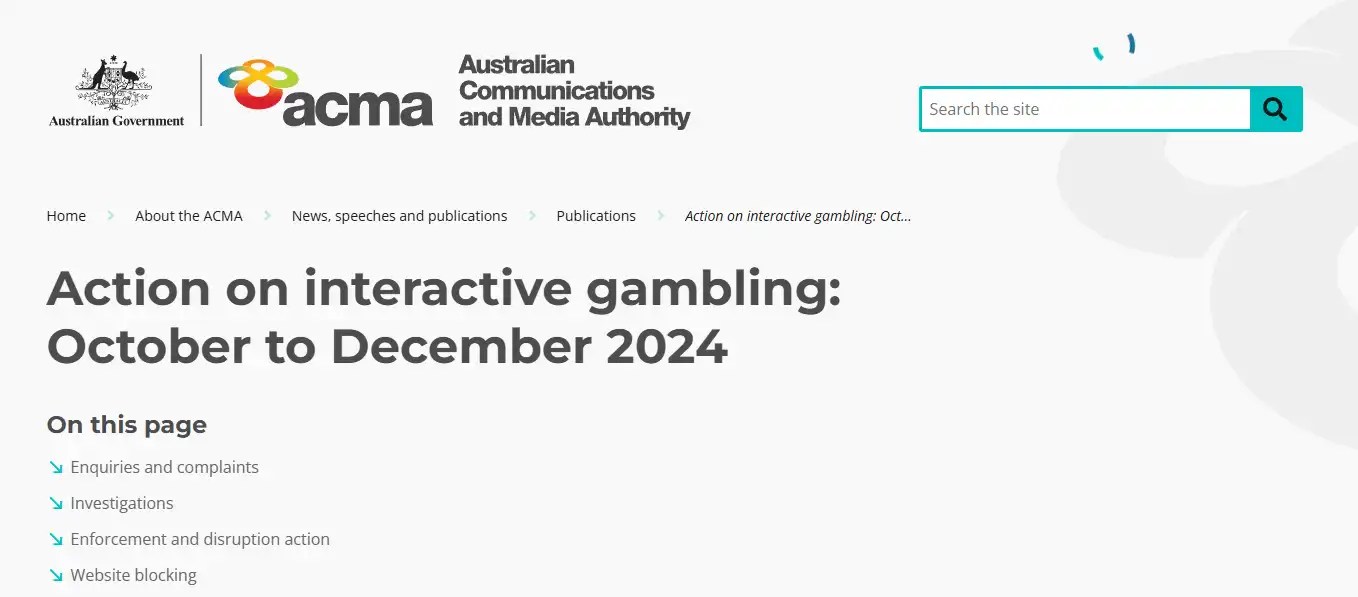
The legal position should not be confused with the practical availability of offshore sites. Some may accept Australians, even though the law prohibits operators from providing the service to people located in Australia. The Australian Communications and Media Authority (ACMA) enforces the Interactive Gambling Act 2001 and blocks access to illegal offshore gambling sites; internet service providers must comply with its blocklist. A site being reachable, or continuing to accept customers, does not turn it into an Australian-licensed casino.
BetStop is also not a safeguard against offshore operators. It applies to Australian-licensed operators and does not bind offshore sites. Since there is no Australian-licensed online casino, registration with BetStop should not be read as a mechanism that prevents an offshore casino from accepting an account or acting on its own terms. It is a boundary of the scheme, not a guarantee that every gambling service will be covered.
For anyone assessing an instant-payout online casino claim, the useful separation is between payment wording and legal protection. The wording may indicate what the operator says about speed. It cannot confer an Australian licence, establish a right to enforce payment locally, or resolve the risk that winnings may be withheld without Australian legal recourse. Those limits remain even when a site uses confident language about rapid cash-outs.
In practical terms, “best” cannot be determined by the word “instant” alone. A speed claim does not answer the question that matters if a payment fails: what authority in Australia can compel the operator to pay? For offshore real-money casino services, the answer is that Australian players have no local legal recourse against a refusal to pay. That is a material limit, not a technical footnote to the payment description.
The result is a narrow meaning for the claim. It is a statement about advertised payout speed, not proof of Australian authorisation or a remedy if funds are withheld. The law places the prohibition on operators, not individual players, but that distinction does not provide players with domestic recovery rights. An offshore service may accept Australian customers; acceptance does not change its legal status or create Australian protection.
A pokies game’s spin, its return-to-player setting and the handling of a withdrawal describe different things. Treating them as one measure can make an “instant payout” label sound more informative than it is. It does not, by itself, explain the game’s odds or establish what happens to a balance after play.
Each spin is an independent event determined by a Random Number Generator (RNG). The result of an earlier spin does not determine the next one: a run of losses does not make a win due, and a previous win does not make a loss more likely. The sequence may feel patterned, but that impression is not evidence that the next result has changed.
RTP, or return to player, is a separate measure. It describes the proportion of stakes a game is designed to return over a very large number of plays, rather than a promised return to an individual player or over a particular session. A stated RTP therefore cannot predict the result of the next spin, or establish how much a particular balance will be after a short period of play.
There is also a configuration issue. A specialist review reports that some providers give casinos a choice of more than one RTP setting for a particular pokie. On that account, the same game title may operate at different return percentages at different casinos. The title alone is not enough to establish which setting applies. No specific percentage can be assumed from the game’s name or appearance.
That point matters because a familiar game can look identical while its underlying return setting differs. If the applicable setting is not stated clearly, the return percentage cannot be inferred just by recognising the game. A game’s visual presentation, theme or recent results do not resolve that uncertainty either.
“Instant payout” refers to a different question: the movement of money out of an account. It is not a description of the RNG, a feature of a spin, or a measure of RTP. A fast cash-out claim cannot show that a game has a particular return setting; a stated RTP cannot show that a withdrawal will be processed instantly. The two claims need separate evidence.
This distinction also applies to searches for instant-payout pokies or online slots. The wording may combine a game type with a payment expectation, but the game mechanic and the withdrawal process remain separate. A pokie can produce a balance through random results; what happens when someone requests that balance is not determined by the spin’s RNG. Conversely, a quick transfer would say nothing about the odds attached to the game.
A useful way to read a claim is to identify exactly what it describes. If it concerns a game’s return, it needs to identify the relevant RTP setting rather than rely on a title or brand impression. If it concerns a withdrawal, it needs to describe the cash-out terms rather than imply that the game itself pays instantly. If the statement does not distinguish those subjects, it leaves the important variable unresolved.
The practical consequence is simple: a high or low RTP figure is not a short-term forecast, and an instant-payout label is not a game-quality measure. Neither changes the independence of each spin. Neither converts a random result into a predictable one. The wording on a page may put games and cash-outs next to each other, but proximity is not proof that one controls the other.
For Australian readers, this is a technical distinction, not an endorsement of online play. The mechanics of a pokie can be described without treating a payout label as evidence of a particular outcome. A game’s random result, any selected RTP configuration and a later withdrawal are separate stages, each with its own question to answer.
A payment described as instant can still be conditional on account checks. The transfer stage and the verification stage are separate: a quick payment route cannot release funds while required identity and address documents remain unverified. For a first withdrawal, the practical question is therefore not only how the transfer is processed, but whether the account has cleared the checks that come before it.
A specialist review reports that casinos may require identity verification before the first withdrawal. The materials it describes include a photo of an identity document and proof of address; a selfie holding the identity document may also be requested. These are possible requirements, not a uniform checklist applying to every operator. The exact documents and instructions depend on the account’s verification process.
The distinction between submitting a document and having it verified matters. Uploading an image does not, by itself, establish that the check is complete. Until identity and address proof have been verified, a withdrawal may remain pending even where the casino advertises instant payouts. The advertised speed describes neither the status of an individual account nor the time needed to resolve a document query.
A selfie holding an ID adds another step to the evidence requested. It is not simply another copy of the document: it links the account holder to the identity document in the requested image. If that check is required, the account may not be ready for withdrawal until the image has been supplied and accepted. The same principle applies to address proof: the relevant condition is verification, not merely attaching a file.
This makes verification a condition to assess before relying on a payout claim. A casino with instant payout may still require documents at the point funds are requested, particularly for a first withdrawal. An account that has not completed the checks is not in the same position as one whose documents have been approved. A claimed fast transfer cannot remove that difference.
The terms should therefore be read for the stated verification requirements, the documents requested and whether the checks must be completed before withdrawal. If the process asks for identity and address proof, those documents need to be verified before the first withdrawal. Where a selfie holding ID is requested, that is an additional condition to account for. Without clear completion of the process, “instant” is a description of a possible payment stage, not a settled payment time.
There is also a market-specific limit to what account checks can protect. Australian residents have no legal recourse in Australia if an offshore casino withholds winnings. BetStop applies to Australian-licensed operators and does not bind offshore sites; there is no Australian-licensed online casino. Verification can establish that an operator has accepted account documents, but it does not create Australian legal protection or guarantee that a withdrawal will be honoured.
That distinction is important because a completed verification process and a successful cash-out are not the same outcome. The first concerns whether the operator has verified the account documents it requests. The second depends on the operator releasing the funds. A payout claim should not be treated as evidence that either condition has already been met.
For online pokies and other casino games, the verification condition concerns the account, not the game or the result of a particular play. A first withdrawal can therefore be held up by an unresolved identity or address check regardless of which game produced the balance. The relevant measure is whether the required documents have been verified before the withdrawal is requested—not merely whether an instant-payout label appears in the casino’s payment information.
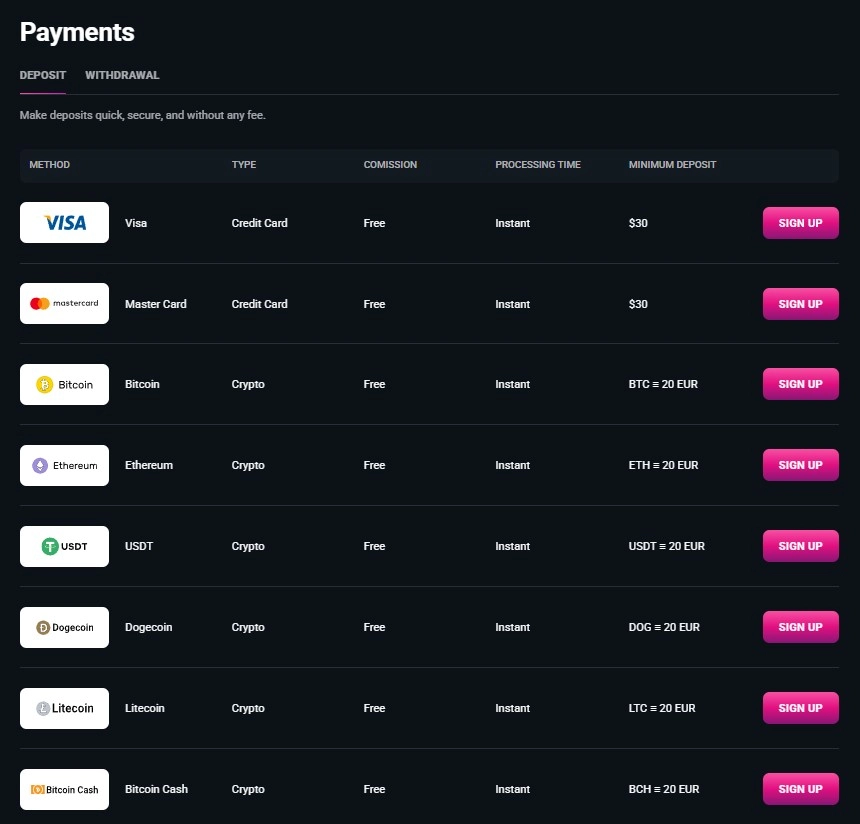
The amount required to open a balance is only one part of the cost of funding an account. The payment method can add fees, and a bank may decline the transaction altogether. Neither a low deposit threshold nor a successful payment says anything about whether a later withdrawal will be released.
A specialist review describes minimum deposits at many operators as AU$10 to AU$20, with some accepting AU$5. These are reported terms, not a fixed market tariff: the minimum can depend on the operator and the payment option selected. A small entry amount reduces the initial outlay, but it does not remove other costs or make the underlying service lawful. Under the Interactive Gambling Act 2001, operators cannot provide real-money online casino games to people in Australia without a domestic licence; no such licences have been issued.
Bank access is a separate condition. A specialist review reports that Australian banks and card companies are increasingly blocking payments to gambling sites they identify. The wording matters: a block is not necessarily a general ban on every payment, and a transaction that succeeds once does not establish that a later one will. A declined payment can therefore leave the intended deposit unfunded, regardless of the amount entered.
Cards carry a further possible charge. A specialist review notes that a bank or card issuer may classify a gambling deposit made by credit or debit card as a cash advance. If that classification applies, the reported fee range is 3–5%, and interest may begin immediately rather than after a usual purchase grace period. The issuer’s treatment controls the final cost; the amount displayed by a gambling site may not include it.
The arithmetic is direct. On a AU$100 deposit, a 3–5% fee would add AU$3 to AU$5, before any interest. This is a conditional calculation, not a prediction that every card payment will be classified that way. The relevant terms sit with the card issuer, so a low advertised minimum cannot be used as a proxy for the total debit.
Deposit availability, account balance and cash-out are distinct stages. “Instant payout” describes a claim about money leaving an account; it does not mean a deposit will be approved, arrive without charges, or avoid the card issuer’s classification. A deposit can be accepted while the payment method still carries a cost. It can also be blocked before any account balance is created.
That distinction is especially important for real-money online casino services in Australia. A payment route does not change the legal position of the service being funded, and it does not create Australian legal recourse if an offshore operator withholds winnings. The low end of a deposit range is therefore a measure of the initial transaction only—not a measure of total exposure, payment reliability or legal protection.
A Bitcoin option does not, by itself, establish that a casino pays instantly. The currency named on a cashier page is one part of a transaction; it does not settle how much can be withdrawn at once or how often a withdrawal can be requested. No speed or special withdrawal terms should be inferred from Bitcoin acceptance alone.
A separate constraint may be the casino’s withdrawal ceiling. A specialist review reports that some casinos set weekly or monthly withdrawal caps in the $5,000–$10,000 range. That is a reported condition, not a market-wide rule: the applicable amount and period depend on the individual operator’s terms. The payment method does not remove a cap merely because the balance is held or paid in Bitcoin.
The practical effect is that a large balance may not be available in one transfer. The same specialist review describes a $50,000 jackpot becoming a multi-year payout plan under withdrawal limits. The key variable in that account is the ceiling and its schedule, rather than the currency used. A claim of instant payout can therefore be narrower than it sounds: it may describe a transfer step, while leaving the total release of a balance subject to separate limits.
For a Bitcoin casino payout, the relevant terms are the maximum amount allowed per withdrawal and the period over which the limit applies. The distinction matters. A weekly ceiling and a monthly ceiling do not produce the same payment schedule, and a headline about speed does not answer either question. Nor does the word “instant” clarify whether it refers to processing an individual payment or making the full balance accessible.
The accounting is straightforward: if a balance exceeds the permitted amount for a withdrawal period, the remainder must wait for later periods under that limit. The eventual access time can therefore be governed by the ceiling, even where a payment is described as fast. A large win is not equivalent to a large immediately available payment.
Bitcoin should consequently be treated as a payment denomination, not as evidence of a guaranteed cash-out timetable. The withdrawal limit is a separate condition and can determine when the balance is released. No ranking of the best Bitcoin casino for instant payout follows from currency support alone; the stated cap and its period are the terms that determine whether the claimed speed has practical value.
A no-deposit bonus removes the initial funding condition, not the conditions attached to withdrawing winnings. The headline amount is therefore not the amount available to cash out. A wagering requirement sets the total eligible bets that must be completed before withdrawal can be requested, subject to the promotion’s other terms.
The multiplier’s base matters. A bonus-only requirement applies to the bonus amount alone. A deposit-plus-bonus requirement applies to the combined value of the deposit and bonus. Identical multipliers can therefore produce materially different turnover obligations. The wording in the terms determines which calculation applies; the promotional headline does not.
The arithmetic is direct. At a 40x requirement, a $500 bonus multiplied by 40 creates $20,000 in required bets before any winnings can be withdrawn. If the 35x requirement instead applies to a $500 deposit plus a $500 bonus, the calculation is $1,000 multiplied by 35, or $35,000 in bets. The second offer has the lower multiplier and the larger turnover obligation. A multiplier without its calculation base is not enough to compare offers.
Specialist bonus-review guidance treats requirements of 35x or less as a more manageable benchmark and describes anything above 40x as punishing. That is an assessment of the arithmetic, not a universal rule or a promise that completing the turnover produces a cashable balance. The result still depends on the written promotion conditions, including which bets count and whether winnings are subject to a separate cap.
Free spins add another layer. A promotion may limit the amount of winnings that can be cashed out, even when the spins produce a larger balance. The cap is distinct from wagering: completing turnover does not necessarily remove a limit on the eligible withdrawal amount. The stated maximum and the treatment of any excess need to be read alongside the wagering clause.
For a no-deposit offer, the useful comparison is therefore not the displayed bonus value alone. It is the amount used as the multiplier’s base, the resulting total turnover, and any cap on the winnings that may leave the account. If the terms state only a multiplier but do not make its base clear, the required betting total cannot be calculated reliably. If they specify a free-spin cash-out cap separately, that cap remains part of the final amount calculation.
An instant-payout label changes none of these calculations. A promotion can require substantial turnover or restrict cashable winnings before any withdrawal stage begins. The relevant figure is the balance eligible for withdrawal after the promotion’s conditions are applied, not the initial bonus headline.
A crypto payment method does not, by itself, establish how quickly a casino will process a cash-out. The currency used for a transfer and the operator’s withdrawal rules are separate conditions. A claim of an instant crypto payout therefore needs to be read alongside the account’s limits and the steps required before funds are released; the word “crypto” is not a timetable.
Withdrawal ceilings can matter even when a balance is already available for payment. A specialist review reports that some casinos set weekly or monthly withdrawal caps of $5,000–$10,000. Under a cap, a large balance cannot necessarily be withdrawn in one transaction. A $50,000 jackpot, for instance, may be paid in stages, with the review describing the result as potentially extending into a multi-year payout plan. The relevant delay comes from the ceiling and its period, not from whether the requested transfer is in crypto.
That distinction changes the calculation behind an instant-payout claim. Processing a request promptly is not the same as making the full balance accessible immediately. If a limit applies per week or month, the amount payable in each period constrains the release schedule. A fast first transaction can still leave most of the balance subject to later payment periods.
Terms should therefore be read for the withdrawal cap, the period over which it applies, and whether the stated limit governs an individual transaction or total withdrawals in that period. Those details determine whether a displayed balance is available at once or only in instalments. A headline speed without the corresponding ceiling describes only part of the cash-out condition.
The same distinction applies across crypto payment methods; a general label cannot resolve the operator-specific terms. A casino might process a request quickly while paying a high balance gradually under its cap. Conversely, the existence of a cap does not say how quickly an individual permitted payment is processed. Neither point can be inferred from the payment currency alone.
For Australian readers, this is a question of contractual access, not a guarantee that winnings can be recovered if an offshore operator withholds them. An instant-payout claim and a withdrawal ceiling describe different parts of the arrangement. The amount that can leave in a given period is the controlling figure when the balance exceeds that limit.
The phrase “Australian online pokies” describes the audience and location, not a category of locally licensed casino. Under the Interactive Gambling Act 2001, companies cannot legally provide real-money online pokies to people in Australia without a domestic licence. No such licences have been issued, and there is no Australian-licensed online casino.
That boundary matters when payout language is used. A claim of instant payment concerns an operator’s stated handling of withdrawals; it does not establish that the service is authorised in Australia. The payment promise and the legal status are separate questions. A fast transfer, an Australian-dollar balance or a payment method familiar to local customers does not create a domestic licence.
For real-money play, offshore casino services operate outside Australia’s domestic licensing framework. Their availability to Australian residents should not be mistaken for local approval. The Interactive Gambling Act places the prohibition on companies providing the services, rather than making an individual player’s participation a criminal offence. That distinction does not turn an offshore casino into a regulated Australian venue or provide the protections associated with a domestic casino licence.
BetStop has a similarly specific boundary: it applies to Australian-licensed operators and does not bind offshore sites. It therefore cannot be treated as a control that automatically blocks an account at an offshore casino. The existence of a self-exclusion service does not alter the licensing position.
The domestic position is especially important where marketing uses terms such as “Australian pokies” or “instant payout casino AU”. Those labels can describe intended customers or a payment claim, but they are not evidence of authorisation. The legal test is whether the company holds the relevant Australian licence; for online casinos, there is no such locally issued licence.
Accordingly, a payout claim cannot be read as a regulatory assurance. In this market, there is no domestic online-casino licence against which an operator’s local authorisation can be checked. The distinction is not a technicality: it separates a service’s commercial promise from the legal framework available in Australia.
PayID is an alias layer on Australia’s New Payments Platform (NPP), rather than a separate bank account or a guarantee that money will be released instantly. It can direct a transfer using an email address, mobile number or ABN. The NPP is supported by all major Australian banks and uses end-to-end encryption, but those features describe the transfer network, not the terms of a gambling service.
For real-money use at an online casino, PayID must first be linked to a bank account. That link does not make a transfer certain: a bank may decline a payment, and a payment route cannot establish how quickly an operator processes a withdrawal. Depositing through PayID and receiving winnings are separate transactions with separate conditions.
A specialist review has reported that some Australian banks, including members of the Big Four, may block PayID transfers to gambling merchants they recognise. Bank policies can change, so acceptance at one point does not establish that a later transfer will be allowed. A blocked payment is a bank decision, not evidence that a site has failed to process a withdrawal.
PayID acceptance also says nothing about a site’s licensing, game fairness or the return-to-player (RTP) setting of a pokie. It is a payment identifier, not a regulator’s approval or a test of game configuration. Australia has no locally licensed online casino; under the Interactive Gambling Act 2001, operators cannot provide real-money online casino games to people in Australia without a domestic licence, and none has been issued. BetStop applies to Australian-licensed operators and does not bind offshore sites.
The practical distinction is therefore narrow: PayID can identify the bank account used for a transfer, while the bank and the service determine whether a particular transaction proceeds. Its presence does not verify a casino’s legal status or turn a payout claim into a commitment.
A fast payment route can shorten the transfer stage; it cannot remove the steps before a withdrawal is released. The advertised speed of a casino cash-out therefore describes only part of the process. Account review, payment processing and the receiving bank’s handling are separate stages, and a delay at any one of them changes the time until funds arrive.
A specialist review describes e-wallets such as Skrill and Neteller as popular for speed and relative anonymity. That is a source’s characterisation, not a guarantee for a particular transaction. After a casino’s finance team approves a cash-out, the transfer typically takes one to three business days. The approval stage comes first, so a quick route does not establish when that approval will happen.
Identity checks can also stand between a balance and a withdrawal. A specialist review reports that casinos may ask for identity and address documents before the first cash-out, and sometimes a selfie holding the identification. Those documents need to be verified before the first withdrawal. If verification is incomplete, choosing a faster transfer method does not resolve the outstanding condition.
In Australia, payment speed should also be separated from legal protection. Real-money online casino services are prohibited for operators without a domestic licence, and no Australian-licensed online casino exists. BetStop applies to Australian-licensed operators; it does not bind offshore sites. A payment method is not evidence of licensing or a remedy if an offshore service withholds winnings. The practical measure is therefore not the route’s label alone, but the full sequence of verification, approval and transfer—and the limited protection available when the service is offshore.
It is the amount you must bet before bonus winnings can be withdrawn. For example, a $500 bonus with a 40x requirement means $20,000 in bets; if the requirement applies to the deposit plus bonus, the total is higher.
Australian players are not criminally liable simply for playing on an offshore site that accepts them, but operators must not offer real-money online pokies to people in Australia without a domestic licence. No Australian online casino licences have been issued.
Some game providers let casinos choose from multiple RTP settings for a game, so the same pokie can have different return percentages at different casinos.
Created by the ”SpinsUP Casino” editorial team.