Australian law does not license online casinos, so offshore status, payment routes and bonus conditions need separate scrutiny.

The legal position is not the same for an operator and a player. Under the Interactive Gambling Act 2001, companies cannot legally provide real-money online pokies to people in Australia without a domestic licence. No such licences have been issued, so there is no Australian-licensed online casino. The restriction is directed at the businesses supplying the service; it does not make an individual player liable to a fine or prosecution simply for playing on an offshore site that accepts Australian customers.
That distinction matters when assessing what an “Aussie casino” means. It may describe a site aimed at Australians or accessible from Australia, but it does not establish that the operator holds an Australian licence. There is no local online casino licence for such a site to hold. Nor does a foreign licence change the domestic position: it is not an Australian authorisation, and it does not give the player the protections or remedies of a locally licensed service.
The Australian Communications and Media Authority (ACMA) is the primary domestic regulator enforcing the Act. Its enforcement includes blocking access to illegal offshore gambling sites. Internet service providers must comply with ACMA’s blocklist, so a site being unavailable through a particular connection may reflect a block rather than a voluntary closure. Conversely, access at a given time does not establish that the service is lawful in Australia, locally approved or protected by Australian regulation. Access and legal status are separate questions.
Choosing an online casino for Australia calls for a close look at the information available about each operator. This guide offers a concise reference to help you consider the options.
Bizzo Casino
Bizzo Casino is listed with a Curacao Gaming Control Board license held by TechSolutions Group N.V.
Vegaz Casino
Vegaz Casino is listed under Curacao OGL/2024/1335/0780. Its minimum deposit is EUR 20.
Neospin
Neospin is listed with a Curacao Gaming Control Board license, OGL/2023/176/0095, held by Hollycorn N.V.
Ricky Casino
Ricky Casino lists crypto payouts as taking under an hour and PayID payouts as taking 1–3 business days. The minimum deposit is A$20, or A$30 to qualify for the bonus.
7Bit Casino
7Bit Casino is licensed in Curacao and operated by Dama N.V.
Kingmaker
Kingmaker lists crypto payouts at about 90 minutes and fiat payouts at 1–5 days. Its minimum deposit is A$30.
WinSpirit Casino
WinSpirit Casino is listed with a Curacao eGaming license, OGL/2024/923/0383, issued by Antillephone N.V. Its minimum deposit is A$30.
Playfina Casino
Playfina Casino is listed with a Curacao eGaming license held by Hollycorn N.V. since 2017. The minimum deposit is A$20–30, depending on the offer.
Golden Pokies
Golden Pokies is listed with a Curacao license.
DragonSlots Casino
DragonSlots Casino is listed with a Curacao Gaming Authority license, with Jumpman Gaming Ltd named as the license holder.
For a player, the practical weakness is the absence of local recourse. If an offshore casino refuses to pay winnings, Australian players have no legal recourse in Australia against that operator. This is a different issue from player liability: not being liable for using an offshore site does not create an Australian mechanism to recover money from it. The legal position therefore offers no basis for treating an offshore account as equivalent to an account with a domestic, licensed provider.
A site’s own description of its status should be read within that limit. A claim about a licence issued elsewhere does not make the operator Australian-licensed, because there is no Australian online casino licence. Likewise, a service being presented as Australian-facing does not turn it into a domestic provider. These distinctions concern the legal status of the operator and the remedies available in Australia, not the appearance or wording of a website.
BetStop has a limited role in this context. It applies to Australian-licensed operators and does not bind offshore sites. Because no Australian-licensed online casino exists, BetStop should not be treated as a restriction that automatically prevents access to offshore casino services or as a control that those services must follow. Its existence does not supply local oversight of an offshore casino.
The legal age for gambling in Australia, including online pokies, is 18. That age requirement does not alter the operator-side restriction: an adult’s eligibility to gamble does not create a domestic licence for a casino or make the provision of prohibited online casino services lawful. Age and operator authorisation are separate conditions.
The phrase “best Aussie online casino” can suggest that a domestic market of licensed providers exists to compare. It does not. The legal framework leaves Australian players without a locally licensed online casino, while ACMA’s blocking powers can restrict access to illegal offshore gambling sites. Offshore services may still accept Australians, and the law’s focus on operators means the player’s position is not the same as the provider’s. But acceptance is not domestic approval, and the lack of player liability is not a guarantee of payment or a route to Australian legal recovery.
For a real-money decision, those distinctions set the boundary of what can be assumed. The Act restricts companies from offering online pokies to Australians without a domestic licence; there are no such licences. ACMA enforces that regime and can have illegal offshore gambling sites blocked by internet service providers. An Australian player is not criminally liable merely for playing on an offshore site that accepts them, but has no legal recourse in Australia if that operator withholds winnings. BetStop does not close that gap: it applies to Australian-licensed operators, not offshore casinos.
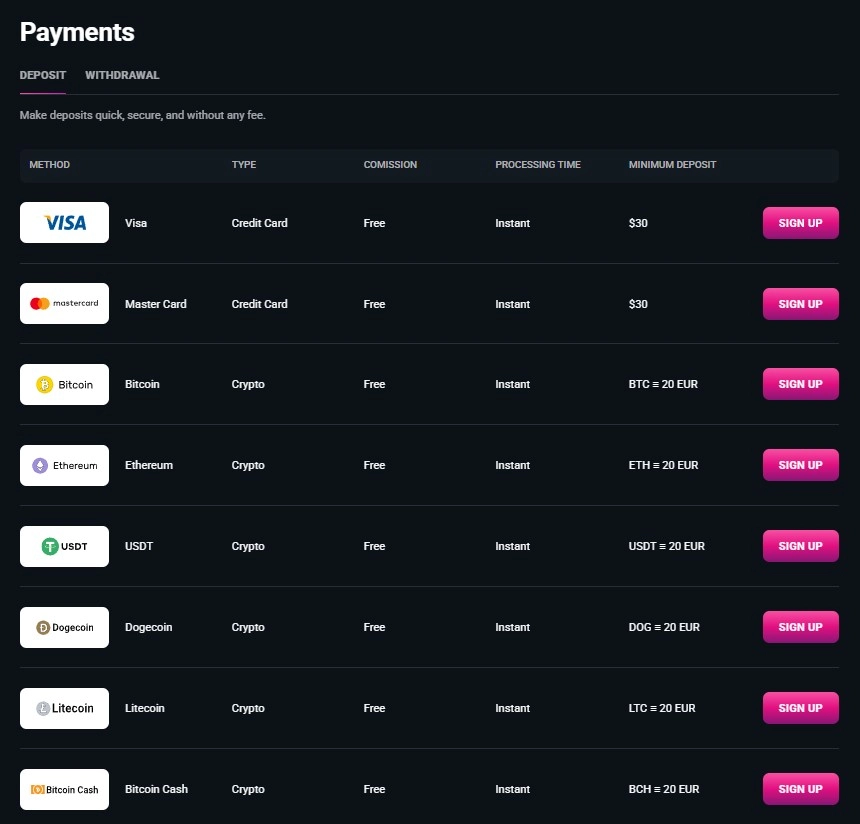
A polished site can describe its games, display payment logos and make claims about trust. Those details are not equivalent. A payment option shows only that a deposit route is presented; it does not establish licensing, fair game operation or transparent return-to-player information. The distinction matters particularly for Australian players, because there is no Australian-licensed online casino. BetStop applies to Australian-licensed operators and does not bind offshore sites.
Claims about pokies need to be separated into what can be checked and what remains an operator statement. A game’s stated RTP is a theoretical return figure, not a prediction of what a particular player will receive. Nor does a displayed percentage, by itself, prove that the game is configured to that setting on a particular site.
A specialist review reports that some game providers allow casinos to choose between different RTP settings for the same pokie. If that applies, the same title can have different stated return percentages at different casinos. The game name alone therefore does not settle the RTP question: the relevant detail is the setting used in the version offered. A site that gives no clear setting leaves that part of its claim unverified.
Even a disclosed setting does not mean that individual results will track the percentage over a short run. Each spin is an independent event determined by a Random Number Generator. Previous wins or losses do not make a later spin “due” to pay, and a sequence of outcomes cannot establish that a game is operating at a particular RTP. The percentage describes a long-run theoretical measure, not a session-level promise.
The same distinction applies to claims of fairness. A statement that games use an RNG identifies the stated mechanism; it is not, on its own, independent proof of how a particular site configures or operates a game. A logo or general assurance cannot fill in missing details about the RTP setting. Where a site makes a precise claim, the useful question is whether it identifies the relevant game configuration and provides information that can be independently checked. If it does not, the claim should be treated as unconfirmed rather than converted into a fact.
This is a more useful test of aussie casino sites than counting familiar game titles or taking a “trusted” label at face value. A long catalogue establishes breadth, not the return setting of each pokie. A well-known provider name establishes who made a game, not which RTP version a particular casino offers. Likewise, a site’s payment support—including PayID—says nothing by itself about licensing, fairness or RTP transparency. Those are separate claims and need separate evidence.
Promotional language deserves the same accounting treatment. A bonus headline is not evidence that the underlying games have a particular return, and a large selection of aussie casino games does not establish their configuration. The figures that matter for a game claim are the stated RTP and the specific version to which it applies. If either is absent, the apparent precision of the marketing does not make the information more complete.
“Best” and “trusted” are conclusions, not proof. A comparison can describe visible features, but it cannot turn an unsupported statement into an independently established fact. For real-money online casino services offered to Australians, the broader legal position also limits what a site-level claim can mean: offshore operators are not Australian-licensed, and ACMA blocks access to illegal offshore gambling sites. A page remaining visible or displaying familiar payment methods does not establish Australian approval.
The practical result is a narrow standard. Treat game-provider names, RNG language, payment badges and promotional labels as distinct pieces of information, not as substitutes for one another. A specific RTP claim is meaningful only when its setting is clear; a fairness claim requires more than the claim itself. Where those details cannot be verified, the site has not proved them.
A balance shown on screen is not the same as money available in a bank account. For real-money play, the withdrawal rules determine how much can leave at once, while identity checks determine whether a payout can be released at all. Both conditions belong in the value calculation; neither is a minor administrative detail.
A specialist review reports that some casinos set weekly or monthly withdrawal caps of $5,000–$10,000. With a $50,000 jackpot, a cap in that range can stretch payment across a multi-year schedule, depending on whether the limit is weekly or monthly and how consistently each permitted payment is processed. The headline win remains $50,000, but the amount accessible at any one time is constrained by the payout rule.
The relevant clause is not simply “maximum withdrawal”. It matters whether that figure applies per transaction, per week or per month, and whether separate limits apply to different payment methods or account categories. A limit described as a maximum can be less useful if the casino also imposes a lower frequency cap. The practical question is how the rules combine, not which single number appears most prominently.
Withdrawal terms should also be checked against the payment route used for cashing out. A site may set a casino-wide ceiling, then describe method-specific conditions elsewhere. Those details affect the pace at which a large balance can be transferred. A large win does not cancel the limit; it makes the limit more consequential.
Verification is a separate condition. A specialist review describes identity checks before the first withdrawal as a common operator requirement. The documents may include a photograph of government-issued identification and proof of address; some casinos may also ask for a selfie holding the identification. Account details, document images and the withdrawal request need to be consistent enough for the operator to match them.
That creates a cost in time and effort, even where the documents are already available. If verification is left until a balance is ready to cash out, the payout process cannot be treated as complete merely because the withdrawal button has been used. The account may still be waiting for documents to be submitted and checked. A sound assessment therefore includes both the payment ceiling and the verification steps required before funds can leave the account.
The documents should be checked for legibility and current details before submission. An unclear image or an address that does not match the account record can prompt further review. That is not the same as a withdrawal cap: a cap governs the permitted amount or frequency, while verification governs whether the account has met the operator’s release conditions.
For Australians, the distinction has an additional practical edge. Offshore casino winnings do not come with Australian legal recourse if the operator refuses to pay. Clear withdrawal rules and a stated verification process can make the terms easier to assess, but they do not create a local remedy. The relevant comparison is therefore between what the site says it will release, how often it can release it, and what evidence it requires before doing so.
Cash-out Calculation
Balance Review
Start with the total available balance shown on the screen.
Apply Limits
Subtract or schedule the amount based on the stated withdrawal ceiling and frequency (weekly or monthly).
Verification Check
Account for the time and documents required for identity and address proof before the first payment is released.
A useful cash-out calculation starts with the available balance, then applies the stated withdrawal ceiling and cadence, and finally accounts for document review before the first payment. A large displayed balance may be payable only in instalments, and the first instalment may remain pending until identity and address proof are accepted. Those are distinct restrictions, and the total amount alone does not describe the payout.
A low minimum deposit is a threshold, not a measure of the total cost of funding an account. Specialist reviews report minimums of AU$10 to AU$20 at most operators they cover, with some accepting AU$5. These figures describe reported terms, not a fixed market standard: the amount can depend on the operator and the payment method, and terms may change.
That distinction matters when comparing an advertised entry point with the amount a bank will actually let through. Australian banks and card companies are increasingly blocking transactions to known gambling sites, according to specialist reviews. A declined payment can therefore reflect the bank’s restrictions rather than a problem with the account or the amount entered. Repeated attempts do not change the underlying restriction and may leave the deposit unavailable.
Credit or debit card payments can carry costs that are separate from the operator’s stated minimum. Specialist reviews report that a bank or card issuer may classify a gambling deposit as a cash advance. In that case, the reported charge is 3–5% of the transaction, and interest may begin immediately.
The calculation is direct: a AU$100 deposit treated as a cash advance could incur a fee of AU$3 to AU$5, before any interest. That is a possible card-side cost, not a charge that applies to every card or every transaction. The issuer’s classification and terms determine the result. A deposit that appears to meet a low minimum can therefore cost more than the amount credited to the account.
The same caution applies to debit cards. The fact that funds come from a transaction account does not establish how the issuer will classify a gambling payment. The displayed deposit amount and the final cost to the account are not necessarily identical.
A payment method can be listed on a site without being usable for a particular customer or transaction. Where a bank blocks a gambling payment, the advertised minimum has little practical value: the transfer cannot fund the account through that route. A different route may have different terms, but its availability and cost must be assessed separately rather than inferred from the first option.
This is also why a “no-deposit” phrase does not settle the funding question. It says nothing by itself about whether a payment will be accepted later, what the minimum is for a particular method, or whether the card issuer will add a fee. A headline is not a transaction record.
The relevant comparison is the amount debited, the amount credited, any bank or issuer charge, and whether the payment succeeds. A small stated minimum can reduce the amount initially committed, but it cannot remove a block or prevent a cash-advance classification. Those are separate conditions, controlled by different parties.
For budgeting purposes, the deposit threshold should be treated as only one line in the calculation. The bank’s decision determines whether funds move; the card terms determine whether the transaction carries an extra cost. Where either is uncertain, the nominal minimum alone is not a reliable estimate of what funding the account will require.
A recent launch is a date, not a measure of service quality. A new Aussie casino may present itself as fresh or more generous, but neither description establishes what happens when a withdrawal is requested. The useful comparison is between the claims on the landing page and the conditions set out in the account and payment terms.
Before depositing, the withdrawal rules should be readable and specific. Check whether the site explains how a cash-out is requested, what verification it requires, and what conditions can delay or prevent payment. If the rules are difficult to locate, incomplete or inconsistent across pages, that is a practical uncertainty—not evidence that the terms will be favourable once money is in the account.
Identity checks deserve particular attention because they can arise only when winnings are being withdrawn. A specialist review reports that casinos commonly require verification before the first withdrawal, with the process potentially involving an identity document, proof of address and, in some cases, a selfie holding the identity document. Those requirements should be understood before depositing, including how documents are submitted and whether the account details must match them. A successful deposit does not establish that a later cash-out will be released without further checks.
A new site’s promotional language is also separate from its payment conditions. References to welcome rewards or other incentives do not answer whether winnings can be withdrawn, what documents will be requested or what restrictions apply to an account. The headline offer is only one part of the transaction; the cash-out conditions determine whether the balance can leave the account. The arithmetic of wagering terms is a separate calculation, but the underlying terms should be available before funds are committed.
The most consequential risk is outside the site’s own wording. If an offshore casino declines to pay, an Australian player cannot take the dispute to an Australian court or regulator for a remedy against that operator. A polished interface, recent launch or responsive support channel does not change that position. A site may have its own complaint process, but that is not equivalent to legal recourse in Australia.
A practical pre-deposit check is therefore documentary rather than impressionistic:
If any answer is unclear, the uncertainty belongs in the cost assessment. The fact that a casino is new does not reduce it. A launch date can make a site look different from established alternatives; it cannot, by itself, establish that a withdrawal will be paid or that an Australian remedy exists.
A bonus headline gives only the starting credit. The cash-out calculation depends on the wagering requirement: the turnover a promotion attaches to the bonus, or to the deposit and bonus combined. The basis matters as much as the multiplier. Two offers displaying the same multiplier can produce different required turnover if one applies it to the bonus alone and the other to the full credited amount.
A specialist review gives a useful comparison point: it treats a wagering requirement of 35x or less as the more manageable range, while describing anything above 40x as punishing. That is an assessment of terms, not a promise that meeting them will produce a profit. Turnover measures the amount staked, not the amount lost or the amount available to withdraw.
Wagering Calculation
Identify the Base
Determine if the wagering requirement applies only to the bonus or to the combined deposit and bonus.
Apply Multiplier
Multiply the base amount by the stated turnover figure (e.g., $500 bonus × 40x).
Determine Total Turnover
Calculate the total amount that must be staked before winnings become eligible for withdrawal.
Consider a $500 bonus with a 40x requirement applied to the bonus. The calculation is $500 × 40 = $20,000 in bets before the bonus winnings become eligible for withdrawal. The required turnover is forty times the bonus, not a cash fee of $20,000. But the distinction does not make it a small condition: wagering returns to the account are not the same as a guaranteed final balance.
A different structure applies the multiplier to the deposit plus bonus. In the specialist review’s $500 deposit and $500 bonus example, the combined base is $1,000. At 35x, the turnover is $1,000 × 35 = $35,000 in bets. The multiplier is lower than 40x, yet the required wagering is higher than in the bonus-only example because it applies to twice the base amount. Reading only the multiplier would therefore miss the more consequential term.
The practical comparison is a short calculation:
Signup offers, no-deposit offers and bonus codes can describe different routes to promotional credit; none changes the need to read the underlying condition. A code is not a cash value in itself, and a no-deposit label does not establish that winnings can be withdrawn without wagering. The offer’s terms determine the calculation.
These figures are examples reported by a specialist review, not universal terms. More importantly, Australian law prohibits operators from providing real-money online casino games to people in Australia. Promotional language does not alter that position, and arithmetic cannot turn an unavailable lawful service into a safe one.
An app changes how an account is accessed; cryptocurrency changes how value may be transferred. Neither format establishes that an online casino is lawful for Australian residents, that its games are fair, or that its safeguards work. A polished interface and a crypto payment option are features, not evidence of oversight.
The practical question is whether controls are available and usable before play begins. Deposit limits restrict funds added to an account; loss limits set a boundary on losses; session time limits constrain time spent playing; and self-exclusion is an option to stop access. These are standard responsible-gambling tools. Their presence matters more than whether the service is presented as an app, a mobile website or a crypto casino.
Restrict the total amount of funds added to an account.
Set a boundary on the total amount lost over a specific period.
Constrain the amount of time spent playing in a single session.
Provide an option to stop all access to the service.
Controls should be assessed by what they actually limit. A deposit limit is not a loss limit, and a time limit does not cap spending. Self-exclusion is different again: it is intended to prevent further access, not to reverse previous activity. Treating these settings as interchangeable leaves a gap between the control selected and the risk it is meant to address.
The account interface should make the available settings clear, including how to activate them and what each one covers. A control that is difficult to locate or whose scope is unclear has limited practical value. The same scrutiny applies across access and payment formats; there is no basis for assuming that an app offers stronger limits than a browser, or that using crypto changes the effect of a responsible-gambling setting.
BetStop is a separate point. It applies to Australian-licensed operators and does not bind offshore sites. Since no Australian-licensed online casino exists, BetStop should not be treated as a safeguard against access to offshore casino services. An account-level exclusion option and BetStop are not substitutes for one another.
The label “top” does not resolve any of these questions, and a recently launched service is not safer by virtue of being new. Nor does a crypto option, by itself, demonstrate better privacy, faster access or stronger consumer protection. Those conclusions require evidence that the payment label alone cannot provide.
For an Australian looking at casino access through an app or cryptocurrency, the meaningful comparison is therefore narrow: which responsible-gambling controls are present, what each control covers, and whether the service’s own exclusion setting is being mistaken for a national block. Convenience describes the route into an account. It says nothing about the boundary around play.
A phone changes the interface, not the underlying terms. A mobile casino page may make it easier to resume a session, but that convenience does not make spending limits or time controls less important. The relevant question is whether safeguards remain visible and usable when play moves between a phone and another device.
Deposit limits set a ceiling on funds added to an account. Loss limits address a different measure: money lost over the period defined by the service. Session time limits help contain the length of a single period of play, while self-exclusion is a stronger option for stopping access. These tools serve different purposes; one does not replace the others.
Before using a mobile interface, the terms for each control matter. A limit may apply to deposits rather than losses, or a session timer may not perform the same function as a spending cap. Where controls are available, their scope and effect should be clear. A setting that is difficult to locate or whose operation is unclear has limited practical value.
The same controls should be considered across devices. If a limit is set in one interface, it should not be assumed to carry over to another unless the service makes that explicit. Nor should a break between sessions be treated as a reset of spending decisions: the relevant measure is the limit itself, not the size of the screen or the device used.
BetStop is not a substitute for checking these controls. It applies to Australian-licensed operators and does not bind offshore sites. Since there is no Australian-licensed online casino, its scope does not provide a general block on offshore casino access.
Mobile access also does not alter the legal position or create local recourse if an offshore operator refuses payment. The interface is only the access point; it does not establish what safeguards apply or how reliably they operate. Responsible-gambling tools are practical limits, not proof of oversight.
For a mobile session, the useful distinction is between convenience and control. A quick route back into an account may reduce friction, while deposit limits, loss limits, session time limits and self-exclusion are intended to constrain play. Their value depends on understanding what each one covers and using them as separate controls.
A free-spin headline describes the play offered, not necessarily the cash that can leave the account. A specialist review reports that free-spin offers may limit the amount of winnings eligible for cash-out. The cap is therefore a separate term from the number of spins or the value attached to them: winnings above it may not be payable, even if they appear in the account balance.
The practical calculation has two stages. First, determine what the offer allows the spins or chip to produce. Then identify the maximum amount of offer-derived winnings that can be withdrawn, if a cap applies. The amount shown before that second step is not the final cash value. A large headline can therefore describe a small maximum payout.
A free chip needs the same close reading, but the free-spin report does not establish that chip offers have identical conditions. The offer’s own terms must specify whether a cash-out cap applies, which winnings it covers and what happens to any excess. If those points are unclear, the headline alone cannot establish the amount payable.
The cap also needs to be distinguished from other conditions. A withdrawal ceiling limits what can be paid out over a period; an offer cap limits the winnings eligible for cash-out under that promotion. Those are different restrictions, even when both affect the amount ultimately received. The relevant figure is the one tied specifically to the offer, not a general impression created by the displayed balance.
For Australian players assessing an online casino offer, the useful comparison is not simply how many free spins or how generous a chip appears. It is the stated cash-out treatment of winnings from that offer. A clear cap makes the maximum knowable; a missing or ambiguous cap leaves the headline without a reliable cash value. The promotional label is packaging. The cap, where one is specified, sets the boundary.
PayID is an alias for a bank transfer, not a separate account or a guarantee that a payment will be accepted. It operates through Australia’s New Payments Platform (NPP), allowing a transfer to be addressed to an email address, mobile number or ABN rather than entered as conventional account details. PayID is integrated into the NPP, which is supported by Australia’s major banks and encrypts transfers end to end.
For real-money deposits, PayID must first be linked to a bank account. That connection is the practical starting point: without it, the alias cannot route funds from the payer’s account. Availability at a particular gambling merchant is a separate matter. A payment option displayed on a site does not establish that the bank will process a transfer to that merchant, or prove anything about the site’s licensing, game fairness or RTP settings.
A specialist review reports that some Australian banks, including the Big Four, occasionally block PayID transfers to known gambling merchants. That is a reported, changeable restriction, not a rule that applies identically to every bank or transaction. A transfer may therefore be unavailable even when PayID is active in the banking app. The payment rail and the bank’s decision are distinct parts of the transaction.
PayID also does not change the status of online casino services in Australia. The Interactive Gambling Act 2001 prohibits operators from providing real-money casino games to people in Australia, and no domestic online casino licences have been issued. BetStop applies to Australian-licensed operators; it does not bind offshore sites. Payment compatibility is not a substitute for legal recourse or consumer protection.
Most operators set minimum deposits at AU$10–AU$20, while some accept AU$5. PayID is treated like other qualifying deposit methods, but the minimum can vary by site.
Check the wagering requirement and what it applies to. For example, a $500 bonus at 40x requires $20,000 in bets; if the 35x requirement applies to a $500 deposit plus a $500 bonus, it requires $35,000 in bets. Also check for cash-out caps on free-spin winnings.
There is no Australian-licensed online casino, and an overseas licence does not provide Australian authorisation or local remedies. Payment logos and a polished site do not prove fair game settings or safety, and Australian players have no legal recourse in Australia if an offshore operator withholds winnings.
Players are not criminally liable simply for playing on an offshore site that accepts Australians. However, companies cannot legally offer real-money online pokies to Australians without a domestic licence, and none have been issued.
Created by the ”SpinsUP Casino” editorial team.