Australian law, payment speed, published RTP, identity checks and account security each address different parts of online casino risk.

The legal position depends on who is providing the service. Under the Interactive Gambling Act 2001, operators in Australia are prohibited from offering online casino games to Australian residents. A website’s Australian-dollar options, local-facing design or use of familiar casino terminology do not alter that rule. The central question is whether an operator is permitted to supply the gambling service to people in Australia, not whether its website appears accessible or professionally presented.
That distinction matters when “safe” is used to describe an online casino. It can mean that a site has technical safeguards, that its games are fair, or that its business is lawful. Those are separate questions. For Australian residents, a polished site or an offshore licence does not establish that the operator is authorised to provide online casino games under Australian law. Safety language cannot change the legal status of the service.
The Act’s treatment of individual players is different from its treatment of operators. It does not explicitly criminalise an individual for using an offshore casino site. That is a narrow statement about player liability: it does not authorise the operator to serve Australian customers, and it does not turn an offshore service into a locally permitted casino. The distinction is between the rules governing supply and the rules governing the person using a service.
Choosing a safe online casino in Australia means checking what is actually known about an operator rather than relying on broad safety claims. This list gives you a concise reference to the available licensing, deposit, and payout details for each casino.
Bizzo Casino
Bizzo Casino is listed with a Curaçao Gaming Control Board licence held by TechSolutions Group N.V.
Vegaz Casino
Vegaz Casino is listed under Curaçao OGL/2024/1335/0780. Its minimum deposit is EUR 20.
Neospin
Neospin is listed with Curaçao Gaming Control Board licence OGL/2023/176/0095, held by Hollycorn N.V.
Ricky Casino
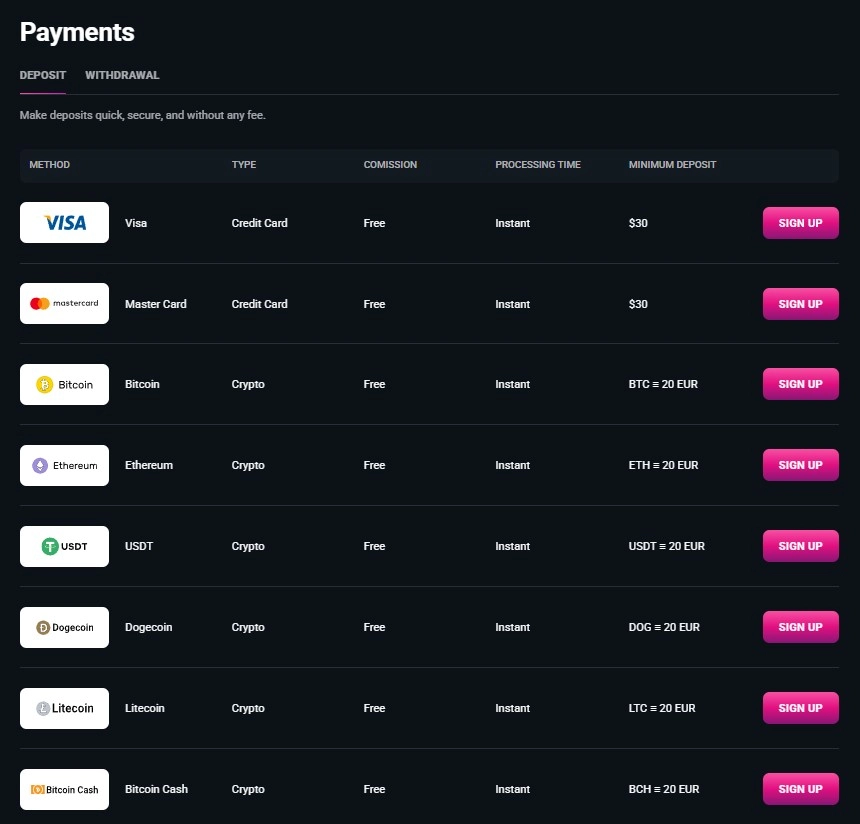
Ricky Casino lists crypto payouts in under an hour and PayID payouts in 1–3 business days. The minimum deposit is A$20, or A$30 to qualify for the bonus.
7Bit Casino
7Bit Casino is listed as Curaçao-licensed and operated by Dama N.V.
Kingmaker
Kingmaker lists crypto payouts at around 90 minutes and fiat payouts in 1–5 days. Its minimum deposit is A$30.
WinSpirit Casino
WinSpirit Casino is listed with Curaçao eGaming licence OGL/2024/923/0383, held by Antillephone N.V. Its minimum deposit is A$30.
Playfina Casino
Playfina Casino is listed as Curaçao eGaming-licensed, with Hollycorn N.V. since 2017. Its minimum deposit is A$20–30, depending on the offer.
Golden Pokies
Golden Pokies is listed with a Curaçao licence.
DragonSlots Casino
DragonSlots Casino is listed with a Curaçao Gaming Authority licence, with Jumpman Gaming Ltd named as the licensee.
This difference is easy to blur in advertising. A site may accept Australian customers or display information aimed at them, but those features are not evidence of Australian approval. Nor does the absence of an explicit offence for the individual mean that all parts of the arrangement are lawful. The legal baseline is asymmetric: Australian operators cannot offer online casino games to residents, while the Act does not explicitly make an individual player’s use of an offshore site a criminal offence.
ACMA is Australia’s primary regulator for online gambling. Its role sits within this national framework; it is not a licensing label that an offshore casino can claim merely by serving Australian visitors. The existence of a regulator also does not imply that an online casino market is locally authorised. The relevant legal distinction remains the one in the Act: prohibited provision by operators versus the separate position of individual players.
For anyone assessing a “safe online casino Australia” claim, legal safety cannot be inferred from a website’s presentation or from the fact that an individual player is not explicitly criminalised. Those points answer different questions. One concerns whether the operator may provide the service; the other concerns whether the player is expressly made criminally liable for using an offshore site. Treating them as interchangeable produces a misleading conclusion.
The practical consequence is that “available” and “allowed” are not synonyms. An offshore site may be reachable through a browser, but accessibility alone does not show that it is authorised to offer casino games in Australia. Likewise, the lack of an explicit criminal offence for the player is not a legal endorsement of the site. A careful reading separates the operator’s prohibition from the player’s position and avoids turning either into a broader promise than the law supports.
This is the legal context for claims about safe casinos aimed at Australians: domestic operators are prohibited from offering online casino games to residents, ACMA is the primary regulator, and the Act does not explicitly criminalise an individual player for using an offshore site. None of those statements amounts to a recommendation to use one. “Safe” is not a substitute for legal authorisation, and a site’s own description cannot supply that authorisation.
PayID describes a way to send a bank payment; it is not a certification of the recipient or the service accepting the money. A payment option can make a deposit convenient without establishing that an online casino is lawful, that a withdrawal will be honoured, or that the transaction carries any special consumer protection. The distinction matters because the speed of a transfer is only one part of its cost and risk.
A specialist payment review reports that PayID transfers generally use Australia’s New Payments Platform and may clear within minutes after the sender releases them. That timing is conditional, not a service guarantee: the review’s account does not establish how long a particular casino takes to credit a payment, whether it first requires approval, or what happens if the deposit is delayed. A transfer can clear between banks while the gambling account still shows a pending transaction. Those are separate steps, controlled by different parties.
The same type of review describes PayID and some e-wallets as potentially quick after approval, while bank transfers and card payments may take several business days. The comparison is useful only as a broad description of processing routes. “After approval” is material: operator checks can precede the release of a deposit, and a fast bank transfer does not remove that stage. Timing can also depend on the payment provider and the receiving service. No fixed arrival time follows from the payment method alone.
The time taken for funds to move is not evidence that a casino is safe. A PayID transfer can be processed quickly even when the underlying service is not authorised to offer online casino games in Australia. Under the Interactive Gambling Act 2001, operators cannot provide real-money online casino games to people in Australia. The presence of an Australian payment option does not change that legal position.
Nor does PayID itself verify that a site’s claims are accurate. It identifies a payment route, not a gambling licence, a dispute outcome, or a promise that deposited funds can be withdrawn. If an offshore service withholds winnings, Australian laws may not assist in recovering them; services operating outside Australian requirements do not provide the protections available through lawful Australian services. A payment arriving promptly does not improve those underlying terms.
This is why “safe” cannot be inferred from a PayID button or a successful transfer. The practical question is not simply whether money can be sent, but what the payment confirms. At most, a completed transfer confirms that the payment instruction was processed. It does not prove the recipient is entitled to provide casino games to Australians. The difference is easy to overlook when the account balance updates immediately.
A no-deposit offer does not alter the analysis. It is a promotion, not a payment safeguard or evidence of authorisation. Whether a bonus requires a deposit or is described as free, it does not make prohibited online casino gambling lawful in Australia. The wording of an offer cannot substitute for the legal status of the service behind it.
When comparing payment timing, distinguish the bank’s transfer stage from any operator approval or account-crediting stage. A delay at either point can affect when a balance appears, and the payment route alone does not identify which stage is responsible. Claims of instant deposits therefore need to be read as claims about a particular step, not proof that the full transaction is immediate.
PayID’s speed is a processing characteristic, not a safety rating. The method may move money rapidly once released, but it does not establish that an online casino is licensed in Australia or that a customer has recourse if funds are disputed. In this market, those are separate questions—and the payment mechanism answers neither.
A casino website may display Australian dollars, accept Australian customers or load on a mobile phone. None of those features changes the legal status of its games. Real-money online slots and casino games, including blackjack, are prohibited for people in Australia. The relevant distinction is what the service offers, not the currency shown on screen or the device used to access it.
That matters when assessing whether an online casino is “safe”. The word can refer to different things: whether a site protects account information, whether a game operates as described, whether a withdrawal is paid, or whether the service is lawful in Australia. Those are separate questions. A reassuring answer on one does not settle the others. In particular, a site’s polished design or Australian-dollar balance cannot turn prohibited real-money casino play into a lawful Australian service.
The restriction covers familiar casino formats rather than a narrow category of slot games. Blackjack is one example; the same legal concern applies to real-money online casino games more broadly. A mobile version is not a separate exception. Moving play from a desktop browser to a phone changes the interface, not the nature of the service. A casino promoted as suitable for Australian mobile players therefore cannot be treated as lawful merely because its pages or app function on a local device.
The legal position also needs to be stated precisely. The Interactive Gambling Act 2001 prohibits operators from providing real-money online casino games to people in Australia. It does not explicitly make an individual player’s use of an offshore casino a criminal offence. That distinction is not an endorsement or a safety guarantee; it describes the difference between the restriction on providing the service and the position of the person using it.
An offshore licence does not amount to a licence to offer online casino games in Australia. Nor does a service become licensed in Australia by accepting AUD, supporting local users, or describing itself as an Australian real-money casino. Those details may be part of a website’s presentation, but they do not override the domestic restriction. Treating them as proof of legality confuses commercial availability with permission to provide the service.
There is a practical consequence to that distinction. An unlicensed gambling service does not provide Australian consumer protections for casino play, and Australian laws may not assist if it withholds winnings. The absence of player criminal liability should not be mistaken for an enforceable right to have a dispute resolved in the player’s favour. Legal exposure and financial recourse are different matters; neither can be inferred from a site’s branding.
Searches for a safe online casino with real money often combine two questions that need separate answers: whether the service is lawful to offer in Australia, and whether the service is safe to use in other respects. For real-money online slots and casino games, the first answer is clear: the activity is prohibited in Australia. Calling a platform safe, reliable or mobile-friendly does not change that baseline.
A review that discusses a casino’s features may describe what the operator claims or how its site works. Such descriptions should not be read as authorisation to provide real-money casino games to Australians. Likewise, the ability to open an account or see a balance is not evidence that the service is licensed in Australia. A functioning website is evidence only that the page loaded.
The practical reading is therefore straightforward: Australian-dollar support, mobile access and a foreign licence do not make an online casino lawful in Australia. Real-money casino games remain prohibited, and the limited point that individual players are not explicitly criminalised does not remove the risks of using an unlicensed service.
A “safe” label is not a regulatory status. It may refer to account security, fair game outcomes, payment handling or a licence, and evidence for one does not establish the others. A polished site, reassuring wording or a badge is not proof that an online casino is authorised to serve people in Australia.
The decisive check is whether the service is legally available in this market. The Interactive Gambling Act 2001 prohibits operators from providing real-money online casino games to people in Australia. An offshore licence does not make an online casino licensed in Australia. Accordingly, claims such as “Australian approved” or “fully legal for Australians” need to be tested against official information, not accepted as a site’s own description.
ACMA directs Australians to its website and public register for information about legal gambling products. The register can help confirm whether a wagering service holds a valid Australian licence. That check has a defined scope: a wagering licence is not a licence to provide prohibited online casino games. A genuine licence from an overseas regulator may identify the jurisdiction that issued it, but it does not change the Australian position.
Marketing language is weaker evidence. Terms such as “trusted”, “secure”, “best” and “player protected” describe a seller’s claim unless they are tied to a specific, independently verifiable condition. A logo or certificate should be traceable to the organisation named, and its stated coverage should match the claim being made. Evidence about a company’s identity, for instance, does not establish that its casino service is authorised in Australia.
The same distinction applies to safety promises that sound measurable. A statement about encrypted transactions concerns information security; it does not establish legal status, fair treatment of a customer or access to a remedy. A published policy is more useful when it identifies who is responsible, what procedure applies and which regulator or dispute process has authority. Even then, paperwork cannot turn a prohibited service into an authorised one.
For Australian residents, “best safe online casino” is therefore the wrong standard for choosing a real-money casino service: the central question is whether such a service may lawfully be offered here. Offshore services lack Australian consumer protections, and Australian laws may not assist if winnings are withheld. An offshore licence or a site’s promise to resolve complaints is not a substitute for local authorisation or an effective local remedy.
Free-play labels also need precise reading. They describe a claimed mode of access, not a general finding that the platform is safe. A service may promote free slots while also offering prohibited real-money casino games; the free label does not establish the status of the wider service. Claims should be assessed service by service, rather than inferred from a slogan, badge or favourable review.
The practical test is documentary: match the service named in a claim to the relevant official register, and check that the register supports the particular activity being promoted. If the evidence only shows an offshore licence, a general trust badge or the operator’s own assurance, it does not establish that a real-money online casino is licensed in Australia.
ACMA’s role is practical as well as regulatory: it can act against services that breach the Interactive Gambling Act 2001 and can seek to make prohibited sites harder to reach from Australia. A website that remains visible or loads at a particular time has not thereby been approved, checked for safety or licensed in Australia. Access is not a regulatory credential.
ACMA can ask internet service providers to block websites that offer prohibited interactive gambling services to Australians, as well as services for adults in Australia that lack the required local licence. A blocking order is available as a last resort when ACMA considers customer safety to be at risk. ACMA can also issue fines to operators that breach the Act. These are enforcement measures, not a public rating system: a block does not certify every unblocked site as safe, and the absence of a block is not evidence of authorisation.
The distinction between an offshore licence and an Australian licence is material. A licence issued by an overseas regulator does not make an online casino licensed in Australia, and a badge or licence number displayed on a site should not be treated as proof of local approval. For wagering services, ACMA encourages the public to use its register to check whether a service holds a valid Australian licence. That check should be made against the regulator’s own record, rather than relying on a logo, a copied certificate or an operator’s description of its status.
This matters when assessing claims that an Australian-facing casino is safe or secure. A polished site, familiar payment branding, positive online casino reviews or a statement that the operator is “regulated” do not answer the Australian licensing question. The relevant claim is specific: whether the service is licensed in Australia for the activity it offers. Where that claim cannot be verified through ACMA’s public register, the site should not be presented as an authorised Australian casino.
Website blocking also has a direct practical consequence. A service may become inaccessible after ACMA requests that internet providers block it. That does not establish what will happen to an account balance or a withdrawal request, and access through a different address would not change the service’s regulatory status. An offshore licence does not supply Australian consumer protections; if winnings are withheld, Australian laws may not assist in recovering them. A blocked page is therefore not merely a technical inconvenience. It is a reason to reconsider whether funds and account access depend on a service outside the Australian licensing framework.
The checks are deliberately narrow: verify Australian licensing in ACMA’s register, distinguish an offshore licence from a local one, and treat availability as separate from approval. No search result, review or site design can substitute for that record. If the stated licence cannot be confirmed, describing the platform as a safe Australian online casino would go beyond what the evidence establishes.
A payment facility does not establish that an online casino is lawful in Australia or that funds are protected. Real-money online casino games are prohibited here, and an offshore licence is not an Australian licence. Where an offshore service accepts Australian customers, its terms and payment arrangements do not create the protections of an Australian-licensed casino. If winnings are withheld or an account dispute arises, Australian law may not assist in recovering the money.
Before any payment, the relevant financial question is not only how a deposit is made. It is also what conditions govern a withdrawal: which payment routes are accepted, whether the service can impose account checks, and what its terms say about disputed or delayed funds. These conditions can affect whether a balance is accessible at all. A displayed balance is not the same as money already returned to a bank account.
Deposit limits are a responsible-gambling control, not a safety certificate. A specialist review describes some licensed online casinos as offering limits that can be set daily, weekly or monthly. That is a reported feature, not an established standard for services available to Australians. Nor does a limit make a prohibited online casino service lawful. Where controls are offered, their terms matter: a limit that cannot be changed immediately may work differently from one that can be raised without delay. The applicable rules should be clear before funds are committed.
Responsible-gambling obligations apply to licensed gambling operators under the Interactive Gambling Act. That statement should not be mistaken for approval of online casino play in Australia: online casino games remain prohibited, and the existence of responsible-play language on an offshore site does not establish Australian oversight. A responsible-play page is useful only as information; it is not a substitute for enforceable local protection.
Reputable gambling platforms provide information about gambling-related harm and direct people to professional support services across Australia. The presence of those details can help identify whether support information is visible and practical, but it cannot settle the legal or financial status of a casino. If gambling is causing harm, professional support is more relevant than a deposit control or a promise in site terms.
The financial exposure is straightforward: money sent to an offshore casino may be difficult to recover, and a stated withdrawal process does not guarantee payment. Limits and support information address parts of gambling harm; they do not remove the underlying legal and recovery risks.
A pokie’s return to player (RTP) information may be available in the game’s information or help screen. The control is often marked with an “i” or placed in a menu. The figure shown there is more useful than a general claim about a game’s fairness because it identifies the RTP associated with the version being presented.
That distinction matters: some providers release the same game in multiple RTP versions, and the operator selects which version to run. A familiar title or identical-looking game screen therefore does not establish that two versions use the same RTP. The relevant detail is the information displayed for the version actually available, not a figure quoted elsewhere for the same title.
RTP is a theoretical measure, not a promise about the result of an individual session. It does not predict when a feature will appear or how much a particular player will win. Nor does the presence of an RTP figure establish that a gambling service is safe or that its claims are reliable. It answers a narrower question: what return rate is stated for this game version?
Open the game’s own information or help panel (often marked with an “i”) to read the RTP associated with the specific version being presented, rather than relying on promotional material.
A practical check is to open the game’s own information or help panel and read the RTP there before treating a figure in promotional material as applicable. If the game screen identifies a version or displays a different figure from a description elsewhere, the discrepancy needs to be resolved before the two figures can be compared. A title alone is not enough to identify its configuration.
RTP also should not be used as a shortcut for comparing every aspect of two games. It does not describe the full pattern of outcomes, and a higher published figure is not a guarantee of a better result in any individual play. The most defensible reading is limited: confirm the figure attached to the version on screen, and do not transfer it automatically to another version of the same game.
The label is useful only when it is tied to the exact game configuration being played. A provider may supply several versions; the operator’s choice determines which one appears. Checking the in-game information panel keeps the comparison attached to that version rather than to the title in the abstract.
A mobile login can be technically encrypted and still lead to an unsafe account or an unlawful service. SSL encryption is used by casino websites to protect transactions and sensitive information as it moves between a device and the site. That reduces exposure during transmission; it does not establish who operates the website, whether its claims are accurate, or whether the service is licensed in Australia. A padlock icon is a narrow technical signal, not a regulatory clearance.
Mobile devices add risks outside the website’s connection. A phone left unlocked, shared with others, or running outdated software can expose saved credentials and account sessions. A safer setup uses a device passcode, current operating-system updates, and a password that is not reused elsewhere. Passwords should not be entered through links in unsolicited messages: a convincing imitation login page can collect credentials even when the real service uses encryption. Account alerts and any available additional authentication can help identify access that was not authorised, but do not change the legal status of a gambling service.
Location controls matter as much as login security. A VPN can make a connection appear to come from another location, but using one to reach a casino may lead to winnings being voided, an account being closed, or a deposit being lost. It does not make an offshore casino licensed in Australia. Treating a changed IP address as a solution is a poor calculation: it adds account and funds risk without changing the operator’s legal position.
Online casino games are prohibited services when offered to people physically located in Australia. An offshore licence is not an Australian licence, and an unlicensed service does not provide Australian consumer protections. If it withholds winnings, Australian laws may not assist in recovering them. A “safe mobile casino” label cannot remove those limits.
The practical distinction is between securing a device and securing an outcome. Encryption can help protect information in transit; careful account habits can reduce unauthorised access. Neither guarantees that a site is legitimate, that an account dispute will be resolved, or that funds will be returned. Mobile convenience changes the route into an account, not the protections available once something goes wrong.
A withdrawal request can trigger a Know Your Customer (KYC) check. Casinos use these procedures to confirm account identity, and verification may be required before funds are released. That makes the document stage part of the withdrawal conditions, not an optional account detail.
The material requested commonly falls into three categories: a government-issued photo document, evidence of the account holder’s address, and evidence that the payment method belongs to that person. The specific documents accepted can vary, so the terms should be checked before an account is funded. A payment method registered to someone else may be difficult to reconcile with a request for proof of ownership.
The practical question behind “is an online casino safe?” is not answered by a document checklist alone. A site can request identity records without thereby becoming lawful in Australia or gaining Australian consumer protections. Real-money online casino games are prohibited services when offered to people in Australia, and an offshore licence is not an Australian licence. For an unlicensed gambling service, protections are absent; Australian laws may not help if a service withholds winnings.
KYC also has a privacy cost. Identity and address documents contain personal information, while payment evidence can expose account details. Before sending anything, the service’s instructions and document-submission process should be clear. Unclear requirements leave the account holder unable to assess what is being requested or why.
A request for verification before withdrawal is therefore a condition to assess, not proof that a platform is safe. The relevant comparison is between the stated requirement and the documents being requested: identity, address and ownership of the payment method. Any additional demand should be considered against the service’s published terms, rather than treated as automatically justified by the word “verification”.
Searches for safe casinos in Australia can produce sites that accept Australian customers, but acceptance does not establish lawful status. Nor does completing KYC convert a prohibited service into an authorised one. The paperwork can clarify what a withdrawal depends on; it cannot supply the legal standing or consumer protection that the service itself lacks.
A deposit option is not automatically a withdrawal option. That distinction matters when comparing AUD payment routes: the method shown at the cashier may describe only how funds enter an account, not how a balance can be returned. A payment label, wallet icon or app interface does not establish that the same route supports payouts.
A specialist review describes POLi mainly as a deposit method and cautions against assuming it can also be used for withdrawals. The practical check is therefore whether the withdrawal terms name the method separately. If they do not, the deposit route alone gives no basis for expecting a payout through POLi. A wallet presented as a safe option should be assessed on the same terms: deposit availability and withdrawal availability are separate conditions.
Card payouts have a different constraint. A specialist review notes that withdrawals to a card may be slower or unavailable, depending on the processor. “Card accepted” at deposit does not settle either point. The route can be available for funding while a payout is delayed or routed elsewhere; the decisive detail is the stated withdrawal method and any processor qualification attached to it. Where that information is unclear, the payment route cannot be treated as confirmed.
For an AUD account, the useful comparison is not the number of logos displayed but the complete path from deposit to withdrawal: which route accepts the deposit, which route can return funds, and whether the terms specify processor-dependent availability. This is more informative than a broad “safe online casino” claim, because payment branding does not show whether a particular payout route will work.
The same standard applies to a casino app or a discussion in an online forum. An app may make the deposit screen easy to navigate, while a forum post may describe one person’s experience; neither replaces the service’s published withdrawal conditions. A safe-looking interface is packaging, not a payment commitment. Until the payout route is stated, the deposit method should be treated as a one-way possibility rather than a guaranteed return channel.
You may be asked for photo ID, proof of address, and proof that you own the payment method used. Identity checks are commonly required before withdrawals.
Payment options may include PayID, e-wallets, bank transfers, and cards; POLi is mainly for deposits. Card withdrawals may be slower or unavailable, and a payment method does not establish that a casino is authorised in Australia.
The Interactive Gambling Act 2001 does not explicitly make an individual player’s use of an offshore casino a criminal offence. However, that does not authorise the operator to offer online casino games to Australian residents.
Licensed operators provide deposit limits that can be set daily, weekly, or monthly. Reputable platforms also provide information about gambling-related harm and direct players to professional support services in Australia.
Created by the ”SpinsUP Casino” editorial team.