The guide separates operator rules from player conduct and examines what ratings reveal about access, payments and offers.

Australia’s legal position separates the conduct of casino operators from that of individual customers. Under the Interactive Gambling Act 2001, a company cannot provide real-money interactive casino games to people in Australia from within the country. The restriction applies to the supply of the service; it does not make an Australian resident’s act of playing on a foreign-licensed site a criminal offence.
That distinction matters when considering offshore casinos. A licence issued in Curaçao, Malta or Anjouan is a licence from an authority outside Australia. It does not convert the operator into a locally licensed casino or displace Australian rules governing the provision of gambling services to people in Australia. Equally, the absence of local authorisation should not be confused with a criminal penalty imposed on an individual simply for playing.
The local market has no domestically licensed real-money casino sites available to Australian players. The legal boundary is therefore not a choice between locally licensed online casinos and offshore casinos carrying equivalent Australian approval. Instead, the law restricts companies providing real-money casino services to people in Australia, while the player’s own position under the Act is different.
Choosing an online casino in Australia means weighing practical details alongside the information available about each operator. This list offers a concise reference to help readers consider what is known before making their own choice.
Bizzo Casino
Bizzo Casino is listed with a Curacao Gaming Control Board license held by TechSolutions Group N.V.
Vegaz Casino
Vegaz Casino lists a Curacao OGL/2024/1335/0780 license and a minimum deposit of EUR 20.
Neospin
Neospin lists a Curacao Gaming Control Board OGL/2023/176/0095 license under Hollycorn N.V.
Ricky Casino
Ricky Casino lists crypto payouts in under an hour and PayID payouts in 1–3 business days. Its minimum deposit is A$20, or A$30 to qualify for the bonus.
7Bit Casino
7Bit Casino is operated by Dama N.V. and lists a Curacao license.
Kingmaker
Kingmaker lists crypto payouts at around 90 minutes and fiat payouts in 1–5 days. Its minimum deposit is A$30.
WinSpirit Casino
WinSpirit Casino lists a Curacao eGaming OGL/2024/923/0383 license held by Antillephone N.V. Its minimum deposit is A$30.
Playfina Casino
Playfina Casino lists a Curacao eGaming license under Hollycorn N.V., held since 2017. Its minimum deposit is A$20–30, depending on the offer.
Golden Pokies
Golden Pokies lists a Curacao license.
DragonSlots Casino
DragonSlots Casino lists a Curacao Gaming Authority license and is operated by Jumpman Gaming Ltd.
A foreign licence describes the operator’s regulatory relationship with the jurisdiction that issued it. It does not establish that Australian regulators supervise the site, that Australian consumer protections apply, or that the site has been approved to provide casino games locally. Those are separate questions. Reading “licensed” without identifying the licensing authority can blur the difference between an overseas credential and domestic oversight.
The same distinction applies to the phrase “legal to play.” It can refer narrowly to whether the individual player commits an offence under the Interactive Gambling Act 2001. For Australian residents playing at foreign-licensed casinos in Curaçao, Malta or Anjouan, the stated position is that they are not committing an offence by playing. That point does not amount to a finding that the casino is authorised to offer its service in Australia. The law’s restriction on operators remains in place.
This is why a top-rated online casino Australia label cannot settle the legal question. A rating may describe an editorial assessment or other measures of a site, but it does not grant an Australian licence. Nor does a favourable rating alter the legal allocation of responsibility between the provider and the customer. Rating and regulatory status are different categories, and treating one as proof of the other would give the label a meaning it cannot carry.
There is also a practical limit to the protection associated with domestic oversight. Player protections available through Australian regulators such as the Australian Communications and Media Authority do not apply to offshore platforms. A foreign licence may place an operator under rules in its own jurisdiction, but it does not bring that operator within the Australian protections associated with domestic regulators. The existence of an overseas regulator is not the same as access to local recourse.
The result is an uneven boundary: the Act restricts companies providing real-money interactive casino games to Australian residents from within Australia, while it does not criminalise an individual Australian for playing on a foreign-licensed site. That distinction is narrow. It does not establish local approval, extend domestic regulatory protections to an offshore platform, or make the operator’s foreign licence equivalent to Australian authorisation. The legal status of the service and the legal position of the player must be read separately.
A high casino rating is a summary of an assessment, not a measure of the amount a player will ultimately receive or a guarantee of protection. Its meaning depends on what the reviewer measured, how the criteria were weighted and how much of the assessment can be checked independently. A score without that context is a result with its working hidden.
For Australian readers, the licence behind an offshore casino is one part of that context. Most online casinos that accept Australian players are registered in Curaçao. Registration identifies a jurisdiction; it does not, by itself, establish that every service term is favourable or that the rating reflects the protections available through Australian regulators. Those are separate questions, and a single headline score cannot answer them all.
The available licence claim also needs to be read at its actual scope. A specialist review reported that the four casinos it examined held active licences from recognised offshore authorities. That is a finding attributed to that review and those casinos at the time of its assessment. It is not a permanent status report for the wider market, nor proof that every casino described as highly rated holds an active licence. Ratings and licence records can change; a review’s date and the operator it assessed matter.
A rating is useful only to the extent that its components are clear. A review may combine assessments of access, terms, customer service, payment handling or other features into one result. If the method does not show which elements were tested and how they affected the final score, the score cannot tell how much weight was given to any particular concern.
This matters when comparing highly rated online casinos. Two reviews can reach similar overall results while examining different things. One may place substantial weight on ease of use; another may focus on documented terms. Their numbers would look comparable, but the underlying judgements would not be interchangeable. The word “best” then describes the reviewer’s chosen weighting, not an objective finding that one option is best for every purpose.
A useful review separates observed details from opinion. A statement that a page lists a licence is different from confirmation of the licence’s current status. A description of a stated policy is different from evidence that the policy was followed in a particular case. The distinction is basic accounting: a recorded claim is not the same as a verified transaction.
A rating cannot make unclear conditions clear. If a review does not set out the relevant terms, the score cannot replace them. Nor does a favourable assessment guarantee that an individual transaction will be handled in a particular way. The review may describe a general process, while an account’s circumstances and the operator’s current rules determine the outcome.
The same limit applies to value. A high score is not a calculation of net value to an individual. That calculation depends on the conditions attached to an offer, the restrictions that apply and whether the stated benefit can actually be retained. A rating that praises an offer without explaining its conditions gives less decision-useful information than a lower score supported by a clear account of the terms. Presentation is cheap; conditions are the liability.
Ratings also age. A review describes an assessment made at a particular point, while ownership, policies, licensing details and service arrangements may change. A page that continues to display a score without showing when its claims were checked offers no reliable way to distinguish a current observation from an old one. The number may remain polished after its evidence has gone stale.
The most useful role for a rating is to narrow the questions that need answering. It can indicate which options a reviewer considered more favourably under stated criteria. It cannot establish that the review is complete, that its priorities match a particular person’s, or that the operator will meet every expectation.
For an Australian comparison, the licence jurisdiction and the limits of the review should therefore sit alongside the score, not disappear behind it. A review that identifies what it examined, dates its assessment and distinguishes documented facts from its own judgement gives the rating a traceable basis. Where those details are absent, the score carries less information than its precision suggests.
This is why “highest rated” and “best rated for money” are not self-explanatory labels. The first depends on the scoring method and the comparison set. The second requires a clear account of what counts as value and which conditions affect it. Without those definitions, a ranking is a presentation of preference, not a settled answer.
A rating can help organise an assessment; it cannot certify a result. Its practical worth lies in the evidence beneath it: the scope of the review, the date of the assessment, the stated licence information and the clarity of the terms being evaluated. If those parts are missing, a high score supplies confidence without showing its basis.
A search for pokies or a casino “near me” can suggest a nearby venue, but that wording does not establish that a real-money site operates locally. Online results may instead lead to offshore platforms: sites based outside Australia that accept Aussie gamblers. The difference is practical. A local venue has a physical location; an offshore casino is accessed online, regardless of how closely a result matches a location-based phrase.
Restrictions on local pokies help explain why offshore casinos licensed in Curaçao, Malta or Anjouan are used by Australian players. That pattern does not turn an offshore platform into a local casino, or make its licence Australian. A location-based search can therefore return results that are geographically relevant to the person searching without identifying a nearby, domestically licensed online venue.
The same distinction applies when a result describes a site as highly rated or presents it as a place to play online pokies. Those labels describe how a site is being presented, not whether it is a local venue. An offer in a result—whether it mentions spins or a bonus—also says nothing about where the operator is based. Those details need to be considered separately from the basic question of access.
A reference to New Jersey casinos is a further geographic mismatch for someone looking for Australian options. It points to a different jurisdiction, not a local Australian casino. Search wording can mix location, game type and promotion in a single phrase; those elements do not establish that a result is relevant in every respect.
For an Australian search, “near me” is therefore best read as a request for locally relevant results, not proof that the listed real-money casino is nearby or locally licensed. In this market, online pokies results may describe access to an offshore service rather than a local establishment. The location implied by the wording and the operator’s actual base are separate facts.
A casino app is an access format, not evidence of a distinct or better service. The label may refer to software installed on a device or to a website arranged for mobile use. Without operator-specific details, those formats cannot be distinguished reliably, and neither establishes what games, account tools or payment functions are available.
That distinction matters when comparing mobile casino options. A polished app description does not, by itself, verify that an app exists under the stated name, that it works on a particular device, or that its features match the description. Nor does an app-related rating establish how the software performs or whether its stated functions are current. Those points require evidence tied to the particular product and operator; a general casino score cannot fill the gap.
“Top rated” language is especially easy to overread. A rating may refer to a casino overall rather than its mobile access, and an app score may concern the software rather than the operator’s account or gambling service. These are different objects of assessment. Treating them as interchangeable can make a comparison look more precise than it is.
The same limitation applies to claims about slot apps. The label identifies a category of access, not a verified list of products or a measure of quality. It does not establish which games are included, how they function on a phone, or whether the experience differs from a browser version. App names, feature sets and app-specific ratings therefore cannot be treated as confirmed on the basis of a category label alone.
For a practical comparison, the relevant record would need to connect the named app to the operator and specify what was assessed. Until that connection is established, an app ranking cannot support a reliable conclusion about access or performance. The distinction is modest but consequential: the presence of an app claim is not the same as proof of an app.
A game’s contribution determines how much of each stake counts toward clearing a bonus wagering requirement. The same stake can therefore make different progress depending on the format played. A game that looks suitable for keeping play varied may contribute little—or nothing—to the requirement.
Slots generally count fully. If the terms assign full contribution, each eligible stake is counted in full toward wagering progress. That makes slots the most direct format for meeting a requirement, but it does not make every slot eligible: game exclusions and other promotion conditions still apply. A title’s appearance in the casino lobby is not proof that it qualifies.
Table games often count at a reduced rate. Their typical contribution is 10–20%, so only that portion of an eligible stake is credited toward wagering. A stake of the same size can consequently advance the requirement much less than a slot bet. This difference is a rule about accounting, not a judgement on the game’s quality or the chance of winning.
Live-dealer games may contribute even less, with some terms assigning them 0–10%. The distinction matters because “table games” and “live tables” are not necessarily treated alike in a promotion. A broad category label does not establish the weighting of every game within it. The relevant entry in the promotion terms is the one that determines progress.
Instant-win formats require a separate check. Some may be excluded from wagering altogether. If a game has no contribution, stakes placed on it do not reduce the outstanding requirement, even if the game is available alongside eligible options. Availability and bonus eligibility are separate conditions.
These differences change the effective amount of play required. A lower weighting means more eligible wagering is needed to produce the same credited progress; a zero weighting produces none. Comparing games by their listed format alone is therefore insufficient. The promotion’s contribution table, exclusions and any game-specific notes set the actual treatment.
Generally count fully toward wagering requirements, though game exclusions may apply.
Often count at a reduced rate, typically between 10–20%.
May contribute even less, with some terms assigning them 0–10%.
Require a separate check as some may be excluded from wagering altogether.
For a practical comparison, the terms should be read in this order: identify the exact promotion, find the contribution assigned to each format, then check whether named games or categories are excluded. Where the wording gives a range or uses a broad label, the specific terms attached to that offer take precedence over assumptions based on genre. A live version of a table game, for instance, may have a different weighting from a non-live version.
A high rating for online casino games says nothing by itself about wagering contribution. Ratings may describe other attributes, while the contribution rule is an offer condition with a direct effect on how quickly wagering progress accumulates. The accounting is less glamorous than the game catalogue, but it is the part that determines whether a session moves the requirement at all.
A pokies bonus is not cash available for withdrawal. Its wagering requirement sets how much qualifying play must be recorded before bonus winnings become eligible for withdrawal. The multiple is applied to the amount specified in the offer terms; it should not be assumed to apply to the deposit, or to the deposit and bonus together, unless the terms say so.
A specialist review reports pokies wagering requirements in the range of 30x–45x the bonus amount. That is a report from one review, not a fixed market rule. The practical calculation is simple: identify the stated wagering base, then multiply it by the stated requirement. A requirement of 30x means the relevant base must be wagered thirty times; at 45x, it must be wagered forty-five times. The difference is material because the same bonus amount produces a larger turnover obligation at the higher multiple.
The wording of the base matters as much as the multiple. “Bonus amount” and “deposit plus bonus” are different calculations. A specialist review also describes a 60x requirement applied to the deposit plus bonus as capable of locking up funds. That example is a warning about how the formula can expand the required turnover, not evidence that every pokies offer uses that basis. The terms must establish which balance the multiple applies to before the offer is accepted.
The headline multiple is only one part of the calculation. Bonus terms can also set a maximum bet while wagering and exclude particular games. Exceeding the stated maximum bet or playing an excluded game can void bonus winnings. A pokies game may appear eligible while a particular version or category is excluded, so the game rules and promotion terms need to be read together. If the offer names permitted games, play outside that list may not advance the requirement.
Game weighting also affects progress. A game can contribute less than its full stake to wagering, meaning the displayed bet total and the amount credited toward the requirement are not necessarily the same. The contribution rate for the specific pokies must therefore be checked in the promotion terms rather than inferred from the game’s format or appearance.
Pokies Wagering Calculation
Identify the Base
Determine the stated wagering base (e.g., bonus amount or deposit plus bonus).
Apply the Multiple
Multiply the base by the stated requirement (e.g., 30x or 45x).
Check Constraints
Apply game weighting and verify that the maximum bet and excluded-game rules are followed.
The calculation is useful only if the terms are followed from activation through completion. An active promotion can prevent a withdrawal request from being accepted until wagering is cleared. Attempting to withdraw early may result in the request being declined or the bonus and related winnings being forfeited. The maximum bet and excluded-game rules remain relevant throughout that period; a balance that looks large does not cancel a breach.
Before activating a pokies offer, the amount to calculate is the required turnover, using the exact stated base and multiple, with game contribution and restrictions applied. If those terms cannot be reconciled into a clear figure, the offer’s headline value is not yet a usable measure.
A real-money bonus is not equivalent to cash available for withdrawal. Its value depends on the conditions attached to it and on whether the resulting balance can meet those conditions before a withdrawal is requested. Wagering requirements specify how much must be staked before winnings linked to the bonus become eligible for withdrawal.
The calculation starts with the basis named in the offer. If the requirement is a multiple of that basis, the required wagering is:
Required wagering = stated multiple × stated basis
The basis may be the bonus amount or another amount defined in the terms. Those are not interchangeable: using the wrong base produces the wrong turnover target. A specialist review describes bonus offers as subject to wagering, game-weighting and maximum-bet rules; the offer’s own terms determine how those rules apply.
The amount ultimately withdrawable is therefore not simply the advertised bonus added to the deposit. Until the wagering condition is cleared, funds associated with the promotion remain subject to its rules. A displayed balance can include money that is not yet eligible to leave the account. The cash calculation has two separate stages: first determine the required wagering from the offer’s stated base, then establish whether the relevant condition has been completed.
Game weighting changes the effective progress toward that target. A stake may count in full, partly, or not at all, depending on the activity and the promotion’s rules. The amount staked is therefore not necessarily the amount credited toward completion. A player can spend money without reducing the remaining wagering by the same amount. That distinction matters when estimating how much play remains before the balance becomes withdrawable.
Maximum-bet restrictions create a separate condition. A promotion may limit the permitted stake while wagering is active. Exceeding that cap can put bonus winnings at risk, even if the turnover target is otherwise reached. The relevant figure is the maximum stated in the offer, not a general assumption about what counts as an acceptable stake.
Before play begins, the full terms should be checked for the calculation base, the wagering multiple, eligible games and their weighting, and the maximum permitted bet. These conditions work together: a low apparent target may still require substantial activity if game weighting is low, while a stake above the cap can undermine the value already built up. The figures in the terms determine the result; the promotional headline does not.
An active promotion can prevent a withdrawal request from being accepted until wagering is complete. Requesting a withdrawal before then may result in rejection or the loss of the bonus and associated winnings. The final withdrawable amount is therefore the balance remaining after the applicable conditions have been satisfied, not the headline offer added to the starting funds.
Payment speed has separate stages: the deposit reaching an account, the casino reviewing a withdrawal, and the payment network completing the transfer. Those stages should not be treated as one promised arrival time.
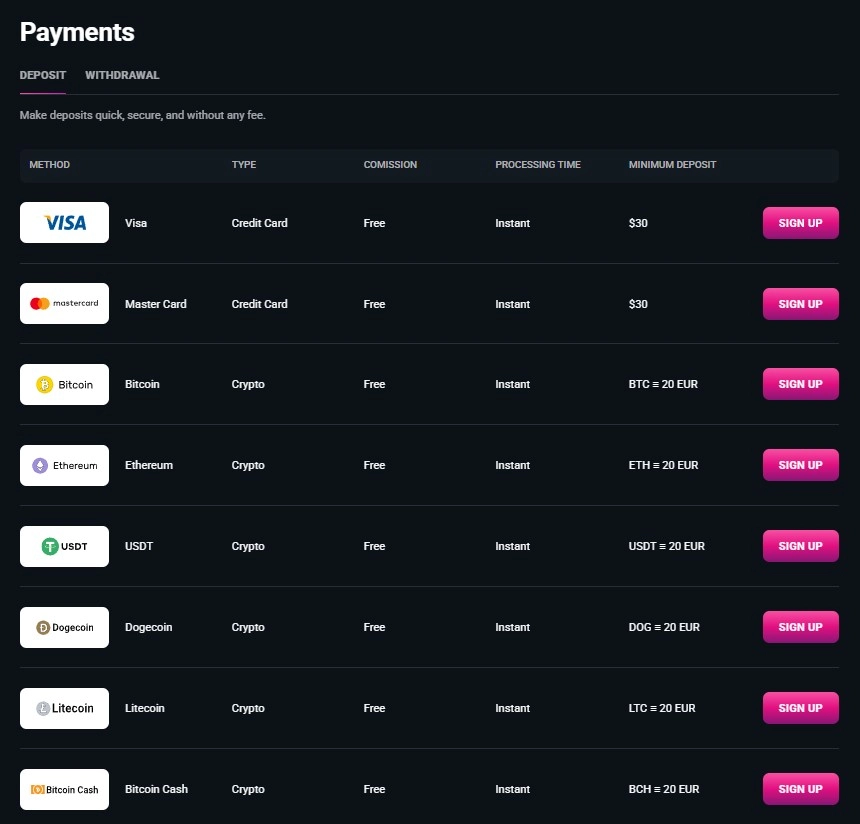
Deposits may be made by card, e-wallet or cryptocurrency. Neosurf is a deposit-only option; it cannot receive a withdrawal. A method that accepts funds in one direction does not necessarily provide a route back out, so the withdrawal method and any account requirements matter before a balance is built up.
A withdrawal request may also enter a pending period before the casino sends it. A specialist review describes some casinos as holding requests for between zero and 24 hours, during which the customer can cancel and reuse the funds. That interval is not the transfer time: it is time during which the payout has not yet been released. The possibility of cancelling makes the distinction financially material.
Verification can add another step. Casinos may require government-issued identification and proof of address before approving a withdrawal, and identity checks are required before a first withdrawal can be processed. Completing verification before requesting payment reduces the risk of a review being added after the request is already pending.
After casino approval, the payment route still affects when funds appear. A specialist review reports that cryptocurrency payouts are released before blockchain confirmation, which it says generally follows within an hour. The casino’s release and the network’s confirmation are different events. Another specialist review reports that credit-card refunds can take days after casino approval, with a bank potentially holding the funds longer. A refund is not the same as a cash withdrawal, and the timing should not be read as a deposit option.
Active promotion conditions can prevent a withdrawal from being accepted until wagering is complete. In that case, payment processing has not yet begun, regardless of the selected method. The amount shown as a balance is therefore not necessarily an amount available to withdraw: verification, pending status and any remaining promotion conditions each affect the route from request to receipt.
For a casino that offers PayID withdrawals, the relevant timing point is when the operator sends the payout. Once sent, a PayID transfer reaches the player’s bank almost immediately. That makes bank arrival a distinct service measure: it describes the final transfer, not the time taken to review or approve a withdrawal.
A high rating may reflect a favourable experience with that step, but it does not establish that every payout will arrive on the same schedule. The operator must first release the funds. Until that happens, the near-immediate bank transfer says nothing about how long the request is waiting or what checks remain outstanding. Treating the two stages as one promise would overstate what the timing means.
That distinction matters when comparing a highly rated PayID casino with another service. A rating is a summary; the transfer itself has a narrower definition. It can indicate how quickly money moves after release, but it cannot, by itself, show that the casino is the highest rated overall, or that its app, games or other services are better. Nor does a strong score turn a payment method into a guarantee of approval or arrival at a particular moment.
There is therefore no single highest-rated online casino established by PayID timing alone. “Best rated” depends on what the rating measures and how much weight is assigned to payout arrival compared with other parts of the service. For Aussie punters assessing this specific attribute, the useful question is whether the stated timing begins at operator approval or at dispatch. With PayID, the known speed applies after dispatch; earlier processing is a separate stage.
A high rating is most informative when its payment component is read precisely. Fast receipt after a payout is sent is a concrete advantage. It is not a complete measure of reliability, and it does not make the overall rating a substitute for the casino’s terms or withdrawal process.
A slot is a self-contained game format, but the word alone says little about the terms attached to a particular version. A title may be presented for free play or for real-money play; those are different conditions, even where the screen and play sequence look similar. The appearance of a game does not establish whether a balance can be withdrawn, whether a promotion applies, or what rules govern any funds connected to play.
Free slots can be useful for understanding a game’s layout and how its controls work without staking money. That is a limited purpose. A free-play session does not, by itself, show what the real-money version’s terms are, whether the same features apply, or whether any winnings could be withdrawn. A label such as “free” describes the play context, not a cash value.
The distinction matters when a game is offered through a casino promotion. Promotional funds are subject to conditions, including wagering, game weighting and maximum-bet rules. A slot may count fully toward wagering, but that does not remove other conditions attached to the offer. The amount credited to an account is therefore not necessarily the amount available to withdraw. If a promotion is active, its wagering must be completed before a withdrawal request can be accepted; attempting to withdraw earlier may result in the request being declined or the bonus and related winnings being forfeited.
The relevant calculation is not just whether a game appears in a casino’s catalogue. The promotion’s terms determine which games qualify and how play is treated. Maximum-bet restrictions also matter: exceeding the stated limit while wagering can void bonus winnings. A game’s name or position on a page cannot replace those rules. The practical value of an offer depends on the conditions that apply while playing, not on the size of the balance displayed.
Progressive slots raise a separate question: the jackpot feature does not settle the terms of play. “Progressive” describes a jackpot structure, not a promise that a particular game is the highest-rated or most suitable option. The label also does not explain how a casino treats the game under a promotion. Where bonus wagering is involved, the game’s contribution and any exclusions still need to be checked in the applicable terms. A prominent jackpot is a feature; it is not a substitute for the rules governing funds.
App access is another separate issue. A slot available on a mobile screen remains a game format, while the app itself is only a means of access. An app label does not establish the rules of a game or the terms of a promotion. Likewise, a game’s presentation on a phone does not change the conditions attached to the account balance. Device, game and offer are distinct parts of the transaction.
For a comparison of slot options, the useful distinction is between what the game displays and what the account terms permit. Free play concerns whether money is staked; progressive concerns a jackpot feature; a promotion concerns the conditions applied to credited funds. None of those labels, on its own, answers the other questions. Reading the game and offer terms together gives a clearer account of what a displayed balance represents and when it may become withdrawable.
Prepared by the SpinsUP Casino editorial staff.