This guide separates PayID deposits made through a banking app from carrier billing and outlines checks for casino payment methods.

A payment made on a phone can involve a bank account without being charged to the phone bill. The distinction matters: using a mobile banking app to approve a PayID payment is different from adding a purchase to a mobile carrier account and paying for it through a later phone bill.
PayID is a payment service on the New Payments Platform (NPP). It allows a bank payment to be addressed using an identifier, such as a mobile number or email address. The phone number is a way to identify the recipient’s payment account; it is not a billing instruction to the mobile network. A PayID payment therefore draws on the payer’s bank account, not their carrier balance or phone-bill allowance.
That difference can be obscured by phrases such as “pay by phone”. They can refer to several unrelated arrangements: paying in a banking app, using a mobile wallet, or charging an amount to a carrier bill. The relevant payment process described here is PayID through a banking app. It does not establish that a casino accepts carrier billing. Nor does the presence of a mobile-number PayID mean a deposit will appear as a phone charge.
For a PayID deposit, the payment flow is generally described in three parts: select PayID as the payment method, enter the deposit amount, then confirm the payment in the banking app. The app is where the bank payment is authorised. The casino account does not receive funds merely because a phone number was entered or because a page was opened on a mobile device.
The reference field needs particular attention. A casino may require the account’s player ID or username in the PayID payment reference so it can match the incoming payment to the correct account automatically. If that detail is omitted, a payment may remain pending while support staff process it manually. The transfer and the account credit are related, but they are not the same event: a bank payment can be sent while the casino account still needs the correct identifying information to attribute it.
This is why the payment description should not be treated as optional housekeeping. The requested reference is an accounting key. A payment without it may be harder to reconcile, even when the amount has reached the recipient. The casino’s displayed instructions should be followed exactly, including the requested player identifier, rather than replacing it with a phone number or a personal note.
The label “mobile casino payment” can also describe the device used, not the source of funds. A person may access a payment page on a phone and switch to a banking app to authorise a PayID transfer. That remains a bank payment. It is not equivalent to paying for mobile slots through a carrier bill, and it does not verify that any particular game or casino offers either arrangement.
There is a separate legal point for people physically located in Australia. Under the Interactive Gambling Act 2001, operators are prohibited from providing real-money online casino games, including slots, poker and table games, to customers in Australia. A payment method does not alter that position. Describing how PayID works is not an endorsement of depositing with an online casino or a claim that such a service is lawful for operators to provide in Australia.
For clarity, “pay by phone” should not be read as proof of phone-bill billing. In the PayID process, the phone may be the device used to approve a bank payment, or a mobile number may serve as the recipient’s PayID identifier. Neither means the cost is added to a carrier invoice. Carrier billing is a distinct payment arrangement, and no carrier-billing acceptance can be inferred from PayID instructions.
The practical distinction is about the payment source and the record attached to it. A banking-app PayID payment uses bank funds and may need the player ID or username in its reference for automatic account crediting. A phone-bill charge would be billed by a mobile carrier under its own arrangement. Treating those as interchangeable can lead to a mistaken expectation about how a payment is collected—or why a deposit has not been matched to an account.
A PayID deposit moves from a bank account through the New Payments Platform (NPP) to the recipient identified by the payment details. The casino’s payment page supplies the information needed to initiate the transfer; the player confirms it in a banking app. PayID transactions can settle within seconds, with deposits commonly reaching the casino within 3 to 15 seconds. That is the payment leg, not a guarantee that an account will be credited at precisely the same moment.
The distinction matters because a transfer can reach its recipient while the casino account still shows no deposit. The casino must match the incoming payment to the correct player. Where it requires a player ID or username in the payment reference, leaving that detail out can prevent automatic crediting. The payment may then remain pending while support processes it manually. A reference is not decorative text: it is part of the matching process.
Before confirming a transfer, the recipient name shown by the bank should match the details supplied for that payment. A mismatch is a reason to stop and clarify the instructions, not to assume the payment will be routed correctly. The reference should also be checked for accuracy, including any required player ID or username. A payment sent with an incorrect or incomplete reference may take longer to identify, even if it has reached the intended account.
Once the transfer is confirmed, the bank’s processing and the casino’s crediting process are separate stages. PayID’s real-time settlement explains why the bank transfer itself can arrive quickly; it does not remove the casino’s need to identify and post the deposit. An account balance that has not updated immediately therefore does not, by itself, establish whether the payment failed, is still being matched, or is awaiting manual handling. The transaction record in the banking app and the details entered at payment are the relevant points to compare.
The amount available for a transfer is governed by two different sets of limits. The casino sets its own minimum deposit, while the bank sets transaction and daily PayID limits. Casino minimums commonly fall between AUD 10 and AUD 20; some payment pages accept amounts as low as AUD 5 through bank transfer. These are not interchangeable promises: the minimum displayed by a payment page does not override a bank’s transfer limit, and a bank limit does not oblige a casino to accept a deposit of that size.
Limits vary between banks. Most major Australian banks allow PayID transfers of AUD 1,000 to AUD 5,000 per transaction, with daily limits in the AUD 10,000 to AUD 20,000 range. The player’s own bank account settings determine the actual limit, so figures reported for other banks are not a substitute for checking the applicable limit in the banking app. A transfer can be declined or unavailable if the requested amount exceeds the bank’s permitted amount.
PayID Deposit Process
Selection
Select PayID as the payment method on the casino's payment page.
Details
Enter the deposit amount and include the required player ID or username in the reference field.
Authorisation
Confirm and authorise the bank payment within your banking app.
These mechanics describe a payment rail, not a finding that a particular casino accepts deposits or is available to Australian residents. Under Australia’s Interactive Gambling Act 2001, it is illegal for operators to provide real-money online casino games, including slots and table games, to people physically located in Australia. A payment method’s ability to transfer money does not make the underlying service lawful or establish that a payment request is legitimate.
For any payment instructions encountered, the decisive checks are the recipient name, the required reference, and the amount against the bank’s own limits. A fast settlement cannot correct a wrong recipient or missing player identifier. Nor does a short arrival time establish that the casino has credited the account: payment settlement and account posting are separate events, and the second depends on the recipient matching the transfer to the right account.
When choosing a casino for phone payments in Australia, check that its payment options suit your needs and review the available operator details. This list provides a concise reference to the information supplied for each entry.
Bizzo Casino
Bizzo Casino is listed with a Curacao Gaming Control Board license held by TechSolutions Group N.V. The supplied details do not specify phone payment options.
Vegaz Casino
Vegaz Casino is listed with Curacao license OGL/2024/1335/0780 and a minimum deposit of EUR 20. The supplied details do not specify phone payment options.
Neospin
Neospin is listed with a Curacao Gaming Control Board license, OGL/2023/176/0095, held by Hollycorn N.V. The supplied details do not specify phone payment options.
Ricky Casino
Ricky Casino lists a minimum deposit of A$20, or A$30 to qualify for the bonus. Its stated payout times are under an hour for crypto and 1–3 business days for PayID; phone payment options are not specified.
7Bit Casino
7Bit Casino is listed as operating under a Curacao license, with Dama N.V. as operator. The supplied details do not specify phone payment options.
Kingmaker
Kingmaker lists a minimum deposit of A$30. Its stated payout times are about 90 minutes for crypto and 1–5 days for fiat; phone payment options are not specified.
WinSpirit Casino
WinSpirit Casino is listed with Curacao eGaming license OGL/2024/923/0383, held by Antillephone N.V., and a minimum deposit of A$30. The supplied details do not specify phone payment options.
Playfina Casino
Playfina Casino is listed with a Curacao eGaming license held by Hollycorn N.V. since 2017. Its minimum deposit is A$20–30, depending on the offer; phone payment options are not specified.
Golden Pokies
Golden Pokies is listed with a Curacao license. No other operator details, including phone payment options, were supplied.
DragonSlots Casino
DragonSlots Casino is listed with a Curacao Gaming Authority license, with Jumpman Gaming Ltd named as the licensee. The supplied details do not specify phone payment options.
“Pay by phone” can describe two different payment arrangements. One uses a mobile phone to access a bank account and approve a bank payment. The other places a charge on a mobile carrier account or phone bill. They are not interchangeable: a payment made on a phone is not necessarily billed by the phone company.
The Australian payment method associated with phone-assisted bank transfers is PayID, which operates through the New Payments Platform (NPP). PayID lets a person send or receive money using an identifier linked to a bank account, such as a mobile number or email address. The identifier is a way to direct a bank payment; it does not turn that payment into a telecommunications charge.
In practical terms, a phone may be the device used to open a banking app and approve a transfer. The funds still move from a bank account through the payment network. A mobile number used as a PayID is an account identifier, not the billing account for the mobile service. The same distinction applies when an email address is used instead: it identifies where a bank payment should go, rather than acting as a separate payment balance.
PayID transactions settle in real time through the NPP. That describes the bank-payment rail, not every stage of a transaction with a merchant or service. A bank transfer and a phone-bill purchase have different funding sources and different account relationships, even if both are initiated using a smartphone.
This distinction matters when the phrase “pay by phone casino” appears in a description. It should not be read as proof that a casino can charge a deposit to a mobile carrier bill. Nor does the phrase alone establish that a particular payment option is accepted. The relevant question is what payment arrangement is actually described: a bank transfer using PayID, or a carrier-billed transaction. The label by itself does not settle that question.
There is also a legal boundary around the subject. Under Australia’s Interactive Gambling Act 2001, operators are prohibited from providing real-money online casino games to people in Australia. That prohibition covers casino-style services such as slots, poker and table games. Payment terminology does not alter the status of the service being paid for; calling a transfer “pay by phone” does not make a prohibited online casino service lawful.
Accordingly, “pay by phone” in an Australian banking context is best understood as a phone-assisted PayID payment: a bank account sends funds using an identifier through the NPP. It does not mean that the payment is charged to a phone bill, and it does not establish that any particular casino accepts either route. The distinction is about the source and path of the money, not the device used to initiate the transaction.
A deposit bonus is not extra cash at face value. Its value depends on the conditions attached to the bonus and on whether the resulting balance can be converted into withdrawable funds. A headline percentage or a large bonus cap cannot answer that question on its own.
There is also a legal boundary in Australia: under the Interactive Gambling Act 2001, operators may not provide real-money online casino games, including pokies, to people physically located in the country. The checks below are a way to understand how bonus terms affect a balance, not a recommendation to use an online casino.
The wagering requirement must be read alongside its base. It may apply to the bonus, the deposit, or both. Those are materially different calculations: the amount that must be wagered changes with the base, even when the displayed multiplier is identical.
Write down the deposit amount, bonus amount and the precise amount the terms say must be wagered. Then apply the stated requirement to that base. If the wording does not make the base clear, the cost cannot be calculated reliably. A promotional headline does not resolve an ambiguous clause.
Also check whether wagering is required before any withdrawal, and whether withdrawing early cancels the bonus or affects the associated balance. The important figure is not the credit shown in the account; it is the amount that remains eligible to be withdrawn after all conditions are met.
Maximum-bet rules can make a bonus easier to lose than to clear. The terms may set a bet ceiling while wagering is in progress, and breaching it may void the bonus or related winnings. That ceiling needs to be understood before play, not inferred from the ordinary minimum or maximum shown at a game.
Game weighting changes the pace of the calculation. If different game categories contribute different shares toward wagering, the same stake can reduce the remaining requirement by different amounts. A game that contributes little, or nothing, may extend the required play without making that obvious from the balance display. The terms should state which games count and how their contribution is calculated.
A bonus that expires before its wagering condition can reasonably be completed has limited practical value. Check when the time limit begins, what activity must be completed by its end, and what happens to unused bonus funds or associated winnings when time runs out. A deadline is a condition, not decoration.
A maximum cash-out condition can cap winnings generated under a bonus, even if the balance is higher. The calculation therefore needs two stages: first, determine whether the wagering and other conditions can be completed; then identify any cap on the amount that may be withdrawn. A high displayed balance does not override a stated cash-out limit.
Before accepting any deposit bonus, the relevant terms are the wagering base and requirement, maximum bet, game weighting, time limit and maximum cash-out. Each affects the final amount independently. If one is missing or unclear, the offer cannot be valued with confidence—and no headline can substitute for the arithmetic.
“No wagering” describes one condition, not the whole offer. It does not establish that winnings can be withdrawn without restrictions. The terms may still set eligibility rules, a maximum cash-out, a deadline, or limits on which games count. The value depends on what remains payable after those conditions are applied, not on the label.
A no-deposit offer similarly means that a deposit is not required to receive the promotion; it does not mean the resulting balance is automatically cashable. The terms may restrict who qualifies, how the bonus can be used, and what happens to winnings when the promotion ends. If a withdrawal cap applies, the amount above it may not be payable. If a deadline applies, any unused balance may expire.
A practical assessment separates the headline from the outcome:
The calculation should stop if the terms do not explain how the final withdrawal amount is determined. An advertised balance is not the same as a withdrawable balance; unclear conditions make that difference impossible to price.
These checks are analytical, not an endorsement of an offer. In Australia, the Interactive Gambling Act 2001 prohibits operators from providing real-money online casino games to people physically in the country. A promotional label does not change that legal status, and a no-deposit claim does not make a prohibited service lawful.
A claim that a casino is “not on BetStop” does not establish that it can lawfully provide real-money casino games in Australia. Under the Interactive Gambling Act 2001, operators cannot provide online casino games, including slots, to people physically located in Australia. A label about BetStop status does not change that rule or verify an operator’s status.
The same caution applies to claims about Boku. Descriptions such as “not using Boku” do not establish that a deposit can be charged to a mobile phone bill. A payment method needs to be confirmed as an actual option in the relevant payment flow; wording in a promotion or description is not proof of a completed billing route. In particular, “pay by phone” can refer to different processes, and a bank payment made using a phone is not the same as a charge added to a carrier bill.
Payment labels also say nothing reliable about whether a purported no-deposit offer, bingo product or pokies catalogue is available or what its conditions are. Those details should not be inferred from a claim about BetStop or Boku. Nor does a payment label make a prohibited online casino service lawful.
Where a transfer is being considered, the transaction details matter independently of those labels. Before confirming a PayID payment, the recipient name shown by the banking app should match the details supplied for the transaction. The payment description should include the required player ID or username if the recipient requires it for automatic crediting. Without that identifier, a deposit may remain pending and need manual support processing. A reference that is missing or incorrect can therefore affect whether the payment is matched to an account; it does not verify the operator or the purpose of the payment.
A screenshot, search snippet or copied payment instruction is not a substitute for checking the details displayed in the bank’s own confirmation screen. If the recipient name or requested reference does not match the stated instructions, the transfer should not be confirmed until the discrepancy is resolved. This is a basic control against misdirected payments, not an endorsement of a casino or a way around Australian law.
The practical distinction is narrow: BetStop and Boku claims cannot, on their own, confirm a service’s legal status, a carrier-bill payment route or an offer’s terms. A payment instruction can be checked for recipient and reference details; those checks do not convert an unavailable or prohibited service into an authorised one.
A payment method and a game catalogue answer different questions. PayID or POLi describes how a payment may be made; it does not identify particular pokies, table games or features, nor does it show that a payment route unlocks a particular game. A phone-assisted payment is still a payment process, not a category of casino game.
POLi is mainly used for deposits. Its availability should not be taken as evidence that the same method can be used to withdraw money. Deposit and withdrawal routes can differ, so a payment page that displays POLi does not establish how winnings could be paid out. The practical distinction is simple: funding an account and receiving a payout are separate transactions.
Likewise, a game or bonus description does not establish that a payment method is accepted. Those details need to be stated separately in the relevant terms. A reference to a phone payment alongside slots or a casino bonus is not enough to confirm that the games, promotion or withdrawal route are available on the same service. The label may describe only the deposit channel.
There is also a legal boundary that matters in Australia. Under the Interactive Gambling Act 2001, operators cannot provide real-money online casino games, including slots, poker and table games, to people physically located in Australia. That applies regardless of whether a site describes its games as pokies or uses a phone-assisted bank payment for deposits. A payment option does not change the status of the service.
Searches for casino games in another country do not establish that a service is suitable or lawful for someone in Australia. Game names, payment buttons and promotional wording are not substitutes for checking what a service actually offers and where it operates. For payment decisions, the relevant detail is the method’s stated function: POLi is a deposit route, not proof of support for withdrawals or of a particular games catalogue.
For Australian residents, a foreign licence does not make an online casino lawful to provide real-money games in Australia. The Interactive Gambling Act 2001 prohibits operators from supplying online casino games, including pokies, poker and table games, to people physically located in the country. A licence issued elsewhere is not an Australian authorisation, and a polished payment page does not change that legal position.
That distinction matters when assessing claims about online casinos that accept payments by phone or bank app. A payment method says how money may be sent; it does not establish that the service is permitted in Australia, that a withdrawal will be approved, or that winnings will be paid. Searches for mobile-phone slots can blur those questions, but the payment route and the legal status of the service are separate matters.
Payout claims also need evidence rather than presentation. A stated withdrawal policy can be compared with the operator’s published terms and its documented payout record, but neither a prominent claim nor user reports amount to a guarantee of an individual payment. Any apparent record should be read alongside the conditions for withdrawals, account checks and payment processing. A fast payment method cannot remove an operator’s internal review.
KYC verification is a separate practical checkpoint. A specialist review reports that identity checks are generally required before a first withdrawal and that completing them ahead of time can reduce paperwork delays. That is a processing consideration, not proof that a service is lawful or that a withdrawal will be successful.
The sensible conclusion for an Australian audience is not to treat a foreign licence, a payment logo or a payout claim as permission to use an offshore casino. The law concerns the operator’s provision of real-money casino games to people in Australia. Payment details cannot resolve that issue, and payout assurances cannot substitute for lawful access.
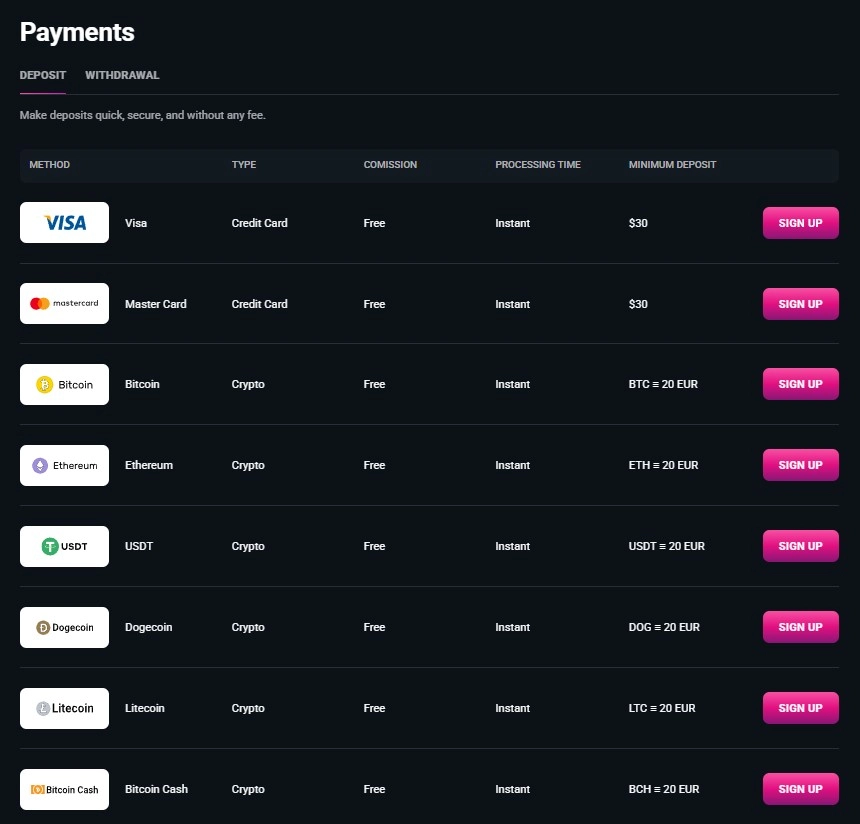
A card that appears in a deposit menu does not necessarily provide a way to receive a payout. A specialist review reports that Visa and Mastercard are widely accepted for deposits, while card withdrawals may be slower or unavailable, depending on the payment processor. That distinction matters: the route used to send money and the route used to return it are separate parts of the payment arrangement.
For services operating outside Australia, an operator may require a withdrawal to go back through the deposit method when that is possible, according to a specialist review. If a card cannot receive the payout, the operator may need to process it another way. The available route and any conditions attached to it should therefore be established before treating a card deposit as compatible with a later withdrawal.
That does not make credit-card gambling an available option for Australian online casino services. Real-money online casino games are prohibited for operators providing them to people in Australia. References to card acceptance describe payment arrangements reported elsewhere; they are not a statement that Australian residents can use a credit card to fund an online casino legally operating in Australia.
“Pay by phone” can also refer to different mechanisms. A mobile phone might be used to access a banking service, while a carrier-billed payment would put a charge on a phone account. Neither phrasing establishes that a card-based deposit, a phone-bill charge or a particular billing provider can be used for an Australian online casino. The payment label alone does not settle the legal or practical question.
The useful comparison is between deposit and payout terms, not between card brands in isolation. Deposit availability says nothing conclusive about withdrawal speed, eligibility or the method an operator will accept. Before any transaction, the written payment terms should identify whether the card is deposit-only, whether withdrawals can return to it, and what alternative route applies if they cannot. A deposit option without a workable payout route is an incomplete payment arrangement.
A free spin has no fixed cash value on its own. Its practical value depends on what the promotion permits, what conditions attach to any winnings, and whether those winnings can ultimately be withdrawn. Promotional credit is subject to the same calculation: a displayed balance is not necessarily withdrawable cash.
The terms should be checked for wagering requirements, maximum bet limits, eligible games and game weighting, expiry deadlines, and any cap on cash-out. Each condition changes the amount that may remain after play. A cash-out ceiling can limit the result even when a balance appears larger; a wagering condition can require further play before withdrawal is available. Without the full terms, a monetary estimate is not meaningful.
The label “free” does not remove those conditions. Nor does a payment method establish that an offer is valid, available or payable. A claim linking phone-assisted payment with spins or promotional credit should be assessed separately from the payment route: the payment process does not determine the offer’s cash value.
There is also a legal boundary in Australia. Under the Interactive Gambling Act 2001, operators cannot provide real-money online casino games, including pokies, to people physically located in Australia, and advertising those services to Australian audiences is prohibited. A promotional description does not change that status.
For a purely numerical comparison, the relevant figure is the amount that remains eligible for withdrawal after every stated condition is applied—not the headline number of spins or credits. If the terms do not specify the requirements, eligible games, deadline and maximum cash-out, the promotion cannot be valued reliably.
PayID casino deposits commonly start at AUD 10–20, with some bank-transfer deposits accepted from AUD 5. The payment limit is set by your bank; most major Australian banks allow AUD 1,000–5,000 per transaction, with daily limits of AUD 10,000–20,000.
Yes, PayID can be used for withdrawals where the casino offers it. Typical PayID withdrawal minimums are AUD 20–50, and maximums are AUD 5,000–10,000 per transaction.
At top-rated PayID casinos, verified withdrawal requests are typically reviewed and approved within 2–6 hours. Once approved, the PayID payment may arrive within minutes to hours.
PayID is available through Australian banks that participate in the New Payments Platform, and it can use an identifier such as a mobile number or email address. Check with your bank to confirm PayID availability and your transaction limits.
Created by the ”SpinsUP Casino” editorial team.