See how PayID directs a payment, how the NPP moves it, and which bank and payout terms can affect casino transactions.

PayID is an Australian digital payment system built around an identifier rather than the need to share traditional account details for every transfer. An identifier can be a mobile phone number or an email address. PayID provides the address used to direct a payment; the New Payments Platform (NPP) is the infrastructure through which participating banks can move funds quickly between accounts. The two terms describe related but different parts of the process.
For a payment, the PayID identifies the intended destination. The NPP carries the transfer between banks. This distinction matters because PayID is not itself a casino account, a bank account or a separate pool of funds. It is a way of addressing a payment, while the bank accounts remain the places from which money is sent and to which it is delivered.
A simplified transaction has three stages: the payer initiates a transfer using a PayID, the payment is routed through the NPP, and the receiving bank processes it for the destination account. The identifier gives the payment a destination without requiring the payer to enter conventional bank account details in the same way. The underlying bank transfer, rather than the identifier alone, is what moves the money.
For a 2026 PayID pokies search in Australia, check the available operator details before choosing where to play. The notes below stick to the information provided and do not assume that a listed operator supports PayID.
Bizzo Casino
Bizzo Casino is listed with a Curacao Gaming Control Board licence held by TechSolutions Group N.V.
Vegaz Casino
Vegaz Casino is listed with licence Curacao OGL/2024/1335/0780. Its minimum deposit is EUR 20.
Neospin
Neospin is listed with Curacao Gaming Control Board licence OGL/2023/176/0095, held by Hollycorn N.V.
Ricky Casino
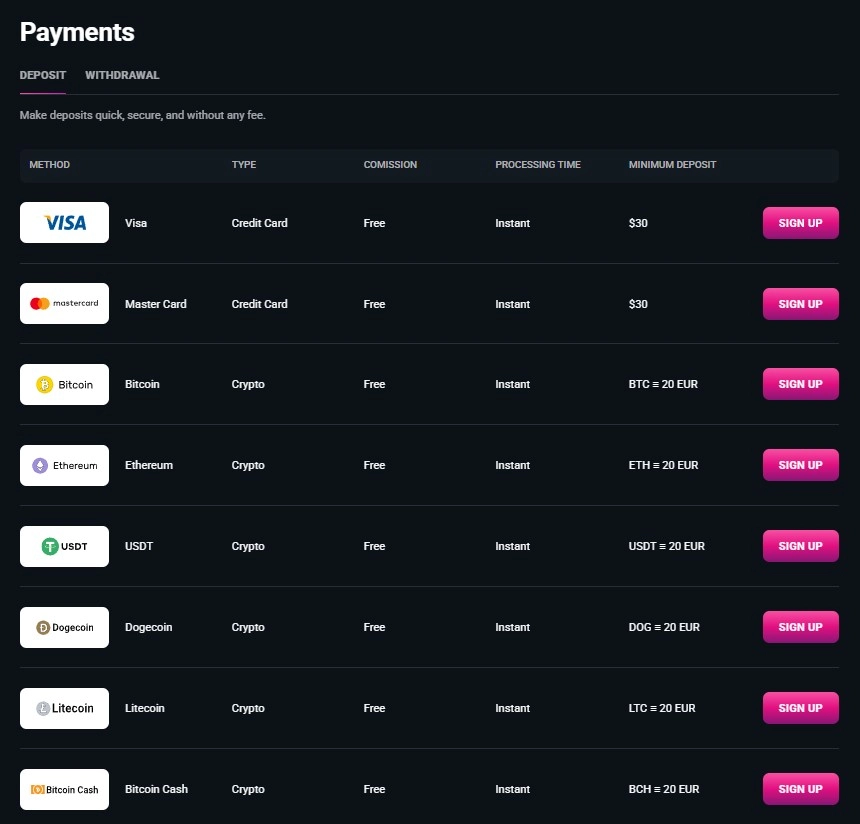
Ricky Casino lists crypto payouts in under an hour and PayID payouts in 1–3 business days. The minimum deposit is A$20, or A$30 to qualify for the bonus.
7Bit Casino
7Bit Casino is listed as operating under a Curacao licence, with Dama N.V. as its operator.
Kingmaker
Kingmaker lists crypto payouts at around 90 minutes and fiat payouts in 1–5 days. Its minimum deposit is A$30.
WinSpirit Casino
WinSpirit Casino is listed with Curacao eGaming licence OGL/2024/923/0383, held by Antillephone N.V. Its minimum deposit is A$30.
Playfina Casino
Playfina Casino is listed with a Curacao eGaming licence held by Hollycorn N.V. since 2017. Its minimum deposit is A$20–30, depending on the offer.
Golden Pokies
Golden Pokies is listed with a Curacao licence.
DragonSlots Casino
DragonSlots Casino is listed with a Curacao Gaming Authority licence, with Jumpman Gaming Ltd named as the operator.
That arrangement explains why PayID can be used for transfers between banks without treating each bank as a separate payment network. The NPP supports the movement between them, while the PayID supplies a recognisable destination. For a customer, the practical distinction is modest but useful: the visible detail used to address the payment is an identifier, not a description of how the banks settle it behind the scenes.
In a payment interface, PayID may appear as one of the available methods for adding funds. If selected, the payment is directed using the PayID associated with the intended recipient. The casino interface and the bank each have a role: one presents the payment option and destination details, while the bank initiates and processes the transfer through the relevant payment infrastructure. The exact screens and steps can differ between services, so the label alone does not describe every part of a transaction.
PayID is often associated with speed because the NPP facilitates quick transfers between banks. For deposits at online casinos, payments are typically completed within seconds. That timing describes the transfer reaching its destination; it does not mean every casino-related process is instant. Payment movement and the handling of a balance inside a separate service are distinct events. A fast bank transfer should therefore be understood as a feature of the payment pathway, not as a statement about what a casino does after funds arrive.
The word “instant” can otherwise blur two separate questions: how quickly money moves between bank accounts, and how quickly a service updates its own records. PayID relates to the first. A casino may have its own interface and account processes, and those are not functions of the NPP. A payment method cannot determine how a separate business records or displays a transaction.
The system’s use of a unique identifier also does not change the basic nature of the payment. Funds still move from a bank account to a destination account. PayID is not a wallet that independently stores a balance, nor does it turn a bank transfer into a card payment. It provides a way to address a transfer within the Australian payment environment.
For anyone trying to understand “new PayID” options associated with pokies, the word “new” should not be mistaken for a different payment rail. A service may add PayID to its payment screen, or a user may encounter a newly presented payment option, but the core mechanism remains the same: an identifier is used to address a payment and the NPP facilitates the interbank movement. The age or placement of a button does not alter what PayID is.
Nor does the presence of PayID establish anything about the status of the service displaying it. Payment access is a technical matter, not a legal endorsement. Under Australia’s Interactive Gambling Act 2001, operators are prohibited from providing real-money online casino games, including pokies, to people physically located in Australia. A payment method does not make such a service lawful or constitute approval by a bank or payment network.
The practical description is therefore narrow: PayID identifies a destination through a mobile number, email address or another supported unique identifier, while the NPP enables quick transfers between banks. In the context of online casino deposits, that transfer is typically completed within seconds. Those points explain the payment mechanism without turning it into a claim about a particular operator, the legality of its service or the handling of funds after the transfer has arrived.
PayID payments depend on two details being aligned: the identifier used for the transfer and the account to which that identifier is registered. The PayID entered for a payment must match the PayID recorded with the player’s bank. A mismatch is not a minor formatting issue; it can prevent the payment from being correctly associated with the intended account.
The account name matters as well. For a payment connected with an online service, the bank account holder’s name should match the name on the casino profile. Where those details differ, a deposit or withdrawal may not be accepted or may require additional checks. Using another person’s bank details does not resolve the mismatch; it introduces a separate ownership inconsistency. The safest reading of the requirement is literal: the PayID and account details should belong to the same named account holder as the profile.
This matching condition is particularly relevant when a person has more than one bank account or uses a mobile number or email address as a PayID. An identifier can be familiar and still be registered to a different account than the one intended for the transaction. Selecting the correct identifier is therefore a matter of account ownership, not simply remembering a phone number or email address.
The amount transferable through PayID is subject to the sending bank’s daily limit. A specialist review identifies the bank as the party that sets this limit, rather than PayID itself. The applicable ceiling may therefore depend on the bank account and its settings; it should not be assumed to be the same across institutions or users.
A bank limit and an online service’s own payment conditions are separate constraints. The bank’s limit governs whether a transfer can be sent through the account. The recipient may apply its own conditions to payments, but those do not increase the bank’s available transfer capacity. If a transaction is larger than the remaining bank allowance, the payment may not proceed as intended. Splitting a payment into several transfers should not be treated as a workaround: the daily limit still applies to the bank account, and the total of transfers may be relevant to that limit.
Limits can also matter when other PayID transfers have already been made during the day. The amount available for a further transfer is not necessarily the account’s full daily allowance; it depends on what has already counted against it. A displayed balance is not the same thing as a payment limit. Having sufficient funds does not establish that the bank will permit a transfer of that size.
For a new PayID setup, the identifier and the bank’s applicable limit are separate checks. Confirming that an identifier is registered does not establish that a particular payment can be sent. Conversely, a limit that appears sufficient does not correct a mismatch between the PayID and the registered account. Both conditions have to be satisfied for the transfer to be correctly initiated.
A confirmed PayID transaction is irreversible. That is the central risk condition: after confirmation, the sender cannot rely on a routine cancellation or reversal to recover funds sent to the wrong destination. The transfer should therefore be treated as final once the payment is confirmed, not as a pending instruction that can be edited later.
This changes the order in which checks matter. The recipient details and amount need to be checked before confirming, because the practical opportunity to correct an error is before completion. A mistyped identifier, an outdated contact detail, or a selection of the wrong saved PayID can turn a routine payment into a recovery problem. The fact that PayID uses a recognisable identifier does not remove the need to verify the details displayed for the transaction.
A transfer sent to an incorrect recipient is not equivalent to a payment that has merely taken longer than expected. Delay concerns timing; an incorrect confirmed payment concerns destination and recovery. Those are different problems, and the irreversible nature of the transaction makes prevention more important than relying on a later correction.
The same caution applies when a payment request or account instruction is received from an unfamiliar source. A name or message associated with a request is not, by itself, proof that the destination is correct. The payment details should correspond to the intended recipient before confirmation. No assumption about the ability to recall a payment should be built into the decision.
The relevant checks are distinct:
Passing one check does not compensate for failing another. A correctly registered PayID can still be subject to a bank limit, while a transfer within that limit can still be sent to the wrong destination if the details are not verified. The payment method’s convenience does not change these conditions.
For people comparing new PayID pokies payment arrangements, the key distinction is between an identifier that is available and a transaction that is both correctly addressed and permitted by the bank. The identifier must match the bank registration, the account holder’s name must align with the profile, and the intended transfer must fit within the bank’s applicable limit. Confirmation is the point after which the payment cannot be reversed.
PayID’s availability in a payment menu describes a transfer option, not the legal status of the service receiving the money. The distinction matters in Australia: a payment can be technically possible while the underlying real-money gambling service remains prohibited. A successful transfer does not change that position, establish that an operator is licensed locally, or show that the service is permitted to accept Australian customers.
The Interactive Gambling Act 2001 prohibits operators from providing real-money online casino games to people located in Australia. That category includes pokies and other casino-style games, as well as poker and table games such as blackjack and roulette. The restriction concerns the provision of the service to people in Australia; a foreign location or licence does not, by itself, make the service lawful for Australian customers.
The Act places the legal prohibition on operators. A person playing at an offshore casino without a local licence does not incur a fine or criminal prosecution under the stated Australian framework. That distinction should not be confused with approval or endorsement: absence of player liability does not make the operator’s service lawful, nor does it remove the restrictions applying to the business providing it.
PayID is an Australian payment system, but its presence cannot certify what a merchant is authorised to offer. A payment rail processes a transaction; it does not grant a gambling licence, assess compliance with the Interactive Gambling Act, or decide whether a customer may lawfully be offered casino games. The same applies to a payment button, a successful deposit, or a casino’s claim that it accepts Australian customers. None is evidence of local authorisation.
This separation also matters when a site describes itself as licensed offshore. A foreign licence may regulate the operator in another jurisdiction, but it is not an Australian licence and does not override the Australian prohibition on providing real-money online casino services to people physically in Australia. The relevant question is not simply whether a licence exists somewhere. It is whether the service may lawfully be supplied to customers in Australia. For online casino games, the Act sets the applicable restriction.
Access is also subject to practical barriers. A specialist review has reported that some Australian banks, including members of the Big Four, may block PayID transfers to gambling merchants identified by the bank under its acceptable use rules. This is a reported possibility, not a settled description of every bank’s current policy or every transaction. Policies and controls can change, and an account holder may encounter a declined transfer even where the payment method is displayed by a merchant.
A bank decision about a transfer does not determine the legality of the gambling service. A completed transfer does not determine it either. These are separate questions: the bank applies its own payment controls, while the legal framework governs whether an operator may provide the service to people in Australia. Treating one outcome as proof of the other confuses payment processing with permission.
The law is not limited to a particular game label. Casino-style online products offered for real money—including pokies, poker, blackjack and roulette—fall within the prohibited interactive gambling services described by the Act when supplied to customers in Australia. Changing the name of a game, using a different payment method, or routing a payment through a digital identifier does not alter the nature of the service.
The Australian Communications and Media Authority is the regulator associated with the interactive gambling framework. The existence of a regulator and statutory restrictions should not be read as a local approval system for offshore casinos. In particular, a foreign operator’s statement that it is regulated elsewhere does not establish that it is authorised to provide real-money casino games to Australians.
For payment decisions, the practical record therefore has two separate entries: whether the bank permits a transfer and whether the recipient is legally entitled to provide the service. PayID can answer neither licensing nor legality questions. Even a transfer that proceeds without interruption says only that the payment cleared; it does not convert a prohibited service into a lawful one.
The word “new” in descriptions of PayID pokies does not change this framework. A recently added cashier option is still only a payment feature. It does not create an exception to the Interactive Gambling Act 2001 or make an offshore casino locally authorised. In 2026, the relevant legal distinction remains between a payment method being technically available and an operator being allowed to supply real-money online casino games in Australia.
Bank restrictions should be understood just as narrowly. A reported block may prevent a particular payment, but it is not a full legal assessment of the merchant or a universal measure of policy across Australian banks. Conversely, the absence of a block is not evidence that the bank has reviewed or approved the operator’s gambling service. Payment availability is an operational fact; legality is a separate matter governed by the law.
The result is a clear boundary for interpreting PayID in the Australian gambling context: its use does not confer permission, prove licensing, or validate the service receiving funds. The legal status follows the operator’s provision of real-money casino-style gambling to people in Australia, not the payment label shown at checkout.
PayID changes the movement of funds, not the amount available or the conditions attached to it. It can be used for deposits and withdrawals, with transfers moving quickly in both directions. That makes the payment method relevant to the timing of a transaction, but it does not by itself determine when funds become usable or arrive in an account. Those are separate parts of the process.
For a deposit, the practical difference is that the transfer can be completed quickly rather than treated as a slow bank movement. Once the payment reaches its destination, the balance may be updated without a long wait for the transfer itself. The distinction matters because “sent” and “available” describe different points: the payment method handles movement between accounts, while the receiving service controls how it records and displays the funds.
The same distinction applies to withdrawals. PayID can carry money back towards a bank account quickly, but that does not mean every withdrawal request is released immediately. A payment method can move funds only after the sending party initiates the transfer. The timing of that decision is not a feature of PayID. Treating a fast transfer as a guaranteed fast payout would therefore confuse the payment rail with the process that precedes it.
The direct-fee position is comparatively simple. PayID itself does not charge a transfer fee, and reputable venues do not add a separate charge for deposits or withdrawals made with it. That can make the stated transaction amount easier to reconcile: a payment sent is not reduced by a PayID fee, and an incoming transfer is not subject to a PayID charge. The absence of a method fee is a cost attribute, not a broader judgement about the service handling the funds.
A fee assessment should keep those categories separate. The payment method’s own charge is one line; any amount imposed by another party would be a different line and would need to be stated in that party’s terms. It would be inaccurate to attribute an unrelated deduction to PayID merely because the transfer used PayID. It would also be inaccurate to treat the lack of a PayID fee as proof that every part of a transaction is cost-free.
Speed has a similar boundary. A quick transfer can reduce the interval between sending and receiving funds, but it does not erase other steps around the transaction. The balance shown by a service, the approval of a withdrawal, and the arrival of money in a bank account are not interchangeable events. Each refers to a different stage. PayID concerns the movement of money; it does not set the rules for a balance, authorise a withdrawal, or determine what a service will pay.
This is why convenience should be measured narrowly. For deposits, the relevant benefit is quick movement into the receiving account without a PayID transfer fee. For withdrawals, it is quick movement once the funds are sent, again without a PayID transfer fee. Neither point establishes that a service will accept a transaction, process it at a particular time, or apply no other terms. The method’s value is real but bounded: it affects transfer speed and the direct payment cost, not the entire financial arrangement.
The same accounting logic applies when comparing a PayID transaction with another payment method. A useful comparison separates the time spent moving funds from any delay before the transfer begins, then separates the method’s own fee from any other charge. Without that separation, a transaction that appears slow may be blamed on the wrong stage, while a transfer with no method fee may be mistaken for a transaction with no possible costs at all.
For anyone assessing PayID pokies as a payment category, the central point is not that every associated transaction is instant or free in every sense. PayID can move funds quickly in both directions and does not itself charge a transfer fee. Reputable venues do not add a PayID-specific deposit or withdrawal fee. Those are the practical advantages to record, without extending them into a promise about access, processing, or payout.
A PayID option describes a payment route, not a payout promise. The transfer can move quickly after release, but a casino controls whether and when a withdrawal is approved. Its internal review and the account’s KYC status therefore affect the time before funds leave the casino’s system. A payment logo alone establishes neither that a withdrawal will be authorised nor that an operator is entitled to serve customers in Australia.
That distinction matters when comparing payout claims. A stated transfer time may begin only after approval, while a separate pending period applies before approval. Adding those stages gives a more useful picture than treating the advertised transfer speed as the total wait. Terms that do not define when the clock starts leave a material gap: a fast payment rail cannot resolve an unspecified review process.
A specialist review reports that some casino-initiated PayID withdrawals may remain pending for 24–72 hours before funds are sent. That is a reported range, not a universal timetable. A separate specialist review describes PayID transfers as taking 12–24 hours after casino approval, with the casino’s internal pending period potentially extending the overall request-to-receipt interval to 2–4 days. These figures should be read as descriptions of reported arrangements, not guarantees for every operator or account.
Payout Process
Casino Approval
The operator reviews the request and the player's KYC status to approve the withdrawal.
Fund Release
Once approved, the casino initiates the transfer through the PayID system.
Bank Receipt
The funds move via the NPP and arrive in the player's bank account, typically within seconds to 24 hours after release.
The practical assessment is to separate the stages rather than collapse them into one headline. First comes the casino’s decision to approve a request. Then comes the transfer after release. A published estimate that covers only the second stage can look shorter than the actual wait if the first stage is not stated. Conversely, a pending period does not tell how long the transfer itself takes once approved. The terms should make clear which interval is being described.
KYC status is part of that calculation. Specialist reviews identify internal casino checks and the player’s verification status as factors affecting payout speed. An estimate tied to a verified account cannot be assumed to apply when verification is incomplete. The central question is not simply whether PayID is listed, but what the operator says must happen before a withdrawal is approved and whether the stated timing begins at request, approval, or release.
Useful terms are specific about the sequence: what the operator reviews, what status is required before payment, and which part of the wait its estimate covers. If wording gives only a broad promise of fast withdrawals, it supplies no basis for calculating the full time from request to receipt. A stated range is more informative when its starting point and end point are explicit. Without those boundaries, two apparently different promises may describe the same stage—or two identical promises may conceal different processes.
There is also a difference between payment availability and payment reliability. PayID being offered for deposits or withdrawals does not establish that an operator will approve a particular request, pay winnings, or meet a quoted timeline. Nor is it evidence of licensing, fairness, or public accountability. These are separate questions, and a payment method cannot answer them.
In Australia, the legal position is decisive context rather than a footnote: the Interactive Gambling Act 2001 prohibits operators from providing real-money online casino games, including pokies, to people physically located in the country. Accordingly, payout comparisons should not be treated as recommendations or as encouragement to use an offshore casino. Access to a payment channel does not alter that restriction.
A cautious reading of any payout statement therefore keeps the claims narrow. A reported post-approval transfer interval concerns the transfer stage; a pending estimate concerns the casino’s handling before release; and KYC status may affect the review. None guarantees a final outcome. The meaningful measure is the complete process described in the terms, not the presence of PayID or the shortest isolated time figure.
A payment threshold determines whether a transaction can be made; it says nothing about the value of a bonus or whether a withdrawal will be paid. For PayID, the figures reported for casino deposits and withdrawals are operator-set terms, not limits built into the payment system. They therefore need to be read as separate conditions rather than as one standard PayID schedule.
Reported minimum deposits commonly fall between AU$10 and AU$20. A specialist review has also reported operators with a AU$5 starting deposit, but that is a specific offer, not a market-wide floor. The difference matters when calculating the cash required to meet an offer’s conditions: a low entry amount can still be attached to a substantial wagering obligation.
Commonly range between AU$10 and AU$20, with some specific offers starting at AU$5.
Typically reported in the AU$20–AU$50 range.
Some operators may deduct A$5–A$10 on withdrawals below thresholds like A$100 or A$200.
Withdrawal minimums are reported in the AU$20–AU$50 range. A balance below the stated minimum may not be eligible for a withdrawal request, while a higher threshold may leave funds unavailable until the balance reaches it. These are operator terms, not PayID rules. A deposit minimum and a withdrawal minimum can differ, so the amount accepted into an account should not be treated as an amount that can immediately be taken back out.
Some specialist reviews report deductions of A$5–A$10 on withdrawals below internal thresholds such as A$100 or A$200. These are not universal charges, and the conditions need to be stated by the operator. The arithmetic is straightforward: a A$5 deduction from a A$20 withdrawal leaves A$15 before any other applicable condition; a A$10 deduction leaves A$10. Where a minimum withdrawal applies, a fee may also make a small balance less useful than its displayed amount suggests. The relevant comparison is the net amount received, not the amount entered in a withdrawal field.
A bonus adds a condition to the balance rather than simply increasing immediately available cash. A specialist review describes wagering requirements in the range of 30x–45x the bonus amount. The multiplier is applied to the bonus amount where the terms define it that way; if the terms instead apply it to the deposit and bonus together, the required turnover is higher. The calculation base must therefore be checked before a bonus is assigned any value.
For a hypothetical A$10 bonus subject to a 30x requirement, the required wagering total is A$300. At 45x, it is A$450. The gap between those two terms is A$150 of additional wagering, despite the bonus amount remaining A$10. That is the useful comparison: the nominal credit is small, while the qualifying turnover can be many times larger.
If the wagering requirement applies to a combined deposit-and-bonus amount, the calculation changes. For instance, a A$10 deposit plus a A$10 bonus creates a A$20 base. At 30x, that means A$600 of required turnover; at 45x, it means A$900. Those totals are calculations from the stated multipliers, not promises about how a particular operator defines its terms. The wording in the bonus rules controls.
Turnover is not the same as money spent once and then recovered. A wager can contribute to the required total while changing the remaining balance; the balance may fall before the turnover target is reached. A bonus with a large multiplier can therefore have little practical value if the eligible balance is exhausted first. The calculation should keep three figures separate: the amount credited, the amount required to be wagered, and the cash balance that remains after wagering.
Other conditions can change the result. Games may contribute differently, a bonus may expire under its terms, and a maximum bet condition may apply while wagering is underway. Exceeding that maximum can void the bonus and associated winnings. Without the applicable game contribution, deadline and bet condition, a multiplier alone is not enough to establish the cost or value of an offer.
PayID availability does not establish that an operator is licensed, that its bonus terms are fair, or that a withdrawal will be honoured. In Australia, the Interactive Gambling Act 2001 prohibits operators from providing real-money online casino games, including pokies, to people physically located in the country. Payment thresholds and promotional calculations do not alter that restriction. They are descriptive figures, not a recommendation to use an online casino service.
For a clean comparison, the terms would need to state the deposit minimum, withdrawal minimum, any withdrawal deduction and the precise wagering base. A bonus should then be valued only after calculating the turnover required under that base and accounting for the conditions that can invalidate it. If one of those terms is absent or ambiguous, the headline bonus figure is not a usable measure of its cash value.
Select PayID in the payment interface and use the recipient details provided to initiate a bank transfer. Make sure your PayID and account holder details match the details registered with your bank and casino profile.
No. Under Australia’s Interactive Gambling Act 2001, operators are prohibited from offering real-money online casino games, including pokies, to people physically located in Australia.
Your bank sets your daily PayID transfer limit. Casino minimum deposits are commonly A$10–A$20, while minimum withdrawals are typically A$20–A$50.
After casino approval, PayID transfers usually arrive the same day, often within 12–24 hours. A casino’s pending period can extend the total time from requesting a withdrawal to receiving the money to around 2–4 days.
Yes, PayID can be used for withdrawals as well as deposits. The casino reviews the withdrawal first, and your PayID details should match those registered with your bank.
PayID transactions use a unique identifier, such as a mobile number or email address, and are transferred through the New Payments Platform between banks. Confirmed transactions are irreversible, so check the recipient details carefully before sending money.
Created by the ”SpinsUP Casino” editorial team.