PayID identifies a bank account, while the New Payments Platform carries the transfer; casino payment terms vary by site.

PayID is an Australian payment system built around an identifier that can be linked to a bank account. Instead of entering account details for every transfer, a sender can use a registered mobile number or email address. The identifier points to the account associated with it; it is not itself a separate wallet or a guarantee about the recipient.
The transfer moves through the New Payments Platform (NPP), which connects participating banks for quick payments between accounts. PayID is the identifier layer, while the NPP provides the infrastructure that carries the payment. Keeping those roles separate helps explain why a transfer can be fast without PayID holding the money.
A payment begins when the sender selects PayID through their bank and supplies the recipient’s identifier. The bank uses that detail to identify the destination account and displays recipient information for confirmation. The sender then authorises the payment through the bank’s process. The funds move between bank accounts through the payment network; they do not pass through PayID as a stored balance.
This differs from entering an account number and bank code, but the underlying action remains a bank transfer. The identifier makes the destination easier to specify. It does not change who controls the account, the bank’s checks, or the consequences of authorising a payment.
The word “instant” describes the intended speed of the rail, not a promise that every transaction will appear at precisely the same moment. Banks may apply their own security checks, and a transfer can depend on the sending and receiving institutions. PayID’s role is to route the payment using the registered identifier; it does not decide whether a particular merchant accepts PayID or how a merchant records a payment after receiving it.
That distinction matters when the phrase “PayID pokies” appears in payment descriptions. It refers to a proposed use of a bank transfer, not a special gambling feature built into PayID. Availability of a payment option does not establish that an operator is authorised, that a service is lawful, or that a payment will be handled in a particular way. Under Australia’s Interactive Gambling Act 2001, operators are prohibited from providing real-money online casino games, including pokies, to people physically located in Australia.
The most consequential feature of a PayID transfer is finality. Once a payment has been confirmed, it cannot be reversed through PayID. A mistaken recipient identifier or an unauthorised merchant payment is therefore not equivalent to cancelling a card transaction. The bank may have procedures for reporting an error or suspected fraud, but those procedures do not turn a confirmed transfer into a reversible payment.
The confirmation step is consequently substantive, not ceremonial. It is the point at which the sender checks the recipient details and authorises funds to leave the account. If the displayed destination does not match the intended recipient, proceeding transfers the risk to the sender. A fast rail leaves little room for correcting a deliberate confirmation after the event.
For Australian bank customers, PayID offers a way to address transfers using a familiar identifier while the NPP carries funds between banks. In the context of online pokies, that technical description should not be mistaken for an endorsement or a signal of legality. PayID explains how a transfer is addressed and routed; it does not make the underlying service lawful, assess the merchant, or provide a reversal once the payment is confirmed.
PayID may appear as a payment option on websites describing online pokies for Australian users, but that does not make the underlying service lawful. Under the Interactive Gambling Act 2001, providing real-money online casino games, including pokies, to people physically located in Australia is illegal. The prohibition concerns the service offered by the operator; players do not incur legal liability merely for playing at an offshore casino.
That distinction matters when interpreting advertised deposit amounts. A low entry figure describes a payment condition presented by an operator, not approval of the service or evidence that a transaction will be accepted. It also says nothing about whether funds can be withdrawn, whether the operator will honour its terms, or whether PayID is genuinely available to a particular account. Payment branding and a small minimum are not substitutes for legal status.
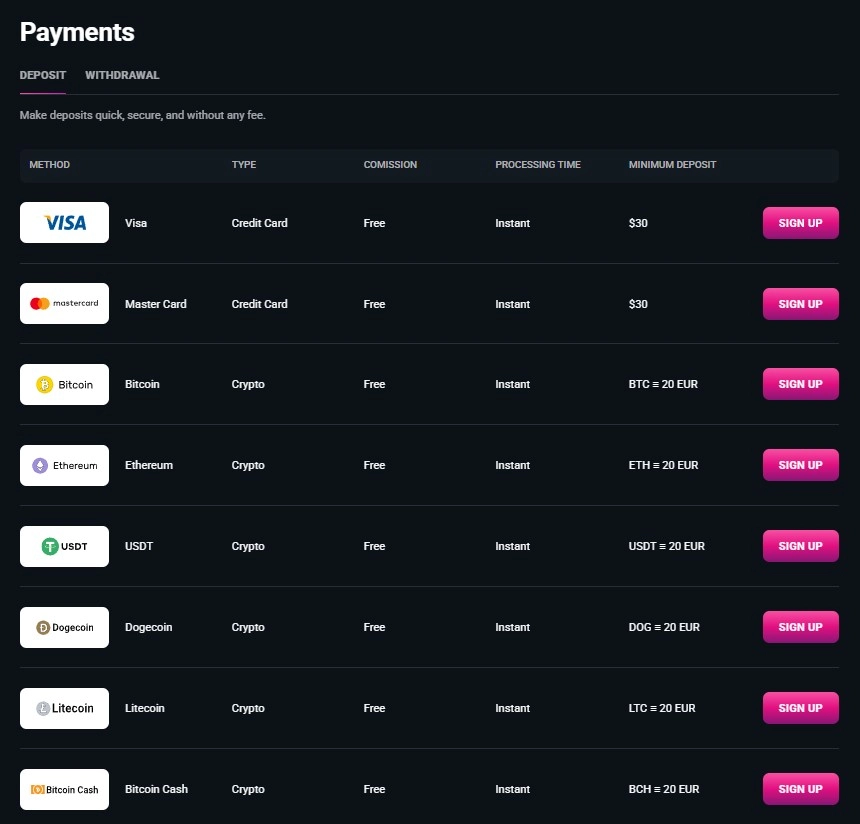
Available reporting places many operators’ opening deposits in the AU$10–AU$20 range. A specialist review reports that some operators set the starting amount at AU$5. These are different thresholds, not a single Australian standard. The minimum is an operator-set condition, and it may change with the site’s terms. A figure displayed in promotional material should therefore not be treated as a dependable market-wide rule.
The amount required to initiate a transaction is also separate from the bank’s transfer ceiling. A casino may state a minimum deposit, but it does not set the customer’s daily PayID transfer limit. A specialist review identifies the player’s bank as the party that sets that daily cap. The limit is consequently a bank-side condition, while the casino’s stated minimum is a site-side condition. Neither figure overrides the other: a permitted minimum does not increase a bank limit, and a bank limit does not compel an operator to accept a deposit below its own threshold.
This distinction can be represented simply. The operator’s minimum determines whether a proposed deposit meets its stated entry condition. The bank’s daily cap determines how much can be sent through PayID under that bank’s rules. A transaction would need to satisfy both conditions, but satisfying them would not make an Australian-prohibited casino service lawful. Treating the two limits as though they were one can lead to a mistaken view of the total cost or availability of a transaction.
A deposit described as AU$10, for instance, is not necessarily the amount that can be sent in every circumstance. The operator’s minimum is only one term; the bank’s own limit remains distinct. Nor does an advertised AU$5 starting point establish that all payment routes or all accounts can use it. The reported lower threshold comes from a specialist review, so it should be understood as a specific report, not a stable condition across the market.
The same caution applies to phrases such as “instant PayID” or “real-money PayID pokies.” They describe a payment claim or a service category, not a legal finding. PayID is a transfer method, not a licensing system, and its presence does not verify an operator’s authority, the fairness of a game, or the return of funds. In Australia, the legality of providing real-money online casino games is governed by the Interactive Gambling Act 2001, not by the payment option shown in a cashier.
For financial assessment, the two relevant amounts remain separate: the site’s stated deposit minimum and the bank’s daily transfer limit. The first is set by the operator; the second is set by the bank, according to specialist review reporting. Neither should be inferred from a headline or assumed to apply uniformly. But for Australian residents, these figures do not alter the central legal position: offering real-money online casino games to people in Australia is prohibited, and a payment rail cannot change that status.
Choosing an online pokies site for PayID in Australia means checking the available payment and licensing details before you play. This list provides a concise reference to the information available for each operator.
Bizzo Casino
Bizzo Casino is listed with a Curacao Gaming Control Board license held by TechSolutions Group N.V.
Vegaz Casino
Vegaz Casino holds license OGL/2024/1335/0780 in Curacao. Its minimum deposit is EUR 20.
Neospin
Neospin is licensed by the Curacao Gaming Control Board under OGL/2023/176/0095, with Hollycorn N.V. named as the license holder.
Ricky Casino
Ricky Casino lists PayID payouts at 1–3 business days and crypto payouts in under an hour. The minimum deposit is A$20, or A$30 to qualify for the bonus.
7Bit Casino
7Bit Casino is operated by Dama N.V. and is licensed in Curacao.
Kingmaker
Kingmaker lists crypto payouts at around 90 minutes and fiat payouts at 1–5 days. Its minimum deposit is A$30.
WinSpirit Casino
WinSpirit Casino holds Curacao eGaming license OGL/2024/923/0383, issued to Antillephone N.V. Its minimum deposit is A$30.
Playfina Casino
Playfina Casino is licensed in Curacao through Hollycorn N.V., with the license dating from 2017. Its minimum deposit is A$20–30, depending on the offer.
Golden Pokies
Golden Pokies is listed as licensed in Curacao.
DragonSlots Casino
DragonSlots Casino is listed with a Curacao Gaming Authority license, with Jumpman Gaming Ltd named in the licensing details.
“Best” is not a useful payment rating unless the terms behind it can be checked. For PayID, the comparison can be kept to two cash figures: the cost of moving funds and the minimum deposit accepted by the venue. Neither figure establishes whether a service is lawful, whether a game is fair, or whether a withdrawal will be paid. A payment option is a payment condition, not a quality seal.
PayID itself does not charge a transfer fee. Reputable venues also do not add a separate charge for PayID deposits or withdrawals. That leaves the venue’s own written terms as the relevant point of comparison: the cashier and payment rules should say whether any charge applies to the transaction. A claim of “free PayID” is incomplete if it refers only to the payment rail and leaves a separate venue charge unstated. The useful comparison is the total amount credited or deducted, not the label attached to the method.
A fee table should distinguish a PayID charge from other possible deductions. If the terms do not identify a separate charge, it should not be assumed that one exists; if they do, the amount and the transaction it applies to need to be clear before any decision is made. Deposit and withdrawal conditions should not be collapsed into one line, because a statement about deposits does not establish the terms for withdrawals. Nor does the absence of a transfer fee imply that the venue has no other account rules.
Minimum deposits provide the second check. A specialist affiliate review reported that the sites it tested accepted PayID deposits from A$10 to A$20. That is a reported range from a particular review, not a fixed Australian standard or a promise about every venue. The result is useful only as a reference point: the cashier terms for the specific service determine its stated minimum, and those terms may change. A lower minimum is not automatically better if a separate payment condition alters the amount that can actually be used.
The arithmetic is simple. A stated minimum is the smallest amount the venue says it will accept through that option; it is not evidence of a fee-free transaction, nor does it settle any other terms attached to the account. Comparing minimums is therefore meaningful only alongside the fee wording. A smaller entry figure can look favourable on its own while offering no advantage if the overall payment conditions are less clear or include a separate charge.
A practical comparison record can be kept to a few fields:
| Term | What to establish |
|---|---|
| PayID transfer fee | Whether the payment method itself carries a fee |
| Venue charge | Whether the venue adds a separate deposit or withdrawal charge |
| Minimum deposit | The current amount stated for PayID in the cashier |
| Source and date | Where the term appeared and when it was checked |
This format avoids treating an old review as a current cashier rule. A reviewed minimum is evidence of what that source reported at the time, not a standing commitment by a venue. The same distinction applies to fee claims: general statements about PayID do not replace the specific payment terms shown for an individual service.
Terms should also be read in their proper scope. “No PayID fee” concerns a charge for using the payment method; it says nothing about other account conditions or the outcome of a withdrawal. Likewise, a low minimum says nothing about service reliability. Rankings that blend these separate questions into a single “best” label conceal the inputs rather than clarify them. A comparison based on visible amounts and explicit fee wording is narrower, but it can be checked.
In Australia, real-money online casino games are prohibited services under the Interactive Gambling Act 2001 when offered to people physically in the country. Describing payment terms does not make an operator lawful or turn a payment method into an endorsement. The term “best” should therefore be treated as a label requiring scrutiny, not as a recommendation. For a neutral assessment of PayID terms, the defensible comparison is limited to the stated fee, any separate venue charge, and the minimum shown in the relevant cashier; broader claims need evidence beyond those figures.
PayID works only when the identifier supplied for a transaction is registered with the bank account from which the funds are sent. A mobile number or email address entered at a payment screen is not interchangeable with an identifier held on a different account. The registered PayID is the reference point; a detail that looks correct but belongs to another bank account does not meet that condition.
This matters separately from any payment option shown by a gambling operator. A casino may display PayID, but that does not establish that a player’s bank will allow a transfer to the merchant. Nor does the presence of PayID establish that a service is lawful, fair, or willing to pay winnings. Those are different questions, and the payment label answers none of them.
Account-name consistency is another condition to keep distinct from the PayID identifier itself. The bank account holder’s name should match the name on the casino profile. If the names differ, a payment or later account check may not correspond cleanly to the person recorded by the operator. Matching details do not guarantee acceptance or payout; they remove one avoidable inconsistency from the account record.
A further complication may arise on the bank side. A specialist review has reported that some Australian banks, including members of the Big Four, may occasionally block PayID transfers to gambling merchants under their acceptable-use policies. This is a qualified report, not a statement that all such banks routinely refuse these payments. Bank policies and controls can change, and a block reported in one account or at one time cannot be treated as a universal rule.
The practical distinction is between a payment method being technically available and a particular transfer being permitted by the bank. PayID can be supported by a receiving service while the sending bank declines a transfer to that merchant. In that situation, repeating the same payment details does not resolve the underlying policy decision. The reason for a decline, if supplied by the bank, is more relevant than the casino’s general statement that it accepts PayID.
Australian law also sets a separate boundary: the Interactive Gambling Act 2001 prohibits operators from providing real-money online casino games, including pokies, to people physically located in Australia. A bank’s payment decision does not alter that legal position. A transfer being processed is not evidence that the underlying service is authorised, and a bank block is not a substitute for assessing the legal status of the activity.
For account records, the useful check is consistency across the bank registration and any operator profile: the PayID must be registered to the bank account used, and the account holder’s name should align with the profile name. These are identity and payment conditions, not endorsements of a site or assurances about its conduct. If a bank refuses a transaction, its own explanation and applicable account terms are the relevant sources for understanding that refusal; a site’s payment page cannot override the bank’s rules.
The result is a two-part constraint. The identifier must belong to the intended bank account, and the bank must permit the transfer to the recipient. Neither condition can be inferred merely from a site’s Australian-facing language or from the fact that PayID appears among its payment options. A successful payment route, even where available, says nothing about licensing, game fairness, or whether winnings will be paid.
PayID is not a standard feature across every online cashier. A site’s Australian-facing branding does not establish that the payment option is available, and a payment method shown in general information may not appear for every account or transaction. Availability and processing conditions are set by the venue, so the cashier is the relevant place to verify the terms before registration.
That check is about payment mechanics, not a signal of licensing, fairness or willingness to pay winnings. In Australia, the Interactive Gambling Act 2001 prohibits operators from providing real-money online casino games to people physically in the country. A PayID option does not change that legal position.
Where a venue lists PayID, its own payment rules determine what happens after a transaction is submitted. For withdrawals, the casino may first hold a request for internal review; only after approval does the transfer proceed. A specialist review describes operator pending periods ranging from zero to 12 hours, with some manual checks taking 12–24 hours or longer over weekends. These are reported venue conditions, not a uniform PayID timetable.
Operator pending periods for withdrawals can range from zero to 12 hours, while some manual checks may take 12–24 hours or longer over weekends.
The same distinction applies to processing after approval. A specialist review reports that withdrawal processing can take from a few hours to 24 hours once a request has been verified and approved, while also noting that timing differs between casinos. The payment rail does not remove the operator’s review stage, and a stated transfer speed should not be read as the time from request to receipt unless the terms define it that way.
Before an account is opened, the cashier and payment terms should be checked for whether PayID is listed, whether it is available for the relevant transaction type, and what review conditions apply. A deposit option alone does not establish that withdrawals use the same method. Nor does a site’s general description settle the matter: the operative conditions are those displayed for the account and transaction.
For any PayID pokies site, the practical comparison is therefore limited to what the cashier actually states: availability, any operator-side review, and the point at which its processing-time estimate begins. Where those terms are unclear, the elapsed time cannot be calculated reliably from the payment method’s name alone.
A PayID deposit has two separate amount constraints: the minimum accepted by the payment venue and the maximum transfer allowed by the bank. These are set independently. A low minimum does not increase the bank’s daily transfer cap, and a bank limit does not require a venue to accept a small deposit.
A specialist review reports that the player’s bank sets the daily PayID transfer limit. The applicable cap is therefore a bank-side condition, not a figure that can be inferred from a casino’s advertised minimum. If the requested transfer exceeds the bank’s limit, the venue’s lower entry amount does not change that result.
The minimum is a separate operator term. One specialist review reports that some operators accept a starting deposit of AU$5. That is a reported offer, not a standard across PayID services, and it does not establish that the option is available at any particular venue. A low threshold only describes the amount the operator says it will accept; it says nothing about the bank’s transfer ceiling or the legality of the service.
For anyone assessing the arithmetic, the relevant comparison is between the amount intended for a deposit, the venue’s stated minimum and the bank’s applicable daily cap. The smallest advertised entry point is not necessarily the operative limit: if the bank permits less than the intended transfer, the bank condition controls; if the amount is below the operator’s minimum, the venue condition controls. Neither term overrides the other.
This distinction does not make real-money online pokies lawful in Australia. Under the Interactive Gambling Act 2001, providing online casino games, including slots, to people physically located in Australia is prohibited. A payment option or a low stated minimum does not change that legal position or establish that a service is authorised for Australian customers.
A PayID withdrawal has two separate stages: the casino’s internal review and the transfer after approval. The first controls when funds leave the operator’s system; the second concerns delivery to the bank account. A fast payment rail cannot remove time spent waiting for casino approval.
Withdrawal Timeline
Internal Review
The casino reviews the request, which may remain pending for 24–72 hours before funds are released.
Transfer Process
Once approved, the PayID transfer itself takes approximately 12–24 hours.
Total Interval
The overall time from request to receipt is typically 2–4 days.
Specialist reviews report that casino-initiated PayID withdrawals may remain pending for 24–72 hours before the funds are released. This is a reported operator-side period, not a standard PayID processing time. The same reviews describe the transfer itself as taking 12–24 hours after approval. On that basis, they put the overall interval from request to receipt at 2–4 days. These are reported timings, not a promise for every transaction.
The distinction matters when assessing a delayed payout. If a request is still marked pending, the casino has not yet released the money to PayID. Once approved and sent, the remaining interval relates to the transfer. Treating both stages as one processing window makes it harder to identify where a delay sits—and gives no useful measure of the payment rail alone.
Casino reviews also identify KYC status as a factor in payout speed. An account awaiting identity checks may face a longer review before approval. The operator’s review process and the account’s verification status therefore affect the first stage; PayID timing applies only after release. A displayed estimate should be read against the casino’s withdrawal terms, including the point at which its stated clock begins.
These figures describe conditions reported in specialist reviews of online pokies with PayID; they do not establish a uniform timetable across operators. The legal context is separate but material: under Australia’s Interactive Gambling Act 2001, providing real-money online casino games to people physically in Australia is illegal. A payment option or payout estimate does not change that status.
For any withdrawal record, the useful distinction is the request time, the approval or release time, and the time the funds appear in the account. Those timestamps show whether the reported wait lies with casino review or the post-approval transfer, without treating the two as the same service.
“Free credit” describes a bonus label, not a cash amount that can automatically be withdrawn. A wagering requirement sets how much eligible play must be recorded before bonus funds, or winnings linked to them, can be converted into withdrawable money. The multiplier is applied to the bonus amount, so a larger multiplier means more required play for the same credit.
A specialist review reports wagering requirements of 30x–45x the bonus amount. On a bonus of B dollars, that represents B multiplied by the stated requirement in eligible wagering. The distinction matters: the multiplier is not a percentage of the deposit, and it does not mean the bonus can be withdrawn after playing its face value. The applicable calculation and which funds it covers depend on the terms attached to the offer.
The headline credit therefore has no standalone value for comparison. The relevant cost is the amount of play required, together with any conditions that determine eligible games, contribution rates, expiry, or maximum bets. Those details must be read in the offer rules; a multiplier alone does not describe the full conversion test. If a stated condition is breached, the offer may no longer be available on its advertised terms.
There is also a legal distinction behind Australian searches for free PayID pokies: the Interactive Gambling Act 2001 prohibits operators from providing real-money online casino games, including pokies, to people physically located in Australia. A payment method or bonus label does not change that status. Claims about free credit should not be treated as proof that an offer is lawful, withdrawable, or available to Australian residents.
The calculation is plain, even when the wording is not: the larger the multiplier, the greater the eligible wagering required before bonus value can be converted. A “free” label leaves that obligation untouched.
A site’s Australian wording or branding does not establish that PayID is available. Payment options can differ between venues, so the cashier is the place to verify whether PayID is listed before any account is created. A general page mentioning PayID is not the same as an option displayed in the deposit menu.
The check is narrow: look for PayID among the available deposit methods and read the accompanying conditions. If it is absent, its availability should not be inferred from promotional wording elsewhere on the site. If it is listed, that confirms only that the cashier presents the method; it does not establish anything about the operator’s licensing, fairness or payment of winnings.
PayID deposits at online casinos are typically completed within seconds. That describes the transfer after the method is available and a payment is made; it does not prove that every venue offers PayID or that a particular transaction will be accepted. A listed method is a payment detail, not a guarantee of access.
There is also a legal boundary in Australia. Under the Interactive Gambling Act 2001, operators cannot lawfully provide real-money online casino games, including pokies, to people physically located in the country. Checking a cashier for PayID does not change that position or make an offshore service lawful. The practical distinction is therefore between confirming what a site displays and treating that display as an endorsement.
A Facebook page mentioning PayID and pokies does not, by itself, verify that a payment option exists, that an offer is genuine or that a withdrawal will be paid. A page name, post, comment or screenshot is a claim made on the platform, not confirmation from a bank or proof of an operator’s terms.
There is also a legal distinction that matters in Australia. Under the Interactive Gambling Act 2001, providing real-money online casino games, including pokies, to people physically located in Australia is prohibited. A Facebook presence does not change that position or make a service lawful. The law concerns operators; players do not incur a penalty simply for playing at an offshore casino.
The payment method itself can be described separately from any page promoting it: PayID is an Australian digital payment system that uses an identifier such as a mobile number or email address and operates through the New Payments Platform. That fact does not verify a particular Facebook-linked casino claim, establish that a venue offers PayID, or indicate that it is fair or will pay winnings.
The practical limit is evidential. Without independently confirmed terms from the relevant service, claims about deposits, bonuses, account access or payouts remain unverified. Promotional wording and user comments cannot settle those points. Nor should a Facebook page be treated as an official payment record or as evidence that the person behind it represents a named operator.
Accordingly, “Facebook PayID pokies” is not a distinct payment category. It is a reference to claims circulating through a social platform; the platform’s presence alone establishes none of their financial or legal promises.
Select PayID through your bank, enter the recipient’s registered mobile number or email address, check the recipient details shown, and authorise the transfer. PayID does not make real-money online pokies lawful for people in Australia; operators are prohibited from providing these games to them.
Many operators set minimum deposits of A$10–A$20, while some start at A$5. The operator sets its own minimum, and the amount must also fit within your bank’s PayID transfer limit.
Yes, PayID can be used for withdrawals where the operator offers it, and your PayID details must match those registered with your bank. Casino review and any pending period affect timing; after approval, transfers usually arrive the same day, though the total process commonly takes 2–4 days.
Your bank sets the daily PayID transfer limit, while the operator sets its own deposit and withdrawal minimums. Check your bank’s limit and the operator’s terms; a bank limit does not require an operator to accept a deposit below its minimum.
PayID itself does not charge transfer fees, and many operators set minimum deposits at A$10–A$20, with some starting at A$5. These amounts describe payment conditions, not the legality of an online pokies service for people in Australia.
Prepared by the SpinsUP Casino editorial staff.