An account may be usable before verification is complete, but identity checks can still affect whether and when a withdrawal is processed.

“No KYC” is a description of an advertised sign-up or playing process, not a reliable promise that identity checks will never occur. KYC, or know-your-customer verification, concerns confirming a customer’s identity. A platform may allow activity before completing that check, then require verification when a withdrawal is requested. The practical distinction is between being able to use an account and being able to receive funds from it.
That distinction matters because casinos must verify a player’s identity before processing withdrawals. A “no KYC” label therefore cannot remove the verification stage where it is required. The request may remain pending until the operator has completed its checks; a payment method or an account balance does not, by itself, settle that requirement.
A specialist review reports that identity requests can arise with a first withdrawal. That is a source-specific observation, not a rule that every operator follows in the same way. Still, it identifies a point at which an earlier omission can become a practical delay: the account may appear usable until money is due to leave it.
Choosing a casino described as no-KYC requires checking its current verification terms as well as its other details. Use this list as a starting point, and confirm the requirements that apply to Australian players before signing up.
Bizzo Casino
Bizzo Casino is listed with a Curacao Gaming Control Board license held by TechSolutions Group N.V.
Vegaz Casino
Vegaz Casino lists Curacao license OGL/2024/1335/0780 and a minimum deposit of EUR 20.
Neospin
Neospin is listed with Curacao Gaming Control Board license OGL/2023/176/0095, held by Hollycorn N.V.
Ricky Casino
Ricky Casino lists crypto payouts in under an hour and PayID payouts in 1–3 business days. Its minimum deposit is A$20, or A$30 to qualify for the bonus.
7Bit Casino
7Bit Casino is listed as operated by Dama N.V. under a Curacao license.
Kingmaker
Kingmaker lists crypto payouts at about 90 minutes and fiat payouts in 1–5 days. Its minimum deposit is A$30.
WinSpirit Casino
WinSpirit Casino lists Curacao eGaming license OGL/2024/923/0383, held by Antillephone N.V., and a minimum deposit of A$30.
Playfina Casino
Playfina Casino lists a Curacao eGaming license held by Hollycorn N.V. since 2017. Its minimum deposit is A$20–30, depending on the offer.
Golden Pokies
Golden Pokies is listed with a Curacao license; no other operator details are provided here.
DragonSlots Casino
DragonSlots Casino is listed with a Curacao Gaming Authority license, with Jumpman Gaming Ltd named as the operator.
The useful test is not whether a platform uses “no KYC” in its advertising, but what its withdrawal terms say about verification. The relevant conditions include when identity checks can be requested and whether a withdrawal is held while those checks are incomplete. If the wording promises play without upfront verification but reserves checks before payout, the two statements are compatible. “No KYC” may describe the initial experience; it does not establish that a withdrawal will be processed without identity confirmation.
Completing verification early can significantly speed up later withdrawals. The reason is procedural: the operator has already completed a step that could otherwise arise when a withdrawal is pending. It does not guarantee a particular processing time or remove other conditions. It simply reduces the chance that identity verification itself is still outstanding at that stage.
This is also why a claim of anonymous play should not be treated as proof of anonymous cashout. An account can be opened with limited initial checks while remaining subject to later verification. The wording on a landing page may emphasise the first part of that arrangement; the withdrawal terms determine what happens at the point when funds are requested. Those are separate stages, and treating them as one promise turns a marketing label into a conclusion it does not support.
For anyone assessing a no-KYC casino Australia claim, the legal setting is separate from the operator’s verification policy. Under the Interactive Gambling Act 2001, operators may not provide real-money online casino games to people physically in Australia. That prohibition covers casino-style services such as slots, poker and table games. A claim about reduced identity checks does not alter the law or make the service lawful to provide in Australia.
The financial reading is straightforward: “no KYC” may describe access before verification, while withdrawal remains conditional on identity checks being completed. The label alone says little about when those checks occur, what the operator will require, or how long a pending request will remain unresolved. Those details belong in the withdrawal terms, not in the shorthand headline. A balance shown on screen is therefore not the same as a cleared withdrawal, and a frictionless sign-up is not evidence of a frictionless exit.
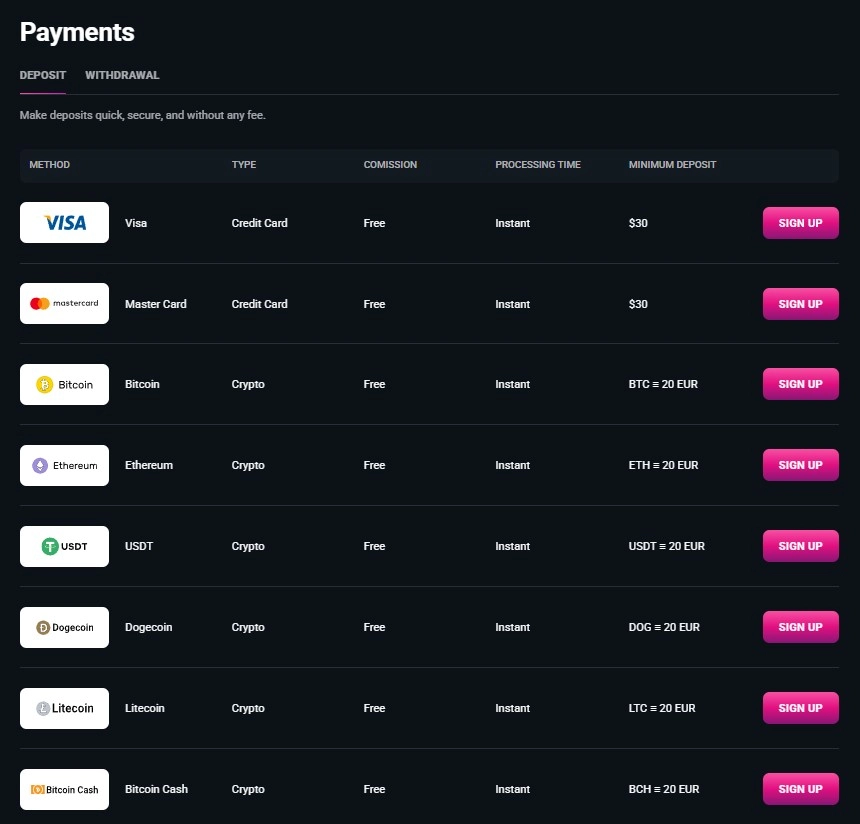
Payment options describe how money is transferred, not whether a withdrawal will be available through the same route. A specialist review of casino payment arrangements listed cards, PayPal and Skrill, bank transfers and, at some operators, cryptocurrency. That is a description of methods reported by the review, not confirmation that a particular service is available or lawful for use in Australia.
The legal distinction matters. Under the Interactive Gambling Act 2001, operators may not provide real-money online casino games to people in Australia. Payment comparisons therefore do not amount to a recommendation to use an offshore casino. They are useful as a way to understand the mechanics and limits of the methods being discussed.
With a bank transfer, funds move between bank accounts. It can serve as a deposit and, where the operator supports it, a withdrawal route. A specialist review reported that traditional transfers could take as long as five business days to complete. That figure is a report about the service it covered, not a fixed timetable for every transfer.
Funds move between accounts and can take as long as five business days to complete.
Includes debit and credit cards; however, online gambling services must not accept credit card payments.
Examples include PayPal and Skrill, with transactions typically completed within hours.
Methods like Neosurf serve as deposit options but generally do not provide a withdrawal route.
Cards have a different payment path, but a deposit option does not establish that the card can receive a payout. The reviewed payment descriptions included debit and credit cards; however, online gambling services must not accept credit card payments. The appearance of a card logo or a listed payment option is not enough to determine what transaction is permitted or how funds would be returned.
PayPal and Skrill are examples of e-wallets. The balance is held with the payment provider, so the casino transfer and the later movement of money from the wallet to a bank account are separate steps. A specialist review described e-wallet transactions as being completed within hours rather than days. This is a source-specific observation, not a dependable promise for an individual payment.
An e-wallet may support deposits and withdrawals, but the operator’s payment rules determine whether the same wallet can be used for both. A method that accepts a deposit is not automatically a valid destination for winnings. Account ownership and matching details can also affect whether a payment is accepted.
Neosurf is a voucher-based method. A specialist review described prepaid cards and vouchers as deposit options that generally do not provide a withdrawal route. The practical difference is straightforward: a voucher can fund an account, but a separate method may be needed to receive a balance later. That makes deposit convenience a poor measure of how easily money can be paid out.
Across these methods, the key comparison is not simply which one moves a deposit quickest. It is whether the method supports both directions, what conditions apply to a payout, and which party controls each stage of the transfer. A payment label alone settles none of those points.
Bitcoin can make a payment appear simple: funds leave a wallet and are sent to an address associated with a service. That does not establish that a casino will accept the deposit, return funds through Bitcoin, or release a withdrawal without checking identity. The payment network and the operator’s account procedures are separate parts of the transaction.
In Australia, that distinction sits within a strict legal boundary. Under the Interactive Gambling Act 2001, providing real-money online casino games to people physically in Australia is illegal for operators. Casino-style games such as slots, poker and table games fall within the prohibited services. A label such as “Bitcoin casino” or “no-KYC Bitcoin casino” does not change the nature of the service or its legal status.
A deposit option describes how money can enter an account. It does not, on its own, identify the method available for a later payout. A service might describe Bitcoin as a deposit method while setting different conditions for withdrawals, including a different payment route or additional account checks. The relevant terms are those governing deposits and cashouts together, not the payment badge shown beside the deposit button.
That distinction matters because a balance displayed on an account is not the same as money received in a wallet. Before funds can be returned, the operator controls its own approval process and payment instructions. The sending side may involve a digital-asset transaction, but the operator still has to decide whether the account and withdrawal request meet its requirements. A quick transfer at the network level cannot compel that decision.
Descriptions in specialist reviews have characterised cryptocurrency transactions as capable of being near-instant. This is a statement about potential transaction speed, not a dependable promise that a Bitcoin withdrawal will be approved or arrive immediately. The transfer itself is only one component; account review and the operator’s handling of a payout remain separate.
The phrase “no KYC” can suggest that identity checks will not occur. That is not a safe assumption where a withdrawal is involved. Casinos must verify a player’s identity through KYC procedures before processing withdrawals. A site’s description of its deposit process therefore cannot be read as a guarantee that a cashout will require no documents or account review.
The practical question is not merely whether a Bitcoin deposit can be made. It is what happens when a withdrawal is requested: whether the account must be verified, which payout method is available, what account details must match, and what operator approval is required before funds are released. If the terms are unclear on those points, the label “no KYC” does not resolve the uncertainty. It simply leaves the withdrawal conditions unanswered.
Bitcoin also does not remove the need to distinguish a request from a completed payment. A request may remain subject to operator procedures before a transaction is sent. Once a transfer is initiated, the digital-asset payment path is still distinct from the operator’s earlier decision to approve it. Treating the whole process as “instant” collapses those separate stages into one claim.
A useful way to assess any payment description is to trace the full route in both directions: where a deposit is sent, how the account records it, what withdrawal method the terms permit, and what must happen before a payout is released. For Bitcoin, that means checking whether the operator describes Bitcoin as a withdrawal option as well as a deposit option. If the terms reserve the right to use another method, or require identity verification first, the deposit label says little about the final route.
The same distinction applies to searches for Litecoin or other crypto payment options. A coin name does not establish that a particular service accepts it, supports withdrawals in it, or applies the same procedure across both directions. Nor does a crypto payment option make an “online casino no KYC” claim reliable. The account rules and the legal status of the service are separate from the technology used to move funds.
For people in Australia, these are not recommendations for selecting an offshore operator. Real-money online casino services are prohibited when supplied to people physically in the country, and describing a payment method does not make such a service lawful. “Bitcoin” describes a means of transfer; “no KYC” describes a claim about account checks. Neither term guarantees that a withdrawal will be approved, processed without verification, or completed as quickly as the underlying payment technology might allow.
“Crypto” describes a payment category, not a single transfer route or a promise about account checks. A real-money platform may accept one or more digital currencies, but that does not establish which network it uses, whether deposits and withdrawals are both supported, or what information it will request before releasing funds. Those details belong to the operator’s payment rules, not to the currency label.
A specialist review has described cryptocurrency transactions as having the potential to be near-instant. That describes the movement of a transaction through a network; it does not mean a casino will approve a withdrawal at the same speed. The operator may first review the request, confirm account details, check the payment history or require identity documents. Only after release does the transfer stage begin. A rapid network cannot remove a hold that exists before funds are sent.
A payment page that lists cryptocurrency is only a starting point. The practical setup depends on the exact method the platform accepts and the routes it permits for withdrawals. A deposit option does not, by itself, confirm that the same option is available for cashing out. Nor does a broad “crypto” label identify the supported currencies, networks, or any conversion applied between the account balance and the transfer.
Those distinctions affect the amount that reaches the destination. If the balance is displayed in another currency, the terms should explain how it is converted for a crypto transaction. If the payment is made through a particular network, the instructions should identify it clearly. A mismatch between the selected network and the receiving wallet can create a problem that has nothing to do with how quickly the network processes transactions.
The payment rules should also say whether a withdrawal must return to the method used for the deposit. Operators generally require funds to go back through the original method where possible. With cryptocurrency, that makes it important to know whether the same wallet or payment route can be used in both directions. A deposit-only option may be workable for funding an account, but it does not settle how any balance would be returned.
The phrase “no KYC” is not enough to establish what happens at withdrawal. A platform can advertise reduced checks at registration and still require identity verification before processing a payout. The relevant distinction is between being able to open an account or make a deposit and being able to withdraw funds. Those are separate stages, governed by separate checks.
For Australian readers, the legal setting also matters: the Interactive Gambling Act 2001 prohibits operators from providing real-money online casino games to people located in Australia. Crypto does not change that position. Using a digital asset as the payment method does not make a prohibited casino service lawful, and a cryptocurrency option should not be treated as an endorsement or a route around the rules.
Some specialist reviews describe Australian payment options as including cards, PayPal, Skrill and bank transfers, with cryptocurrency available at some platforms. That is a description of reported payment availability, not confirmation that any particular service is available, lawful to use, or suitable for an Australian resident. Payment availability can also differ by account, location and operator policy.
A claim about a “new” or “best” crypto platform therefore says little about the conditions that determine whether funds can be withdrawn. The useful details are the actual deposit and withdrawal routes, the applicable verification requirements, the handling of currency conversion, and the operator’s stated fees, limits and processing stages. If those terms are unclear, the word “crypto” does not fill the gaps.
The central calculation is straightforward: network speed concerns the transfer after it is initiated; casino approval and identity checks determine whether and when it is initiated. A payment method can move value quickly while the account remains under review. Treating those as one event turns a technical feature into a payout promise—and the two are not interchangeable.
Ethereum, Tether and Ripple are distinct cryptocurrency names, not evidence that a particular real-money platform accepts them. A coin label can describe a deposit option, a withdrawal option, or simply a search term; it does not establish that both directions are supported. Nor does it show which network is used, what conversion rate applies, or whether the operator will accept a payment from a particular wallet.
A specialist review has described cryptocurrency transactions as capable of being near-instant. That refers to the transfer potential of the payment method, not a confirmed processing time for any named coin at a casino. The operator’s own handling, network choice and account checks remain separate parts of the process. “Fast crypto” is therefore not a complete payment condition.
The phrase “no KYC” also needs careful reading when attached to Ethereum, Tether or Ripple. It may describe how an account can be opened or funded, but it cannot establish that identity checks will be waived when money is due to leave. Casinos must verify a player’s identity before processing withdrawals. A coin-specific label does not cancel that requirement or guarantee that a withdrawal will be accepted.
Availability claims should be treated as operator-specific and checked against the stated payment terms, including whether the same coin and network are supported for deposits and withdrawals. A token name alone is not enough to calculate the amount received: exchange rates, network charges and any operator fees can affect the final value, and those terms need to be disclosed before a transaction is assessed.
There is also a legal boundary in Australia. Under the Interactive Gambling Act 2001, providing real-money online casino games to people in Australia is prohibited. Cryptocurrency does not change the nature of the service. Ethereum, Tether and Ripple may appear in descriptions of payment methods, but their mention should not be read as confirmation that a casino offer is lawful, available or suitable for Australian residents.
A bonus balance is not automatically cash available for withdrawal. The relevant calculation depends on what the wagering requirement applies to: the bonus funds alone, or the deposit and bonus combined. A specialist review describes both structures and favours wagering on bonus funds only. That preference has a clear arithmetic basis: when the deposit is included, the balance subject to the condition is larger.
Let the deposit be D and the bonus be B. Under a bonus-only rule, wagering applies to B. Under a combined-funds rule, it applies to D + B. The difference is not a wording technicality. It changes the base against which the requirement is calculated and therefore the amount of qualifying play needed before bonus-related funds can be released.
The precise wording matters. “Wager the bonus” and “wager the deposit plus bonus” describe different obligations, even when the displayed bonus amount is identical. A headline that gives the bonus value but leaves the calculation base unclear does not establish the withdrawal condition. The operative terms need to say which funds are included.
A useful comparison keeps the same deposit and bonus constant and changes only that base. If the requirement attaches to the bonus alone, the deposit is outside the calculation. If it attaches to the combined sum, the deposit is included as well. No conclusion about the final amount can be made without the actual terms; the structure alone shows why the combined-funds version places more funds inside the wagering calculation.
“Withdrawable” also needs a precise meaning. A balance can appear in an account while remaining conditional. Until the applicable wagering requirement has been met, attempting to withdraw does not turn that conditional balance into cash. Players must satisfy all bonus wagering requirements before submitting a withdrawal request. The condition is part of the balance calculation, not a payment-speed feature.
This distinction applies whether an offer is described as a deposit bonus or a no-deposit bonus. “No deposit” changes the stated source of the bonus, but it does not, by itself, explain what funds wagering applies to or when a withdrawal becomes available. Likewise, a “no KYC” label does not answer the bonus calculation. The withdrawal condition still depends on the offer’s terms, and identity checks are a separate matter.
Search phrases combining “no KYC,” “no deposit bonus” and “instant withdrawal” compress separate claims into one line. They do not establish that an offer exists, that its wagering base is bonus-only, or that its balance can be withdrawn immediately. Each claim needs to be assessed on its own terms.
There is also a market constraint that cannot be tidied away with promotional wording: Australian law prohibits operators from providing real-money online casino games to people in Australia. A bonus label does not change that legal position. Nor does a reference to crypto or Bitcoin change the wagering calculation: the relevant distinction remains the funds included in the requirement and whether that requirement has been completed.
For a financial comparison, the cleanest reading is therefore the one that identifies the calculation base explicitly. Bonus-only wagering is preferable to a combined deposit-and-bonus requirement because the latter includes more funds in the condition. Until the stated requirement is met, the bonus balance is conditional rather than available for withdrawal.
An instant withdrawal describes only part of the process. A casino first has to review a request and approve its release; only then does the payment method carry the funds to the account. The time shown for a transfer cannot be treated as the time from clicking “withdraw” to receiving money.
Speed depends on casino-side handling (review and identity checks) and payment-side movement (the processing route of the chosen method).
The review stage can involve identity checks, account details and the operator’s payment rules. A specialist review notes that first withdrawals can prompt requests for identity documents. That makes an early cashout different from later ones: once verification is complete, the same check may not need to be repeated, although other reviews can still apply. “No KYC” wording does not remove the requirement for identity verification before a withdrawal is processed.
Approval is also not payment. After release, the chosen method and its processing route determine how quickly funds arrive. E-wallets are described as being processed within 24 hours, while card payments and bank transfers can take several days. These are different stages and time frames, not competing promises: an operator may approve a request before the receiving institution completes its part.
A specialist review describes payment speed as dependent on several factors rather than the transfer method alone. The useful distinction is between casino-side handling and payment-side movement. A fast transfer route cannot compensate for a request still awaiting review, and a prompt approval does not make every receiving method equally quick.
The first withdrawal is therefore a poor measure of the speed of later payments. If identity checks are requested, the clock includes the time needed to submit and review the documents as well as the eventual transfer. Completing verification early can reduce friction on future withdrawals, but it does not guarantee immediate approval or receipt. A later request may still be reviewed under the operator’s rules.
The displayed maximum for one transaction may not be the only cap that affects access to funds. A specialist review notes that weekly or monthly cashout ceilings can be separate from the maximum allowed for a single withdrawal. Where such a limit applies, an approved amount may need to be paid in stages or across separate requests, extending the time before the full balance is received. The relevant terms are the transaction cap and any period-based limit; treating one as a substitute for the other gives an incomplete picture.
For a claim of “instant withdrawal,” the practical question is what event starts the clock. If the stated speed begins only after approval, it says nothing about how long the review takes. If the request is a first withdrawal, verification may add another step. If payment is made by bank transfer or card, the receiving process may then take longer than an e-wallet transaction.
In Australia, these payment mechanics do not change the legal position: the Interactive Gambling Act 2001 prohibits operators from providing real-money online casino games to people physically located in the country. A payout label is a description of processing, not evidence that a service is lawful or that a withdrawal will be completed from request to receipt at once.
PayID is Australia’s bank-to-bank instant payment system, operating through the New Payments Platform (NPP). Transfers are processed in real time through the Osko network. That describes the payment rail, not the full time between requesting a withdrawal and receiving funds.
A withdrawal has separate stages: the operator reviews and approves the request, then releases the payment. PayID can move funds in real time after release; it cannot make an unapproved request instant. Identity checks may be required before a withdrawal is processed, and a first request can therefore take longer than the transfer itself.
Account details also matter. Withdrawals should go to an account linked to the player’s profile, using the same PayID details used for deposits. A mismatch can trigger additional security review rather than speed up payment. The request process may involve entering a PayID identifier and amount in a wallet or withdrawal area, then confirming the transaction; the operator’s own terms govern the actual steps and limits.
The distinction is useful beyond PayID. A payment method’s technical speed says nothing about whether an operator has completed its checks or released the funds. “Instant” can describe the transfer after approval, not the entire withdrawal process.
There is also a legal boundary: the Interactive Gambling Act 2001 prohibits operators from providing real-money online casino games to people physically located in Australia. Payment-system details do not change that status. PayID is an Australian transfer method, not evidence that a real-money casino service is lawful or available in the country.
A free-spin offer changes how a game may be played; it does not establish that an account can withdraw without identity checks. Any resulting balance remains subject to the operator’s withdrawal procedures, including identity verification before funds are processed. The label “no KYC” is not a substitute for those conditions.
The offer’s terms determine whether winnings from spins can be withdrawn, whether they are subject to wagering conditions, and what restrictions apply. Without those terms, the cash value of a free-spin promotion cannot be calculated. A displayed prize is not necessarily an available balance: it may be conditional, restricted or ineligible for withdrawal until the stated requirements are met.
That distinction matters even where an offer is described as free. The spins may cost nothing to use, but the resulting winnings do not automatically become cash that can be paid out. The relevant figure is the amount eligible for withdrawal after all applicable terms and verification steps have been satisfied.
In Australia, the Interactive Gambling Act 2001 prohibits operators from providing real-money online casino games to people physically located in the country. A free-spin label does not change that legal position or turn an offshore casino offer into an authorised service. Claims about free spins and no-KYC access therefore should not be treated as proof of availability, withdrawal eligibility or exemption from identity checks.
The practical assessment is narrow: an offer matters only to the extent that its written conditions define withdrawable winnings. Until those conditions and the withdrawal process are clear, the promotion has no dependable cash value.
A live dealer format does not change the legal category of a real-money casino game. Blackjack, roulette and other casino-style games offered to people physically located in Australia are treated as prohibited interactive gambling services under the Interactive Gambling Act 2001. The law applies to the service provided, not to whether a game is streamed from a studio or uses a digital interface.
“No KYC” is a separate claim about identity checks, not evidence that a live table is available or that a withdrawal can be made without verification. A promotional label cannot establish the operator’s procedures, the games on offer or the conditions attached to a cashout. Those details require more than a headline.
The practical distinction is therefore between the format described and the service actually supplied. A live presentation does not make an otherwise prohibited real-money casino service lawful for Australian customers. Nor does a claim about reduced onboarding checks remove the operator’s obligations around withdrawals. Casinos must verify player identity before processing withdrawals.
For Australian residents, a live-casino description should not be treated as confirmation of an accessible or lawful real-money product. Where the terms do not clearly state what is offered and how withdrawals are handled, the label supplies little usable information. The camera may be live; the claim still needs scrutiny.
Check when identity verification may be required, whether withdrawals can use your deposit method, and whether minimum, maximum and cashout limits are clearly published. Completing verification early can reduce delays, but it does not guarantee a particular payout time.
PayID transfers can arrive in real time once the casino releases them, though internal reviews can delay a payout. E-wallet withdrawals are typically processed within 24 hours, while bank transfers and card payments may take several days; traditional bank transfers can take up to five business days.
Reported options include debit cards, PayPal and Skrill, bank transfers and, at some operators, cryptocurrency. PayID and POLi are also mentioned as banking options; prepaid vouchers such as Neosurf are usually for deposits rather than withdrawals.
They are casinos with clear payout terms and convenient withdrawal methods, but a simple sign-up does not guarantee an easy cashout: identity checks may still be required before funds are released. In Australia, operators may not provide real-money online casino games to people physically in the country.
Created by the ”SpinsUP Casino” editorial team.